
This heat wave would be ‘virtually impossible’ if not for fossil fuel pollution, study says
This Heat Wave Would Be Virtually Impossible Without Fossil Fuels, Study Finds
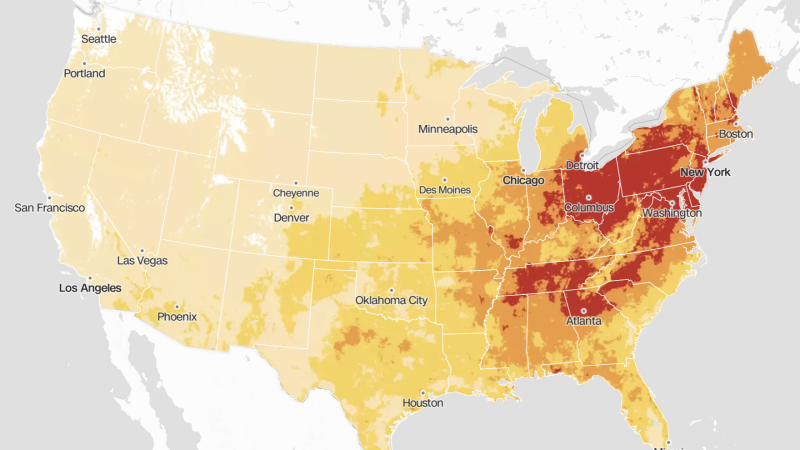
This heat wave would be virtually – A record-breaking heat wave sweeping across the eastern United States is being described as “virtually impossible” to occur without the impact of fossil fuel pollution, according to a new study by climate scientists. As temperatures soar and the Fourth of July celebrations face unprecedented challenges, the extreme weather conditions highlight the growing influence of human-driven climate change on daily life. The study underscores how greenhouse gas emissions have intensified heat events, pushing them beyond what would be expected in a stable climate.
The Role of Climate Change in Intensifying Heat Events
The current heat wave is driven by a high-pressure system that has created a heat dome over the Northeast, trapping warm air and amplifying temperatures. Researchers from the World Weather Attribution network, a group of climate scientists, have linked this extreme weather to the warming climate, stating that fossil fuel emissions have made such conditions far more likely. Without the additional heat from greenhouse gases, the event would have been significantly milder, according to the study’s analysis.
“This heat wave would be virtually impossible without the warming caused by fossil fuels,” explained Friederike Otto, a climate science professor at Imperial College London. “The combination of heat and humidity now creating life-threatening conditions would have been a rare occurrence in the past, but climate change has made it a reality.”
Breaking Temperature Records and Escalating Risks
On Thursday, at least 20 locations across the region set or matched daily temperature records, with heat index values exceeding 113°F in Washington, D.C., and 111°F in Philadelphia. New York City and Boston also experienced extreme conditions, reaching 109°F and 104°F, respectively. These records are not just numbers—they signal a shift in climate patterns that is increasingly affecting communities.
Philadelphia’s decision to cancel its Independence Day parade due to dangerously high temperatures serves as a stark example of how climate change is altering familiar summer traditions. The prolonged heat, paired with high humidity, creates a perfect environment for heat-related illnesses, particularly among those without access to cooling systems. The study emphasizes that such a scenario would be virtually impossible without the ongoing effects of global warming.
Strain on Power Grids and Energy Systems
As demand for air conditioning surges, power grids in the Mid-Atlantic and Northeast are under severe stress. Energy Secretary Chris Wright recently directed data centers in the PJM region—covering 13 states—to switch to backup power sources to prioritize residential cooling. Virginia, home to the world’s largest cluster of data centers, has seen energy costs rise due to the increased reliance on grid resources during these extreme conditions.
The heat wave has exposed vulnerabilities in energy infrastructure, with over 19,000 Con Edison customers in New York City experiencing outages. Utilities are now implementing voltage reductions and urging conservation, as the combination of high temperatures and humidity continues to test the limits of existing systems. This situation exemplifies how climate change is reshaping the way energy is managed and distributed.
Health Impacts and Vulnerable Populations
Heat-related illnesses are on the rise, with the current wave amplifying risks for vulnerable groups such as the elderly, children, and outdoor workers. High humidity levels prevent effective sweating, increasing the likelihood of heat exhaustion and heatstroke. Health officials are urging the public to take preventive measures, including staying hydrated and using air conditioning, to mitigate the dangers of such extreme weather.
With overnight lows also rising compared to historical averages, the lack of nighttime relief compounds the health risks. The study’s findings reinforce that this heat wave would be virtually impossible under pre-industrial climate conditions, emphasizing the need for urgent action to reduce emissions and adapt to the changing climate.
