
Ukraine targets Russian navy base near St. Petersburg on last day of ‘Putin’s Davos’
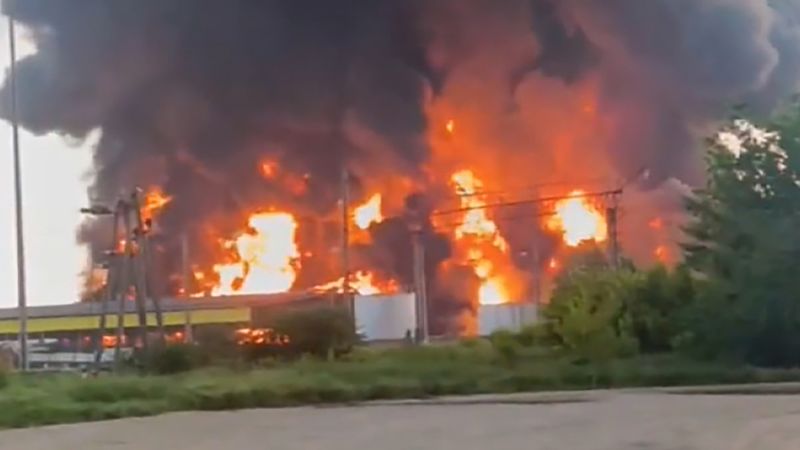
Ukrainian Drone Strikes Target St. Petersburg Region
Ukraine targets Russian navy base near – On the concluding day of the St. Petersburg International Economic Forum, a major event hosted by the Kremlin, Ukraine executed a series of drone strikes against critical Russian infrastructure. The attacks, which began early Saturday, focused on naval installations, oil storage facilities, and military sites in the Leningrad region. This marked the second consecutive day of drone assaults in the area, intensifying pressure on Russia’s eastern Baltic operations.
According to Ukrainian military sources, the strikes targeted the naval base in Kronstadt, a strategic hub for Russia’s fleet and home to a naval academy. The facility, which serves as a primary repair and supply center, was struck by drones that had traveled approximately 1,000 kilometers from Ukrainian territory. This development disrupted the region’s maritime capabilities, as reported by Russian authorities, who noted the area was temporarily closed to traffic following the assault.
“Last night, our drones covered a distance of about 1,000 kilometers to the St. Petersburg region – to the enemy navy’s arsenals and a base in Kronstadt,” stated Ukrainian President Volodymyr Zelensky in a Saturday address. The remarks underscored the reach of Ukraine’s military operations, which have expanded beyond traditional battlefronts into Russian economic and logistical centers.
St. Petersburg’s governor, Aleksandr Beglov, confirmed the city faced a large-scale attack, with at least three individuals injured. He urged residents to remain indoors and avoid public areas due to potential disruptions in mobile internet services. Meanwhile, regional governor Aleksandr Drozdenko reported that a total of 141 unmanned aerial vehicles (UAVs) had been neutralized in the Leningrad Region. Debris from the strikes was found in multiple locations, including a village where over 600 people were evacuated as a fire raged at an oil depot.
Geolocation data from CNN highlighted smoke plumes near the site of the Russian naval arsenal, corroborating the claim that drones were responsible for the damage. Zelensky also emphasized the economic reach of Ukraine’s strikes, noting that long-range drones had impacted an oil depot in the Krasnodar region, sparking fires that threatened fuel supplies for Russian forces in the south and east.
Putin’s Davos and Zelensky’s Strategic Move
The St. Petersburg International Economic Forum, often referred to as Putin’s Davos, provided a backdrop for the attack. Zelensky’s decision to strike during this high-profile gathering was perceived as a deliberate effort to highlight the economic strain on Russia. The forum, attended by global business leaders and political figures, became a symbolic target as Ukraine sought to underscore its impact on the Russian economy.
Putin responded to Zelensky’s open letter, which was delivered two days prior, by dismissing its significance. The Russian leader criticized the message as “rude,” suggesting skepticism about Zelensky’s commitment to peace. A Kremlin spokesperson further noted that Zelensky could “come to Moscow” if he wished to discuss the matter directly. Despite this, the timing of the attack was seen as a calculated move to influence the forum’s outcome.
Fire at Krasnodar Oil Depot
Russian emergency services confirmed a fire at an oil depot in Krasnodar, citing a technical malfunction as the cause. While officials denied drone involvement, the incident aligned with Ukraine’s broader strategy of targeting energy infrastructure. The fires, which included substantial flames at the depot, disrupted fuel supplies for Russian troops, compounding the economic challenges facing the country.
Escalation of Drone Warfare
In recent months, Kyiv has intensified its use of long-range drones to strike key Russian oil facilities and military bases. The attacks have become a critical component of Ukraine’s efforts to undermine Russian logistics and energy production. According to the Ukrainian military, 272 drones were launched overnight from Friday to Saturday, with 249 intercepted and impacts recorded at 11 locations.
This surge in drone activity has increased the effectiveness of Ukraine’s strikes, particularly in hitting strategic targets. The Krasnodar and St. Petersburg attacks are part of a larger campaign that has forced Russia to deploy significant resources for defense and recovery. The success of these operations has shifted the balance of power in certain areas of the conflict, giving Ukraine a tactical advantage.
Regional Impacts and Continued Tensions
While the Krasnodar fire was attributed to a technical failure, the Tyumen oil refinery in the Urals, located 2,300 kilometers from the attack sites, also reported a blaze. Authorities there stated that the fire originated from a purification unit due to a mechanical fault, though they acknowledged the possibility of external factors. This dual incident highlights the widespread disruption caused by Ukraine’s strikes, affecting both military and civilian infrastructure.
As the conflict continues, both sides have engaged in nightly drone exchanges, but Ukraine’s long-range attacks have grown more precise. The strikes near St. Petersburg not only targeted military assets but also sent a message to Russian elites, who were convening to discuss economic and political strategies. Zelensky’s actions, combined with the ongoing war, have created a volatile environment where economic and military pressures converge.
The combination of drone strikes and the timing of Zelensky’s letter to Putin reflects a coordinated effort to maximize political and economic leverage. With Russia’s economy under strain, the attacks serve as a reminder of the vulnerabilities exposed by the war, potentially swaying public opinion and international support for Ukraine’s cause.
