
US experience fighting Iran offers lessons for China, experts say
US Experience Fighting Iran Offers Lessons for China, Experts Say
US experience fighting Iran offers lessons – As the conflict in Iran enters its third month, the ongoing military engagement has become a critical case study for China, offering insights into the United States’ operational capabilities and the enduring influence of adversaries on battlefield outcomes. CNN interviewed a diverse group of specialists from China, Taiwan, and beyond to explore how the recent hostilities in the Persian Gulf could shape Beijing’s strategic approach should a confrontation with Washington escalate. These experts caution that China must avoid overestimating its own strengths, underestimating its lack of combat experience, and clinging to a limited perspective on the conflict’s broader implications.
Iran’s Tactics Highlight Defensive Weaknesses
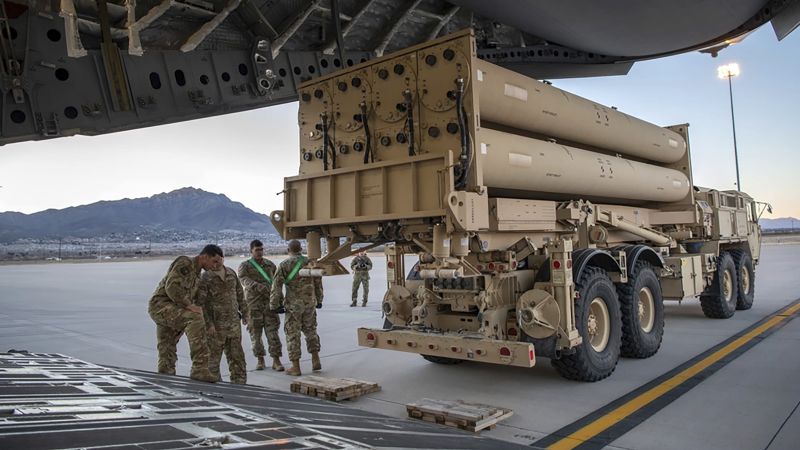
Among the key takeaways from the Iran conflict is the vulnerability of even advanced US defense systems. Fu Qianshao, a former colonel in China’s air force, emphasized the importance of understanding how Iran bypassed US anti-missile defenses, such as the Patriot and THAAD systems. “Our defenses must be scrutinized to prevent future surprises,” Fu stated to CNN. “Iran’s ability to penetrate these systems underscores the need for China to identify and address its own gaps in protective capabilities.”
“We need to devote significant efforts to identify weakness in our defensive side to ensure we remain invincible in future wars,” Fu told CNN.
The People’s Liberation Army (PLA) has increasingly prioritized offensive capabilities, particularly through the integration of hypersonic glide vehicles into its missile arsenal. These advanced projectiles, capable of evading traditional interceptors, represent a major leap in China’s military technology. Meanwhile, the PLA Air Force is rapidly deploying fifth-generation stealth fighters, with projections indicating the force could field approximately 1,000 J-20 jets—comparable to the US F-35 fleet—during long-range precision strikes, according to the British defense think tank RUSI.
China’s strategic ambitions extend to developing a long-range stealth bomber, akin to the US B-2 Spirit or the upcoming B-21 Raider. This development signals a growing emphasis on multi-domain dominance, combining air superiority with the ability to strike deep into enemy territory. However, experts warn that Beijing’s defensive readiness remains a concern, especially in light of Iran’s success in leveraging relatively simple technologies to challenge US air defenses.
China’s Military Balance: Offense vs. Defense
Analysts note that Iran’s use of low-cost Shahed drones and ballistic missiles demonstrated how asymmetric warfare can disrupt even the most technologically advanced forces. In contrast, the US employed sophisticated weaponry like F-35 fighter jets and B-2 bombers, paired with cheaper guided munitions from platforms such as B-1 and B-52 bombers. This combination proved effective in targeting missile launchers, naval assets, and critical infrastructure, showcasing the adaptability of US military strategies.
For China, the lessons from Iran are clear: a robust offensive capability must be complemented by resilient defenses. “The PLA has expanded its firepower significantly, but it must now focus on securing its vital installations,” said Fu Qianshao. “Without strong defensive measures, even the most powerful offense can be neutralized.” The growing number of hypersonic missiles and stealth aircraft highlights China’s push toward strategic dominance, but its ability to counter emerging threats like drone swarms remains a work in progress.
“We have to delve deeper to effectively guard our key sites, airfields and ports against attacks and raids,” Fu said.
Taiwan as a Potential Flashpoint
The Taiwan Strait has long been considered a hotspot for US-China tensions, and the current conflict in Iran has reignited discussions about its strategic importance. China’s ruling Communist Party has consistently declared its intent to reunify with Taiwan, despite the island’s current status as a self-governing democracy. President Xi Jinping has not excluded the possibility of military intervention, raising concerns about the region’s stability.
On Taiwan, analysts acknowledge that China’s military has evolved to rival both the US in high-tech precision strikes and Iran in the production of low-cost drones. “China’s forces are now capable of executing complex operations against both high-tech adversaries and weaker opponents,” said Chieh Chung, an associate research fellow at Taiwan’s Institute for National Defense and Security Research. “Long-range rockets and drone swarms will be central to this effort.”
“Long-range rockets and drone swarms will definitely play a key role in China’s joint military operations against Taiwan,” Chieh Chung told CNN.
Taiwan’s preparedness for such a scenario is under scrutiny. A recent government watchdog report criticized the island’s drone countermeasures as “ineffective,” highlighting risks to its infrastructure and military bases. The report also noted that China’s drone manufacturers could produce billions of weaponized drones annually within a year, a capability that could overwhelm Taiwan’s defenses. “The scale of China’s drone production is staggering,” a 2025 War on the Rocks analysis stated. “This could shift the balance of power dramatically in a potential conflict.”
Adapting to the New Battlefield
While China focuses on offensive readiness, the US is also recalibrating its approach to Pacific conflicts. Adm. Samuel Paparo, head of the US Indo-Pacific Command, testified in April that drones are reshaping modern warfare, particularly for the offensive side. “Drones make warfare more costly for the attacker,” Paparo remarked, suggesting that the US may need to adopt a more defensive posture in future engagements.
This shift reflects a broader acknowledgment that the US must prepare for scenarios where it could be the one defending rather than launching attacks. The Iran conflict has exposed how quickly adversaries can adapt, and the US military is now emphasizing the importance of integrated air and missile defense systems. “The US is learning from its own experiences in the Gulf, even as it faces challenges in the Pacific,” said a defense strategist cited by CNN. “This adaptability will be crucial in maintaining strategic advantages.”
Experts also stress the need for China to refine its understanding of conflict dynamics. While the PLA has made strides in offensive technologies, its ability to counter evolving threats like drone swarms and cyberattacks remains a critical area for development. The lessons from Iran underscore that no military force is invincible, and the interplay between offense and defense will define the outcome of any large-scale confrontation.
As the geopolitical landscape continues to shift, the Iran conflict serves as a real-time laboratory for China’s military strategy. The combination of high-tech precision weapons and low-cost, high-volume drone operations highlights the dual nature of modern warfare. For Beijing, the challenge lies in translating these lessons into actionable plans that account for both technological and tactical realities. Meanwhile, the US is rethinking its role in the region, recognizing that the future of conflict may demand a more flexible and resilient approach. The balance between these two powers will ultimately determine the shape of global security in the years ahead.
