What happened inside the Flydubai flight to Israel? What we know so far

Daftar Isi
Passengers and crew intervene after violent cockpit incident on flight bound for Tel Aviv
Earthguardiansonline.com – A Flydubai flight traveling from Dubai to the Tel Aviv area made an emergency landing in Saudi Arabia on Wednesday after a violent incident in the cockpit sent the aircraft into a rapid descent and sparked panic among those on board.
Israeli Prime Minister Benjamin Netanyahu said one pilot stabbed the other and then attempted to interfere with the aircraft’s systems. Passengers, cabin crew and reserve pilots who were traveling in the cabin ultimately helped regain control of the plane, preventing what Netanyahu described as a potentially catastrophic outcome.
Flight FZ1073 left Dubai at 6:05 a.m. local time, or 10:05 p.m. ET, and was heading west toward its destination near Tel Aviv. Roughly two hours into the journey, tracking information showed the aircraft suddenly losing altitude and making a sharp turn north.
The plane dropped 17,400 feet in less than two minutes. At 8:31 a.m., the crew issued a distress call. Minutes later, the aircraft transmitted code 7500, the internationally recognized signal for an unlawful interference or hijacking emergency.
Chaos as the aircraft descended
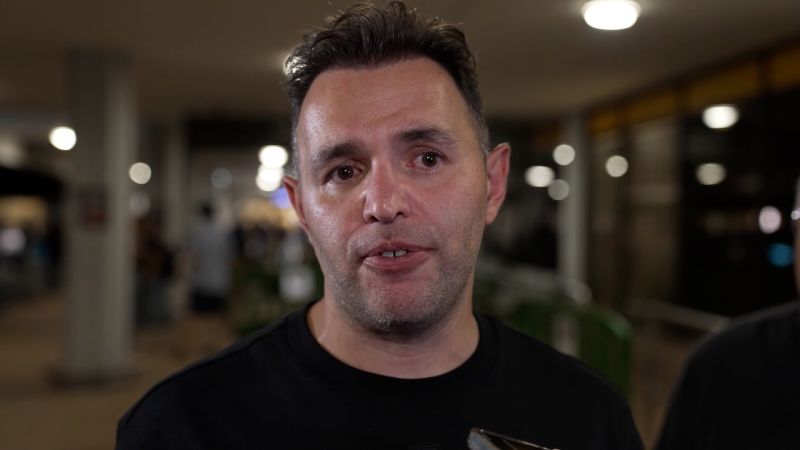
People aboard the flight described a terrifying scene as the plane descended. Passenger Mika Bauman recalled the sudden movement of the aircraft, the cries of children and the fear spreading through the cabin.
“We just felt the plane drop completely and start spinning a little, and everyone was screaming, there were children crying,” Bauman said.
“I was just sure I was going to die,” she added.
Video from inside the aircraft captured passengers and crew gathering near the cockpit entrance as they tried to respond to the emergency. A cabin crew member can be heard telling passengers to remain seated while requesting medical help. Another person shouted that a pilot was needed as crew members opened a first-aid kit.
The footage reflects the difficult balance inside a cabin during an aviation emergency: people were trying to assist injured crew members and stop the alleged attacker while also preventing further panic among passengers.
Passengers enter cockpit and restrain alleged attacker
Several passengers moved toward the cockpit after realizing the situation had become critical. Yaniv Hayoun told Netanyahu that he and others confronted the alleged attacker, placed him in a chokehold and pulled him away from the controls.
Hayoun said he then took hold of the aircraft’s controls while the plane began to stabilize. He told the prime minister that his limited familiarity with cockpit emergencies came from watching a television program that reconstructs aviation accidents.
“I watch Air Crash Investigation, Mr. Prime Minister — really. The plane started to level out a bit, and then the pilot told me he was taking over the controls from there,” Hayoun said.
Dr. Shota Musaev, a dentist among the passengers, said he used headphone cords and plastic zip ties to secure the alleged attacker. Afterward, he turned his attention to the injured pilot and began providing aid.
Even after the immediate confrontation was over, uncertainty remained throughout the cabin. Assaf Rajuan said passengers could see only desert below and did not know where the aircraft might be taken.
“There was nothing but desert beneath us; we feared being taken to an enemy country or landing in the middle of the desert,” Rajuan said. “We didn’t know who to trust.”
Reserve pilots help return aircraft to safety
Netanyahu and Flydubai said reserve pilots who had been seated in the passenger area were able to assist in restoring control of the aircraft. Their presence proved crucial after the cockpit attack left both primary pilots injured.
Additional pilots sometimes travel on commercial flights when they are being repositioned for another assignment. In this case, their ability to reach the cockpit and help manage the aircraft became a central part of the response.
The flight diverted to Tabuk Airport in Saudi Arabia and landed at 9:54 a.m. The diversion brought an end to an emergency that had unfolded over only a short period but involved a steep descent, a cockpit struggle and improvised medical treatment in the cabin.
Injured pilots receive treatment
Images from the aircraft showed the aftermath of the attack. One badly injured pilot was lying on the floor, conscious but visibly distressed, with blood on his hands as passengers helped monitor him. His face was partly covered by a mask while he held his torso.
Nearby, another wounded pilot—identified by passengers as the alleged attacker—was being guarded by several people. He was lying on his side, and blood had soaked the area around the stomach of his white shirt.
Both the captain and co-pilot were taken to hospital after the plane arrived in Saudi Arabia. The full extent of their injuries and the subsequent medical outcome were not immediately clear from the information released.
Investigation focuses on motive and security questions
Investigators are examining why the attack occurred and how events developed inside the cockpit. Netanyahu said Friday that the suspect had undergone “Islamist radicalization.” He also warned that anyone who may have directed the alleged attacker would face “a very heavy price.”
The other pilot, Smit Machchhar of India, has been praised for fighting back during the emergency. Netanyahu said Machchhar helped prevent a disaster comparable in scale to the September 11 attacks.
“What distinguishes this incident from the other tragic attacks was that this time, the good guys won,” Netanyahu said.
The incident highlights how quickly a crisis in the cockpit can affect everyone aboard an aircraft. Commercial flights rely on trained crews, strict cockpit access procedures and rapid coordination with air traffic authorities. In this case, the response also depended on passengers, cabin staff, medical assistance and reserve pilots acting during an extraordinarily dangerous moment.
Authorities will continue to review the cockpit assault, the flight’s descent and the emergency diversion as they determine what led to the confrontation and what lessons may follow for aviation security.
Related Reading
Frequently Asked Questions
What is What happened inside the Flydubai flight?
What happened inside the Flydubai flight is the main topic of this guide. The article explains the context, practical details, and next steps readers should understand.
Why does What happened inside the Flydubai flight matter?
What happened inside the Flydubai flight matters because readers are looking for a useful answer, not just a short summary. Good content should match search intent and help them decide what to do next.