A new app is bringing Vine back, with a very 2026 twist

Daftar Isi
The Six-Second Loop Returns: Divine Bets on Human Creativity in an Age of Algorithmic Noise
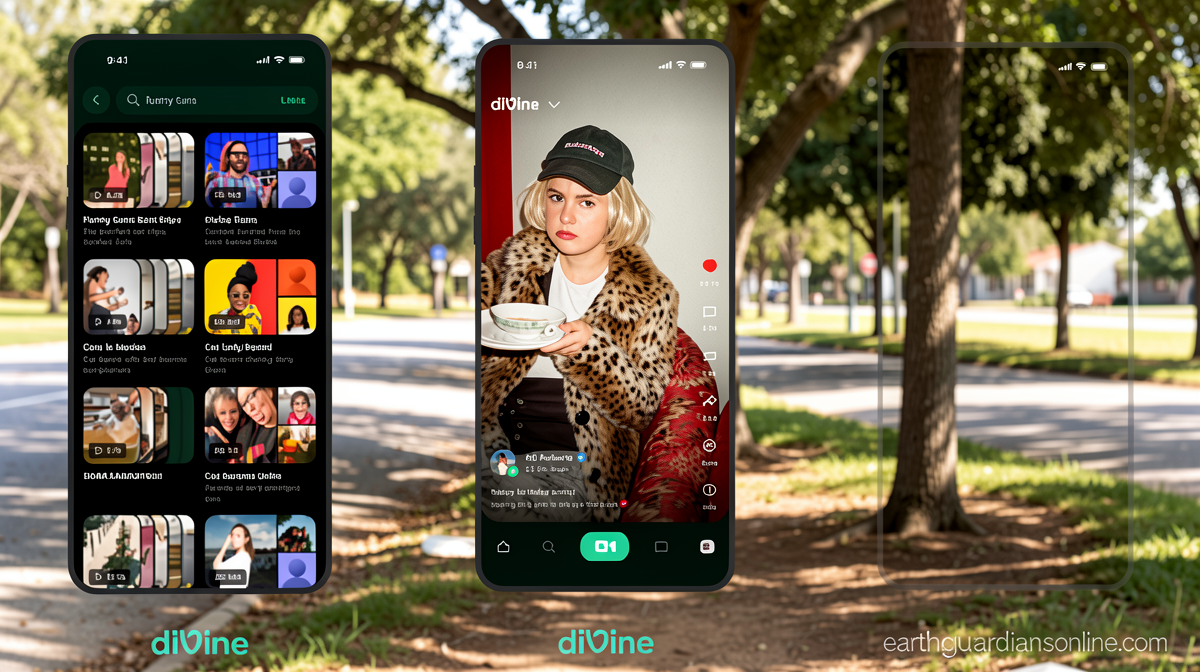
Earthguardiansonline.com – A scrolling feed of six-second video clips, each one a burst of absurdity or wit, has reappeared in the social media landscape. The app behind it, called Divine, went live to the public last week following roughly nine months of internal development and beta testing. Its premise is unmistakably familiar to anyone who spent the mid-2010s glued to a phone: short, looping videos that reward quick comedic timing over polished production. But the platform positions itself not as a simple nostalgia play, but as a deliberate counter-programming to the flood of machine-generated content now saturating mainstream feeds.
What Divine Actually Is
Divine lets users record and upload six-second clips, then consume a feed built around them. Alongside new uploads, the app carries an archive of more than two million original Vine posts, preserved by volunteer internet archivists before the original platform went dark. Those salvaged clips give new users immediate access to the cultural artifacts of a bygone era while the app builds its own library from scratch.
The project is not affiliated with Vine’s former owners. The original app, which Twitter (now X) acquired in 2012 for $30 million, was formally shut down in 2017 after struggling to sustain a business model against competitors like Instagram that rolled out their own short-video features. Divine’s creator, who goes by the handle Rabble, built the new platform independently, with financial backing from Jack Dorsey, the co-founder of Twitter.
Why the Original Format Mattered
Vine launched in 2012 as one of the earliest tools that let ordinary people produce and distribute short-form video without professional equipment. Its constraint — six seconds, looping endlessly — forced creators into a compressed comedic grammar that produced an outsized cultural footprint. The format helped catapult performers like Logan Paul and Shawn Mendes into mainstream visibility and generated a lexicon of memes that still circulates today. When Twitter announced its wind-down in 2016, the internet treated the loss almost as a cultural event, mourning the disappearance of a space dedicated to unpolished, human-scale silliness.
That sense of loss has not faded. Rabble frames Divine’s revival as a response to what many users describe as a growing fatigue with feeds dominated by synthetic, algorithmically optimized content. The founder’s position is blunt:
“I want to see things that are creative and are human and that are weird … there’s a way in which AI generates this sort of mediocrity.”
To enforce that standard, Divine says it will not accept AI-generated uploads. The team employs multiple detection layers to screen submissions before they reach the feed. The stance mirrors recent moves by Pinterest and LinkedIn, both of which have introduced measures to curb the volume of machine-made posts crowding their platforms.
Decentralization and User Agency
Perhaps the most structurally distinct element of Divine is its technical architecture. The platform runs on a decentralized digital infrastructure comparable to Mastodon and Bluesky, the two most prominent alternatives to X. In practical terms, that means a user’s profile and content can be migrated to another compatible service without starting over. The underlying technology is also open-sourced, allowing anyone to spin up independent communities using the same codebase without publishing to Divine’s central feed.
On the algorithmic front, Rabble says the app will publish a detailed explanation of how its “For You” ranking works. Users are not locked into a single recommendation engine; they can switch among feeds tuned to different signals — animal content, style-focused curation, or simply the most-viewed clips on the platform. The transparency is pitched as a direct answer to the opacity that has eroded trust in mainstream social networks, particularly after the controversial sale of X to Elon Musk.
Early Traction and Commercial Signals
By the time of its public launch, Divine had already accumulated roughly 100,000 registered users, Rabble said. Early content skews toward callbacks to 2010s internet humor, alongside more earnest posts celebrating the return of a platform associated with a period many users remember as less cynical about social media’s role in daily life. This week the app announced its first brand partnership, a collaboration with Taco Bell, signaling that advertisers see commercial viability in the niche.
A Broader Nostalgia Current
Divine does not exist in isolation. In a recent documentary, the current owners of MySpace outlined plans to revive the music-sharing site that defined online identity for a generation before Facebook absorbed its cultural function. Together, these efforts point to a broader undercurrent: users who feel they have ceded editorial control of their own feeds to opaque recommendation systems and who want platforms where the norms are legible and contestable.
Rabble articulates that ambition in terms that go beyond product features:
“I look forward to a place where we can have a better idea of what healthy social media is, and where people think that it doesn’t have to be this sort of nightmarish hellscape.”
The founder adds a sharper diagnosis of what went wrong in the intervening decade:
“I think this idea of not having human agency over how we make our own norms and rules has created a toxic culture.”
Whether Divine can sustain itself as a business while enforcing strict content boundaries remains an open question. The original Vine’s failure was less about format than about monetization in a market that quickly commodified short video. Divine’s decentralized architecture and open-source model may reduce the pressure to chase advertising scale, but the platform will still need to attract enough creators to keep the feed alive. For now, the six-second loop is spinning again, and the question is whether human-made absurdity can hold a place in feeds that increasingly default to the synthetic.
Related Reading
Frequently Asked Questions
What is A new app is bringing Vine?
A new app is bringing Vine is the main topic of this guide. The article explains the context, practical details, and next steps readers should understand.
Why does A new app is bringing Vine matter?
A new app is bringing Vine matters because readers are looking for a useful answer, not just a short summary. Good content should match search intent and help them decide what to do next.