Russia’s infrastructure is being pummeled by Ukrainian strikes. Now Putin wants to seize control of it

Daftar Isi
Putin’s New Decree Puts State Hands on Russia’s Most Vital Assets
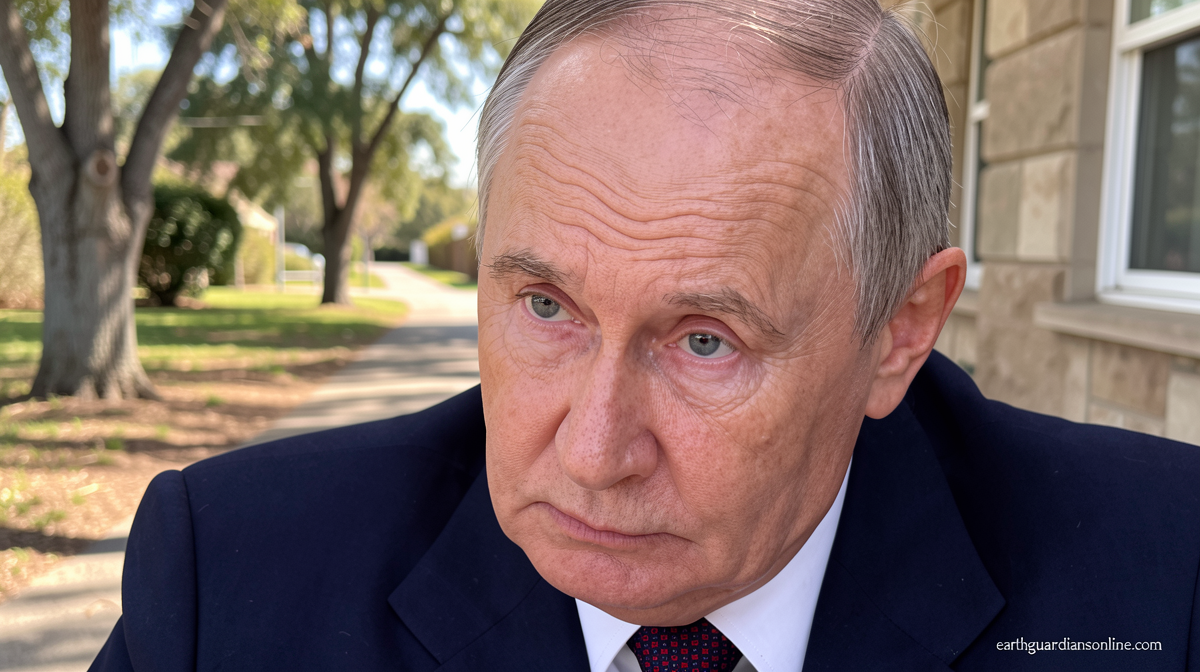
Earthguardiansonline.com – As Ukrainian drones and missiles push deeper into Russian territory each week, Moscow has responded not only with retaliatory strikes but with a sweeping legal instrument that could reshape the relationship between the state and private enterprise. On Monday, Russian President Vladimir Putin signed a decree authorizing the federal government to assume temporary administrative control over any “critical infrastructure” facility whose owners fail to protect it adequately against what the document calls “growing threats to the security of critical infrastructure facilities of the Russian Federation.”
The measure lands at a moment when ordinary Russians are feeling the war’s reach in ways that were unthinkable a year ago. Fuel shortages have appeared in several regions after Ukrainian long-range strikes hit refineries and distribution nodes. Logistics networks that once moved consumer goods across the vast country are now regular targets, and the economic ripple effects are landing on supermarket shelves and gas stations far from any front line.
What the Decree Actually Does
The instrument spans an unusually broad set of sectors. Fuel and energy installations, telecommunications networks, transport corridors, and logistics facilities all fall within its scope. Under the decree’s language, if a private owner does not take what the state deems sufficient steps to guarantee the “security” of a facility—or cannot restore operations quickly enough after an attack—the government may impose what it terms “temporary administration.”
In practical terms, that designation transfers operational control, property rights, and equity stakes to the state apparatus for the duration of the arrangement. The decree does not specify a fixed sunset period, leaving the length of state control to executive discretion. For Russia’s private sector, which has already absorbed years of sanctions pressure and wartime mobilization costs, the provision introduces a new layer of regulatory uncertainty: the line between acceptable and unacceptable protective spending is now drawn by the government itself.
Kremlin Framing: Blame the Owners, Blame the West
Kremlin spokesperson Dmitry Peskov used a Tuesday briefing to explain the logic behind the decree, directing criticism at corporate owners who, in his assessment, have been lax about hardening their sites.
“Quite often the owners of enterprises do not pay proper attention to taking measures to ensure security, anti-drone security.”
Peskov also pointed to continued Western military aid to Kyiv as an additional justification. In his framing, Moscow “must take measures” to “ensure our own security” precisely because allied governments keep supplying Ukraine with the means to strike deeper into Russian territory.
When pressed on which specific companies might find themselves under state administration, Peskov deferred to the bureaucracy. The situation would be “analyzed primarily by the government, by the relevant agencies,” he told reporters, adding that “wherever security measures are not being taken in critical areas, corresponding proposals will be submitted.”
Ukraine’s Campaign Against Russian Commerce and Logistics
The decree’s timing is not accidental. In recent days, Ukrainian forces have intensified strikes on Ozon logistics hubs scattered across Russia. Ozon competes directly with Wildberries, the e-commerce giant that has already endured repeated Ukrainian attacks on its warehouses and fulfillment centers. By targeting both players simultaneously, Kyiv aims to degrade the domestic supply chains that keep Moscow’s war economy functioning and that sustain consumer confidence at home.
Each successful strike on a distribution node does more than destroy inventory. It disrupts delivery schedules, inflates replacement costs, and forces retailers to reroute shipments through longer, less efficient corridors. The cumulative effect is a slow strangulation of the commercial infrastructure that funds both household consumption and state procurement.
The Patriot Gap and Russia’s Escalating Barrages
On the other side of the border, Russia has been exploiting a vulnerability in Ukraine’s air-defense architecture. Kyiv relies heavily on US-made Patriot interceptor missiles to knock down ballistic missiles, but a global supply crunch—compounded by competing demand amid the ongoing Iran conflict—has left Ukraine short of the very interceptors it needs most.
Russia launched two ballistic missiles and 150 drones at Ukrainian targets in the overnight window into Tuesday. The Ukrainian Air Force announced that 124 of the drones were shot down, leaving a residual threat that Patriot systems would ordinarily have intercepted had they been available in sufficient quantity.
Ukrainian President Volodymyr Zelensky addressed the shortfall during a Tuesday meeting with his Estonian counterpart. Speaking through the state media channel Ukrinform, he acknowledged that Kyiv had received only a limited replenishment.
“I won’t say which country provided them either – we’ve also received a small number of Patriot missiles. I can’t say how many, but just a few. We need more.”
The admission underscores a structural problem: even when allied governments release interceptors from stockpiles, the volume arrives in trickles rather than the sustained flows required to counter barrages of 150-plus drones paired with hypersonic missiles. Until that gap closes, Russian strike packages will continue to land with higher probability, and the pressure on Ukrainian cities—and on the political calculus in Western capitals—will intensify.
Why This Matters Beyond the Battlefield
The decree is best understood not as a wartime emergency measure in the narrow sense, but as a long-term consolidation of state ownership over the economic arteries of the country. If “temporary administration” becomes a recurring tool—invoked after each wave of Ukrainian strikes, extended each time owners fail to meet an ever-tightening security standard—the distinction between temporary and permanent state control erodes quickly. Russia’s private sector, already navigating sanctions, capital controls, and labor mobilization, now faces the prospect that its most valuable assets can be commandeered at the discretion of a ministry.
For ordinary Russians, the immediate stakes are simpler: whether the fuel at the pump, the parcel on the doorstep, and the signal on the phone continue to arrive reliably. The decree promises to answer those questions with state authority. Whether that answer improves security or merely centralizes risk remains to be seen.
Related Reading
Frequently Asked Questions
What is Russia s infrastructure is being pummeled?
Russia s infrastructure is being pummeled is the main topic of this guide. The article explains the context, practical details, and next steps readers should understand.
Why does Russia s infrastructure is being pummeled matter?
Russia s infrastructure is being pummeled matters because readers are looking for a useful answer, not just a short summary. Good content should match search intent and help them decide what to do next.