Judge pauses US Postal Service plan to implement Trump’s new mail voting restrictions

Daftar Isi
Federal Judge Halts USPS Mail-Ballot Restrictions Ahead of November Midterms
Earthguardiansonline.com – A Boston federal court issued a two-week temporary restraining order late Thursday night, freezing a sweeping postal regulation that would have forced states to overhaul their mail-ballot infrastructure before the November 3, 2026 midterm elections. Judge Indira Talwani, appointed by President Barack Obama, sided with a coalition of Democratic-led states and voter-advocacy organizations that had challenged the rule within days of its release.
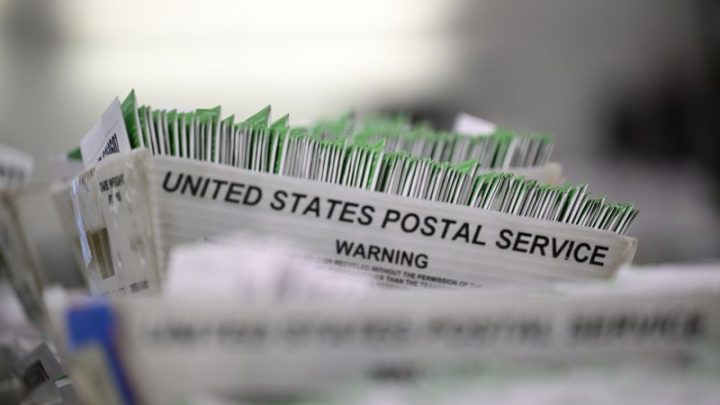
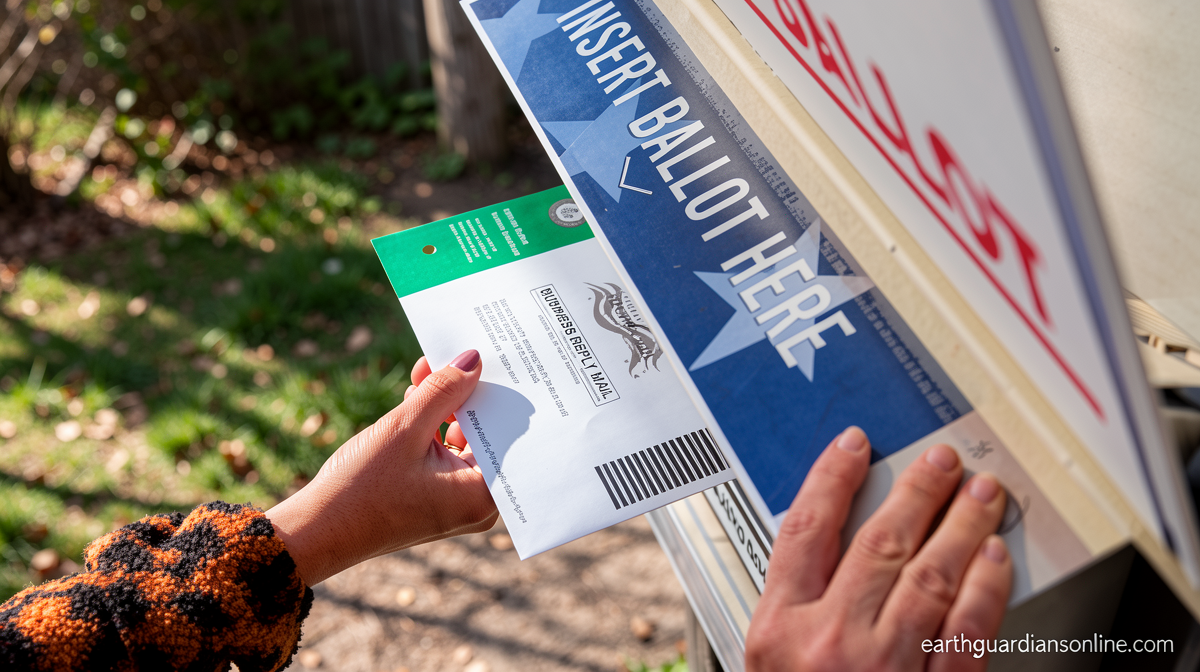
The order blocks the US Postal Service from enforcing a Final Rule promulgated under a March executive order signed by President Trump. Under that rule, states could no longer simply mail ballots to registered voters through the postal system. Instead, election officials would have been required to submit their mail-ballot envelopes and return envelopes to USPS for advance approval before any ballots could be dispatched — a process the judge found incompatible with the compressed timeline leading into the midterms.
“Through the Final Rule, the USPS is refusing to send mail ballots to eligible voters unless States or local election officials submit their mail ballot envelopes and return envelopes and receive advance approval from the USPS without regard to impending deadlines for the November 3, 2026 election,” Judge Indira Talwani wrote in her ruling.
What the Rule Would Have Changed
The postal regulation, released Friday night, imposed two principal obligations on state election offices. First, states would have been required to transmit complete lists of their mail-ballot voters directly to the USPS before using the carrier to transmit any ballots. Second, USPS would have been authorized to transport only those ballots sealed in envelopes bearing individualized bar codes tied to each voter, a mechanism designed to enable automated tracking of every ballot through the delivery pipeline.
The administration framed the requirements as a transparency measure intended to aid law-enforcement investigations into potential ballot irregularities. In court filings, however, state election officials pushed back sharply. They argued the mandate would compel the redesign and reprinting of millions of ballot envelopes across multiple states, and that their printing vendors had already indicated such a production run could not be completed before the November election. Officials also questioned whether the proposed data-upload system for voter lists was technically feasible on the timeline imposed.
Judge Finds States Likely to Prevail
Talwani went beyond merely pausing the rule. In her written opinion, she signaled that the challengers are “likely to win” on two independent grounds: that the regulation is unconstitutional, and that the USPS lacks statutory authority to issue it at all. She noted that the Justice Department had characterized the regulatory change as “modest” and had asserted that the postal service possessed the legal power to undertake it — arguments the judge did not find persuasive.
“Plaintiff States have neither time nor funds to design new mail ballots, seek approval of the new designs, order production of mail ballots, update their own election management systems, train election officials to use the USPS portal, and upload citizen data to the portal, all before the midterms,” wrote Talwani.
The judge also highlighted that the Trump administration offered “no reply to Plaintiff States’ assertion that compliance for the 2026 midterm elections will be impossible for many of them,” underscoring what she viewed as a failure to address the practical impossibility of meeting the new requirements within weeks.
Supreme Court Backdrop and Next Steps
The Thursday ruling arrives in the middle of a rapidly escalating legal confrontation. On Monday, the Supreme Court vacated an earlier order Talwani had issued blocking agencies from implementing portions of the March executive order across roughly two dozen states. Writing over the dissent of the court’s three liberal justices, the high court held that the earlier injunction was premature because, at the time the states filed suit, the agencies had not yet finalized their implementation plan. The justices did not address the Final Rule released Friday night, since that document was not part of the appellate record before them.
The current litigation therefore proceeds on revised complaints that opponents filed specifically in response to the Final Rule. Talwani will hold a hearing next Thursday to determine whether to convert the temporary restraining order into a preliminary injunction — a longer-lasting block that would keep the postal restrictions frozen while the case works through the district court.
It remains unclear whether the administration will wait for a preliminary-injunction ruling before appealing, which is the conventional appellate pathway, or whether it will seek immediate review of the temporary order itself. The Department of Justice did not respond promptly to requests for comment, and the White House had not issued a statement as of publication.
Why This Matters for Voters
Mail-in and absentee ballots account for a substantial share of votes in many states, particularly in jurisdictions where voters can request ballots by mail without needing an excuse. A rule that conditions postal delivery of those ballots on new envelope designs, individualized bar coding, and pre-approval by a federal agency would effectively place a federal gatekeeper between states and their voters. For millions of Americans who rely on mail ballots due to distance, disability, or workplace scheduling, any disruption to the ballot-delivery pipeline in the weeks before an election carries outsized consequences.
The two-week window granted by the restraining order gives both sides a narrow period to prepare for the preliminary-injunction hearing. If Talwani extends the block, the postal restrictions will remain dormant through the November election cycle, preserving the existing state-run mail-ballot processes that have operated for decades. If she does not, states face an immediate and, by their own account, unworkable compliance deadline.
Related Reading
Frequently Asked Questions
What is Judge pauses US Postal Service plan?
Judge pauses US Postal Service plan is the main topic of this guide. The article explains the context, practical details, and next steps readers should understand.
Why does Judge pauses US Postal Service plan matter?
Judge pauses US Postal Service plan matters because readers are looking for a useful answer, not just a short summary. Good content should match search intent and help them decide what to do next.