The Italian pastry that’s caused a frenzy

Daftar Isi
When a Doughy Delicacy Takes Over a Mountain Refuge
Earthguardiansonline.com – Italy’s culinary reputation rests heavily on gelato, pasta, and the elaborate desserts that close a long meal. Yet one humble, ring-shaped confection has recently hijacked the attention of thousands of travelers, sending them scrambling up alpine trails for no reason other than a warm, filled pastry. The treat in question — called a krapfen in some regions and a bombolone in others — resembles a donut minus the central hole, stuffed with cream, jam, or custard. It is a staple of Italian bakeries, unremarkable in most contexts. But in one particular corner of the Dolomites, it has become the sole purpose of a pilgrimage.
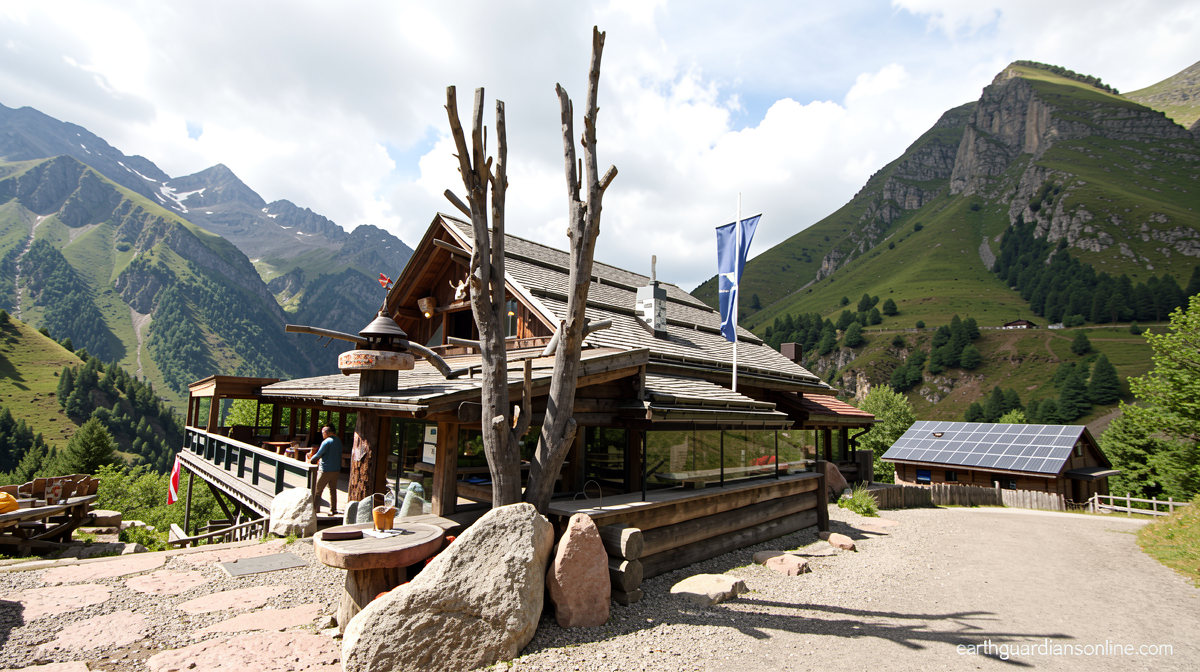
The epicenter of the craze is a rifugio, a mountain refuge tucked into the Val di Fassa valley in northeastern Italy. What was once a quiet waypoint for hikers traversing remote ridgelines now draws crowds of visitors who have followed food bloggers and social-media influencers to its doorstep. Locals, accustomed to solitude and the slow rhythm of mountain life, have watched their peaceful surroundings flood with people whose entire itinerary revolves around a single baked good. The phenomenon underscores how algorithmic recommendation can transform an unassuming rural establishment into a destination in a matter of weeks.
The pastry’s cultural weight is not entirely new. Stanley Tucci, during an episode of the streaming series “Searching for Italy,” sampled regional baked goods without triggering any local alarm — a reminder that the same items have been enjoyed for generations by residents who simply did not need a viral video to appreciate them.
The First Foreign Haenyeo License
On Jeju Island, South Korea’s largest island off the southwestern coast, a centuries-old maritime tradition is undergoing a quiet transformation. The haenyeo — women who dive without breathing apparatus to harvest shellfish, seaweed, and small fish — have worked the cold waters around Jeju for generations. Their communities operate as tight-knit collectives: members eat together, dive together, bathe together, and watch over one another’s safety in the water.
Kylie Genter, an American woman residing in Youngrak-ri, a small coastal village on the island’s far western shore, has become the first non-Korean citizen to earn an official haenyeo diving license. The distinction places her in rare company and carries obligations she does not take lightly.
“As a foreigner doing this, especially as a person who is not a Korean citizen, it’s a big responsibility,” Genter said.
The haenyeo tradition was inscribed on UNESCO’s Representative List of the Intangible Cultural Heritage of Humanity in 2016, recognized as a living practice tied to gender roles, marine ecology, and communal identity on Jeju. Genter’s entry into the practice — as an outsider granted formal standing — highlights both the tradition’s openness and the weight of representing it faithfully.
Lake Ontario Gets a New Name, and Travelers Take Note
In the midst of another round of trade friction between Washington and Ottawa, President Trump signed an executive order renaming Lake Ontario to Lake America. The gesture, widely read as a provocation aimed at Canada, has fueled speculation that a new wave of Canadian travelers will steer clear of the United States altogether. The lake, one of the five Great Lakes, borders four states and a province; its name change carries no practical effect on shipping or geography, but its symbolic sting lands squarely in the cross-border tourism corridor.
The ripple effects are already visible. A stretch of Florida coastline long marketed as “Little Quebec” — a nod to the French-Canadian heritage of its early settlers — has experienced a measurable drop in visitors as tariffs and political friction sour the mood between the two neighbors. Canadian snowbirds, who traditionally spend winters in southern US states, have increasingly booked alternative destinations for the coming cold months.
New Haven, Connecticut: No. 2 on the 2026 Town List
Continuing a countdown of America’s most compelling small cities for 2026, New Haven takes the No. 2 slot. The Connecticut city occupies a peculiar dual identity. On one hand, it is a textbook New England colonial settlement: a street grid laid out in the 17th century, a central town green where civic life still gathers, and a built environment that has changed little in its bones for three centuries. On the other, it is the global academic home of Yale University, which injects a restless, cosmopolitan energy into every block.
Visitors can spend an afternoon in the Yale University Art Gallery — home to works by Auguste Rodin, Vincent van Gogh, and J.M.W. Turner — without paying admission. The same afternoon might end at one of the city’s historic hamburger joints, a food truck parked near the green, a taco stand, or an Ethiopian restaurant serving doro wot and injera. Pizza, too, has become a local obsession, with several pizzerias drawing lines that rival those forming outside the Dolomite rifugio.
Nathan Hale, the Revolutionary War officer who graduated from Yale and reportedly told his captors that he might regret having but one life to give, would perhaps recognize the sentiment of a traveler who regrets having only one weekend to spend in New Haven. The full list so far reads: Roanoke, Virginia (No. 10); Lawrence, Kansas (No. 9); Iowa City, Iowa (No. 8); Juneau, Alaska (No. 7); Burlington, Vermont (No. 6); Fort Collins, Colorado (No. 5); Bethlehem, Pennsylvania (No. 4); and Greenville, South Carolina (No. 3). The No. 1 selection arrives next week.
Quick Hits From Around the World
Britain’s Gen Z cohort is quietly abandoning the post-work pub ritual. Surveys and anecdotal reporting suggest young Brits are now as likely to lace up running shoes and head for a track as they are to order a pint. The shift reflects broader changes in fitness culture, social-media aesthetics, and a generational pivot away from alcohol-centered socializing.
In Taiwan’s mountainous interior, a search-and-rescue volunteer known as the “Beast Runner” continues tracking missing hikers long after organized search teams have withdrawn. He follows faint clues — a discarded glove, a snapped branch, a trail of footprints in mud — into terrain where most would have turned back.
A Bangkok restaurant helmed by a celebrity chef has instituted a “food first, not phones” policy, inviting diners to set screens aside and engage fully with the plate in front of them. In a city where food photography is practically a civic duty, the rule is a deliberate provocation.
Elsewhere in the week’s news: a measles surge in a region with lapsed vaccination coverage, a tragic flood that claimed lives and displaced communities, and the passing of a figure whose legend outlives the headlines. Each story, brief as it appears here, carries its own gravity.
Related Reading
Frequently Asked Questions
What is The Italian pastry that s caused?
The Italian pastry that s caused is the main topic of this guide. The article explains the context, practical details, and next steps readers should understand.
Why does The Italian pastry that s caused matter?
The Italian pastry that s caused matters because readers are looking for a useful answer, not just a short summary. Good content should match search intent and help them decide what to do next.