Helicopter chases, lasers and a rented RV: Inside the hunt for suspected Chinese drone spies over US military bases

Daftar Isi
When Cheap Drones Turned a Desert Missile Range Into a Counterintelligence Puzzle
Earthguardiansonline.com – The sky above American military installations has become a crowded, contested space. As consumer-grade quadcoptors have dropped in price and become nearly effortless to fly, the line between a weekend hobbyist circling a landmark and a foreign operative mapping a weapons test site has grown dangerously thin. For counterintelligence professionals across the Department of Defense, the Department of Homeland Security, and the FBI, the result is a persistent headache: how do you distinguish a tourist with a $300 camera drone from someone conducting what one senior official called “nuisance surveillance” on behalf of a rival power? The answer, in most cases, remains elusive. But in the spring of 2025, near a classified Army missile-testing complex in New Mexico, officials finally managed to close the loop on one such episode — and what they uncovered pointed toward a coordinated operation involving multiple Chinese nationals, a rented recreational vehicle, and a woman who had disembarked from a cruise ship in Texas.
A Five-Day Stalk in the Dust
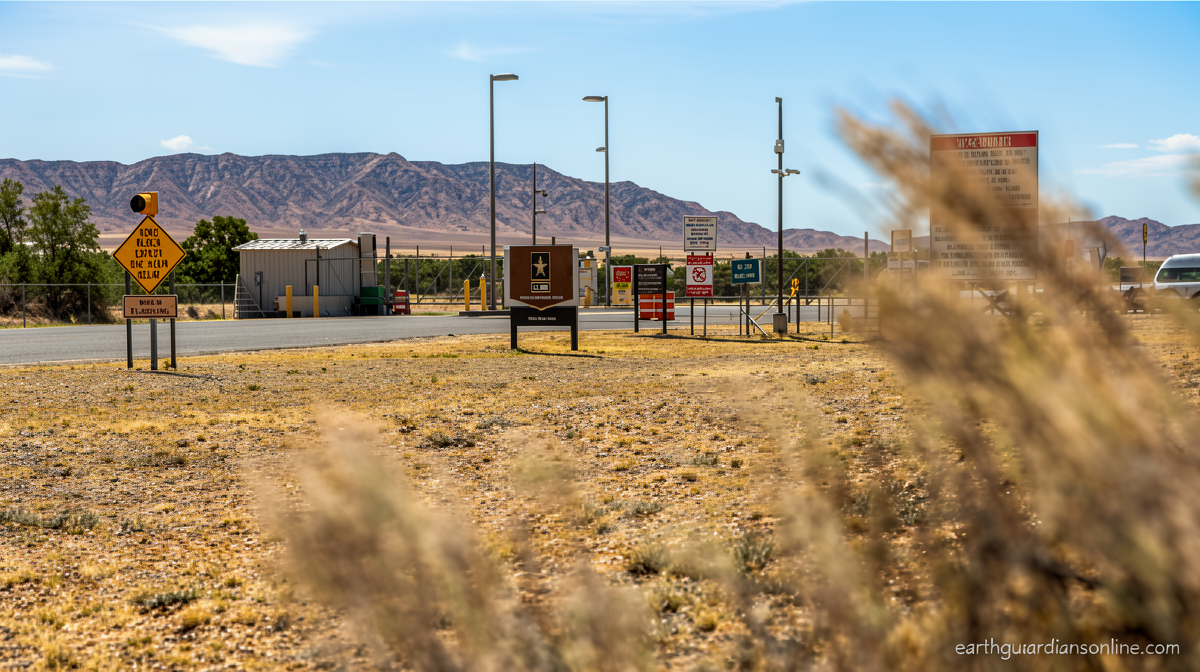
White Sands Missile Range, nestled in the high desert of central New Mexico, has long served as a proving ground for Army munitions. Its airspace is restricted, and repeated sightings of small unmanned aircraft over the range had already raised alarms. In the spring of 2025, a quadcopter-style drone began appearing in patterns that strongly suggested systematic reconnaissance of the facility. Rather than chase it again, a joint task force assembled personnel from the Army, the FBI, the Department of Homeland Security, and even the small Pentagon office tasked with tracking unidentified aerial phenomena. For approximately five days — through dust storms and deteriorating weather — the team tracked the drone’s flight paths, gathered signals intelligence, and worked to identify its operator.
The operation culminated when electronic-warfare equipment was used to force the drone down into a parking lot on the base. Per protocol, the first priority was confirming the craft carried no explosives. Only then did attention shift to what was happening on the ground nearby.
The RV, the Cruise-Ship Passenger, and the Link
Parked within sight of the landing site was a rented Mercedes-Benz recreational vehicle occupied by a small group of Chinese nationals. According to two sources familiar with the matter, the group had flown into New York, collected the RV, driven cross-country to Las Vegas to pick up a third companion, and then headed south in a direct line toward White Sands. A separate individual — a Chinese woman — had arrived in Texas aboard a cruise ship, rented a personal vehicle, and driven to White Sands National Park, where she remained parked behind the park’s gates after closing hours.
Officials monitored both vehicles, attempting to determine how they related to one another and to the drone itself. The connection was confirmed when identifying information tied to the woman was discovered inside the RV. The FBI subsequently informed military and CBP personnel that the individuals were believed to have ties to Chinese intelligence services. The RV occupants were collected by military officials near the base and handed to federal authorities. The woman at the park was issued a citation and released by the Department of the Interior. What became of any of them afterward was not publicly disclosed.
The Earlier Chase That Ended at the Border
The spring 2025 operation was not the first time a drone had drawn attention over the same range. In the fall of 2024, a similar craft flew a comparable pattern above the facility. US Customs and Border Protection agents mounted a pursuit of roughly 35 miles, deploying helicopters and their own drones to keep visual contact. A former official described the aerial footage as “absolutely beautiful video.” The chase ended when the drone crossed into Mexican airspace, beyond CBP’s jurisdiction, and the agents turned back. The operator was never identified, and the purpose of the flight remained unknown.
That earlier failure appears to have shaped the spring 2025 response. Instead of pursuing the aircraft into foreign territory, officials waited, studied its behavior, and used electronic means to bring it down on their own turf.
Denials, Silence, and a Broader Problem
The Army and the FBI did not respond to requests for comment before publication. CBP declined to discuss the specific episode, citing its standing policy of not commenting on reported airspace incursions. At the Chinese Embassy, a spokesperson dismissed the episode outright:
“The false narrative regarding China engaging in espionage activities is entirely devoid of factual basis or evidence, consisting of nothing more than baseless speculation and sensationalist hype.”
The White Sands episode is one thread in a much larger tapestry. Drones now buzz over bases, ports, and government compounds across the country, flown by hobbyists, by cartels ferrying packages to secondary destinations, by tourists, and — in cases that counterintelligence officials suspect — by foreign agents conducting low-level surveillance. The proliferation of inexpensive, easy-to-fly unmanned aircraft has made it straightforward for an ordinary person to carry out what looks like systematic drone observation, while making it extraordinarily difficult for the US government to detect, track, and deter such activity in real time.
Current and former officials describe the investigative process as heavily reliant on instinct and inference. Because the operational links between a civilian pilot and a foreign intelligence service are often deliberately obscured, prosecutions tend to be modest — typically a charge for operating a drone in restricted airspace — rather than sweeping espionage cases. China, these officials believe, pressures or incentivizes ordinary civilians to conduct what one described as “nuisance surveillance” over a range of military targets, some of them highly sensitive. Until the government develops faster, more integrated detection and attribution capabilities, the desert skies above places like White Sands will continue to present a puzzle that is easy to create and very hard to solve.
Related Reading
Frequently Asked Questions
What is Helicopter chases lasers and a rented?
Helicopter chases lasers and a rented is the main topic of this guide. The article explains the context, practical details, and next steps readers should understand.
Why does Helicopter chases lasers and a rented matter?
Helicopter chases lasers and a rented matters because readers are looking for a useful answer, not just a short summary. Good content should match search intent and help them decide what to do next.