Why Saudi Arabia has few options in its conflict with the Houthis

Daftar Isi
Saudi Arabia Faces Narrow Choices as Houthi Pressure Builds
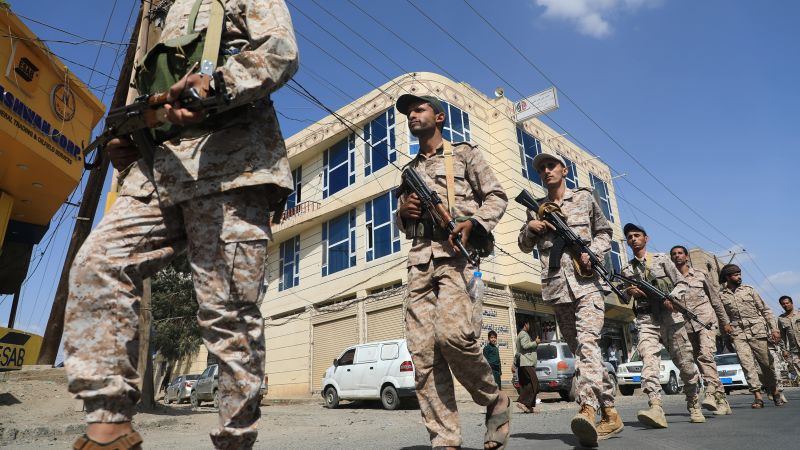
Earthguardiansonline.com – Saudi Arabia is confronting a rapidly worsening security challenge from Yemen’s Iran-backed Houthi movement, with recent territorial gains and attacks on vital infrastructure raising the prospect of a broader confrontation. Riyadh has signaled that it seeks to avoid a full-scale war, yet the Houthis’ increasingly assertive posture is reducing the kingdom’s room to maneuver.
The immediate pressure has intensified along one of the world’s most important maritime corridors. This week, the Houthis took Perim Island at the entrance to the Red Sea and also captured the port town of Mocha. The moves advance the group’s effort to dominate areas around the Bab al-Mandeb strait, a critical passage for global energy shipments and commercial trade.
At roughly the same time, Saudi Arabia’s major East-West oil pipeline was shut after a drone attack originating in Iraq. Responsibility has not been claimed. President Donald Trump blamed Tehran, while Iran-linked proxy groups are known to operate inside Iraq.
The pipeline has become more important because the Iran war has effectively closed the Strait of Hormuz. Saudi Arabia has used the East-West route to redirect about 5 million barrels of oil each day that otherwise would have moved through the Persian Gulf toward waiting tankers. An attack on that alternative route highlights how the conflict is reaching beyond Yemen’s borders and placing Saudi energy exports under added strain.
A threat Saudi Arabia had anticipated
Saudi officials had already expressed concern that Iraqi militias could coordinate with the Houthis in attacks against the kingdom. The latest developments appear to reinforce fears of a campaign designed to strike Saudi Arabia from several directions while the Houthis expand their influence on Yemen’s coast.
Mohammed Al-Basha, a Yemen specialist and risk adviser based in Washington, DC, said the prospect of a major Saudi response is growing.
“At this point they don’t have an option,”
Al-Basha said signs were increasingly pointing toward substantial retaliation by Saudi Arabia. Such a response, however, would carry serious risks. The kingdom has more wealth and a better-equipped military than the Houthi movement, but years of conflict have shown that conventional military superiority does not guarantee a swift result in Yemen.
The Houthis have repeatedly proved difficult to remove from territory they hold. Though frequently portrayed by Western governments and some Gulf states as a loosely organized Iranian proxy force, the group has steadily strengthened its military capabilities and adapted its battlefield methods over many years.
The Houthis’ goals extend beyond Iran
Iran has provided the Houthis with weapons, training and influence, but the group also pursues its own political and territorial objectives. Its core demand remains the lifting of Saudi efforts to isolate Houthi-controlled northern Yemen through travel restrictions and an economic blockade.
Nasr al-Din Amer, who leads the Houthi-run Saba state news agency, said Friday that the movement would keep applying pressure to Saudi Arabia until the blockade ended.
“pressuring” Saudi Arabia until they “break the siege unjustly imposed by the Saudi enemy for 12 years”
The statement suggests that the Houthis intend to continue escalating rather than settle for their recent gains. Their regional profile also rose after they launched strikes against Israel following the Gaza war triggered by the Hamas-led October 7 attack on Israel. That visibility has helped the group gain support among parts of the Middle East, while also placing it more firmly within the region’s wider network of conflicts.
The cost of escalation
Saudi Arabia’s central dilemma is that a strong military answer could satisfy the need to deter further attacks but might also create an open-ended conflict. Cinzia Bianco, a visiting fellow at the European Council on Foreign Relations, described Saudi options as severely limited.
One path would be for Riyadh to intensify its military campaign. But a decision to commit fully could revive the kind of grinding war that devastated Yemen for years, with no clear assurance that Saudi Arabia could force the Houthis from their strongholds or prevent future missile and drone attacks.
Yemen’s conflict began its current phase in 2014, when the Houthis seized the capital, Sanaa, and forced the internationally recognized government into exile. Saudi Arabia launched a military intervention the next year in an attempt to remove the rebels. It has continued supporting the internationally recognized government while maintaining a blockade that has severely affected Houthi-held parts of the country.
The humanitarian consequences have been immense. Yemen’s prolonged civil war has produced what has been described as the world’s worst humanitarian crisis, with about 22 million people — around half the country’s population — requiring humanitarian assistance. A renewed all-out war would threaten to deepen that suffering while further damaging civilian infrastructure and economic life.
A regional conflict with wider consequences
Any direct Saudi-Houthi war would be difficult to confine to Yemen. Iran’s backing for the rebels means a major Saudi escalation could draw Tehran more deeply into the crisis, particularly as Iran has been at war with the United States since February.
For Saudi Arabia, the decision is therefore not simply whether to respond to attacks on its territory and energy facilities. It is whether retaliation can restore deterrence without turning Yemen into another front in the broader confrontation involving Washington, Tehran and their regional partners.
Riyadh’s restraint so far has prompted questions about its next move, especially after the Houthis’ territorial advance and the pipeline attack. But the longer the group maintains momentum, the more difficult it may become for Saudi Arabia to preserve a limited response. The coming days could determine whether the kingdom continues trying to contain the crisis or is pulled back toward a far wider war.
Related Reading
Frequently Asked Questions
What is Why Saudi Arabia has few options?
Why Saudi Arabia has few options is the main topic of this guide. The article explains the context, practical details, and next steps readers should understand.
Why does Why Saudi Arabia has few options matter?
Why Saudi Arabia has few options matters because readers are looking for a useful answer, not just a short summary. Good content should match search intent and help them decide what to do next.