Deadly US strike on Iran school may have been a war crime, UN report finds

Daftar Isi
UN Inquiry Raises War-Crime Concerns Over Deadly US Strikes in Iran
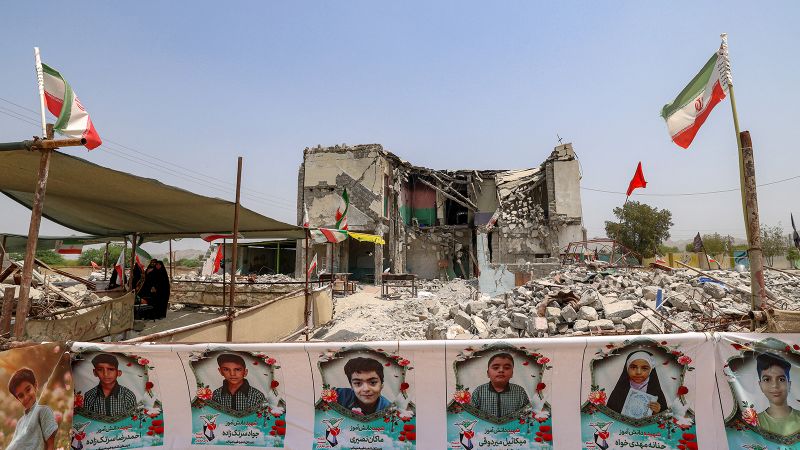
Earthguardiansonline.com – A United Nations investigation has found reasonable grounds to believe that two US attacks in southern Iran at the start of the war, including a strike on an elementary school, may constitute war crimes.
The February 28 attack on the Shajareh Tayyiba school in Minab killed at least 156 people, Iranian officials said. The dead included 120 children and 26 teachers. Although casualty figures have varied slightly, the incident ranks among the most severe civilian-loss events linked to US military action in recent history.
Investigators also reviewed a separate strike carried out that day in Lamerd, another southern Iranian city. That attack hit a sports center and nearby homes, killing 22 civilians, the UN mission said.
“[Investigators] found reasonable grounds to believe the United States committed the war crime of launching indiscriminate attacks resulting in the loss of life or injury to civilians or damage to civilian objects.”
The assessment came from the UN Independent International Fact-Finding Mission, whose findings are due to be presented to the UN Human Rights Council. Its work drew on satellite images, photographs, videos, material supplied by credible organizations and specialists, and dozens of interviews conducted inside and outside Iran.
Questions Over Intelligence Used for the School Strike
The inquiry focused closely on how the Minab school became a target. Preliminary findings from a separate internal US military review indicated that US Central Command developed strike coordinates using outdated Defense Intelligence Agency material while targeting a neighboring Islamic Revolutionary Guard Corps naval base.
Satellite imagery from 2013 showed the school and the IRGC facility had previously been part of one compound. By 2016, however, a fence separated the school from the rest of the base, and the school had its own entrance. Images captured in December 2025 showed dozens of people gathered in the schoolyard, apparently engaged in play.
“No information indicates that the school was used for military purposes at the time.”
The UN investigators concluded that the available evidence did not show the school had a military role when it was hit. They said the United States had not met its duty to take all feasible steps to confirm that the target was a military objective before the attack.
Distinguishing between military and civilian sites is a central obligation under the laws of war. Schools, homes, sports facilities and other civilian locations are protected unless they are being used in a manner that makes them lawful military targets. Even where a military objective exists nearby, forces must take feasible precautions to reduce harm to civilians.
US authorities have not yet released the results of their own review. The Pentagon declined substantive comment, saying an investigation remained underway and that there was nothing further to announce. The internal process has reportedly remained unresolved for months.
A State Department official rejected the UN report’s credibility on behalf of the Trump administration. The official also noted that President Donald Trump withdrew the United States from the UN Human Rights Council in February 2025, shortly after beginning his term, while accusing the body of antisemitism.
Trump initially suggested Iran could have been responsible for the school strike. When asked why members of his administration had not publicly supported that assertion, he said:
“Because I just don’t know enough about it.”
Access Requests and Broader Findings on Iran
The fact-finding mission said it sought unrestricted access to Iran but did not receive permission from Iranian authorities. Iran responded to roughly one-quarter of the information requests made by investigators. Requests for meetings with US officials, as well as information from Israel’s government, did not receive responses.
The report examined more than the US attacks. It also reviewed Iran’s suppression of anti-government demonstrations during late 2025 and early 2026, before the war with the United States began.
Investigators found that the crackdown killed thousands of people and involved torture and enforced disappearances of detainees, with families left without notice of what had happened to their relatives. The mission characterized the campaign as a widespread and systematic assault on civilians.
“These gross violations amount to crimes against humanity.”
Iran’s Ministry of Foreign Affairs was contacted for comment on the findings.
What the Findings Mean
The UN mission’s conclusions do not themselves amount to a criminal conviction. They represent an investigative assessment intended for consideration by the Human Rights Council and potentially by other bodies examining accountability for violations during the conflict.
The United States is not a member of the International Criminal Court, which investigates allegations of war crimes and crimes against humanity. However, US law and military rules also prohibit unlawful attacks and require armed forces to comply with the law of armed conflict.
The Minab case places particular attention on the reliability of intelligence used in targeting decisions. If outdated information led planners to treat a school as part of a nearby military compound despite later evidence of separation, the episode could raise questions about intelligence review procedures, target verification and command oversight.
For survivors and families of those killed, the continued absence of a public US investigation leaves major questions unanswered: why the school was selected, what information was available before the strike, whether warnings about old imagery were considered, and what accountability may follow if failures are confirmed.
The UN findings also underscore the wider civilian toll of the conflict. Its investigation describes alleged violations by both the United States and Iranian authorities, while emphasizing that civilian protections remain binding even amid escalating warfare and domestic unrest.
Related Reading
Frequently Asked Questions
What is Deadly US strike on Iran school?
Deadly US strike on Iran school is the main topic of this guide. The article explains the context, practical details, and next steps readers should understand.
Why does Deadly US strike on Iran school matter?
Deadly US strike on Iran school matters because readers are looking for a useful answer, not just a short summary. Good content should match search intent and help them decide what to do next.