CNN, MS NOW and Politico denied access to White House after Trump ‘ban’

Daftar Isi
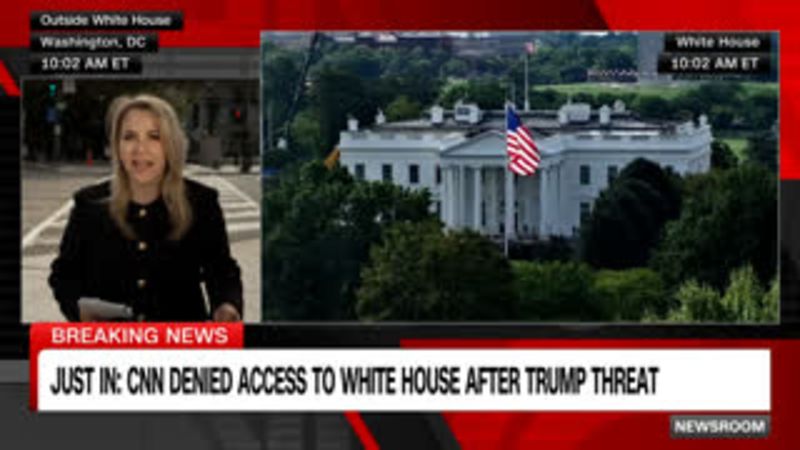
White House denies access to journalists after Trump announces ban on three news organizations
Earthguardiansonline.com – Several journalists were turned away from the White House on Saturday after President Donald Trump declared that CNN, MS NOW and Politico were barred from the premises, escalating a confrontation that First Amendment advocates say raises serious constitutional concerns.
CNN correspondent Betsy Klein arrived Saturday morning and was told that her White House press credentials had been deactivated. A Politico reporter, along with an MS NOW reporter and photographer, also could not enter the grounds to begin their workday.
The developments came less than a day after Trump said the three organizations were banned “effective immediately,” repeating his frequent criticism of unfavorable coverage as “fake” news. The announcement appeared to surprise some members of the White House staff, and journalists from the affected outlets continued working on the campus through Friday evening.
Credentials disabled at the gate
Klein said a Secret Service agent informed her that her access card no longer worked but did not explain the decision.
“I asked him if he could provide an explanation as to why it had been deactivated,” Klein said during an on-air appearance with CNN’s Kasie Hunt. “He said he had no further information. I asked him once more if he had any more details he could share with me, and he said that I should be referred to the White House Press Office.”
MS NOW correspondent Akayla Gardner described a similar encounter outside the White House perimeter. She said an officer requested her badge and told her that it had been disabled.
“He said that it was above him,” Gardner said after asking why she was unable to enter.
Gardner said an MS NOW photographer was also denied access. An MS NOW producer, however, was able to enter after her badge scanned successfully, illustrating apparent inconsistency in how the restriction was being enforced.
Networks signal legal response
CNN, MS NOW and Politico indicated that they would pursue legal options to protect their journalists’ access and their ability to cover the federal government. The dispute is not simply about workplace credentials: White House access enables reporters to attend briefings, witness events, question officials and gather information that informs the public.
CNN said its reporting would continue despite efforts to limit entry to government facilities.
“Early today, CNN journalists were denied access to the White House grounds. CNN’s mission to report on the U.S. government will continue regardless of any attempts to restrict physical access to the White House and other government buildings, or any other attempts to impede our journalism,” the network said.
“We have a right under the U.S. Constitution to do our reporting without hindrance or interference from the government and this ban is an illegal assault on this fundamental right.”
MS NOW said it was prepared to defend both its staff and the broader principle of an independent press.
“MS NOW intends to take any and all steps necessary to defend our First Amendment rights and the essential role of independent journalism in our democracy,” the network said. “We stand firmly behind our anchors, our reporters, and our newsroom. We will continue to report on the President, the administration, and the issues that impact the American people.”
First Amendment questions
Legal and press-freedom specialists argue that the central issue is whether a president may exclude particular news organizations because of dissatisfaction with their coverage. The White House may establish security procedures and credentialing rules, but advocates say those rules cannot be used as punishment for editorial viewpoints.
Bruce D. Brown, president of the Reporters Committee for Freedom of the Press, said Friday that such a move would conflict directly with constitutional protections.
“A ban like this would be flatly unconstitutional,” Brown said.
“The First Amendment is clear that once the White House invites in some journalists, it can’t ban others because it doesn’t like their reporting. This is textbook viewpoint discrimination and will be quickly struck down by the courts if challenged.”
The distinction matters because access restrictions can affect more than the individual reporters who are denied entry. Press pools and White House correspondents help distribute information to audiences nationwide, including people who do not follow a particular outlet. Limiting access based on a newsroom’s perceived political viewpoint could therefore narrow the range of questions directed at officials and the perspectives available to the public.
Clayton Weimers, executive director of Reporters Without Borders North America, said the conflict reflects an effort to control coverage rather than a legitimate press-access policy.
“The president is once again spewing lies about ‘fake news’ to try to control who covers him and where,” Weimers said.
“Press access is not a privilege for journalists. It’s a right to ensure the American people can be independently informed.”
A familiar political strategy with new consequences
Trump has attacked major news organizations throughout his political career, frequently using criticism of the media to energize supporters at MAGA rallies. Confronting reporters and portraying hostile coverage as illegitimate has remained a prominent feature of his messaging for roughly a decade.
During his second term, however, criticism has increasingly been accompanied by concrete attempts to constrain press access. That approach has drawn attention because the White House has also presented itself as exceptionally transparent.
The ban announcement arrived during a difficult political period for Trump. He has faced growing pressure over the unpopular war in Iran, higher gasoline prices and persistent concern about household costs as the midterm elections approach. Some observers viewed the clash with the press as an effort to redirect attention from those issues.
For now, the practical effects remain uncertain. Scores of journalists work from the White House campus on a typical day, and Saturday’s mixed results for MS NOW personnel suggested that implementation was still uneven. But the removal of credentials from named reporters quickly transformed Trump’s declaration from rhetoric into a tangible barrier to newsgathering.
Any court challenge is likely to focus on whether the administration can justify the exclusions under neutral security or operational standards, rather than treating particular outlets differently because of the substance of their reporting. The result could help define how far a White House may go in managing press access while remaining bound by constitutional limits.
Related Reading
Frequently Asked Questions
What is CNN MS NOW and Politico denied?
CNN MS NOW and Politico denied is the main topic of this guide. The article explains the context, practical details, and next steps readers should understand.
Why does CNN MS NOW and Politico denied matter?
CNN MS NOW and Politico denied matters because readers are looking for a useful answer, not just a short summary. Good content should match search intent and help them decide what to do next.