At UN, Russia and Germany’s top diplomats hold first talks since invasion of Ukraine

Daftar Isi
Russian and German Foreign Ministers Meet at UN as Ukraine War Tensions Persist
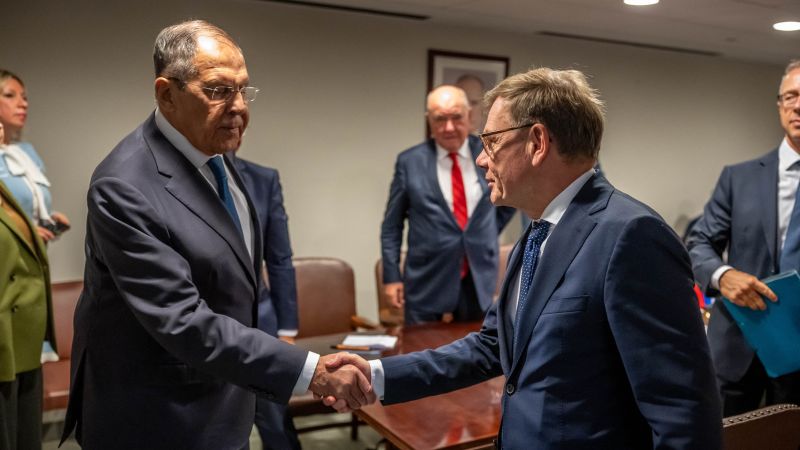
Earthguardiansonline.com – Russia’s and Germany’s foreign ministers held a rare face-to-face meeting in New York on Saturday, marking their first direct talks since before Moscow launched its full-scale invasion of Ukraine in 2022.
The discussion took place alongside the United Nations General Assembly and underscored the strained state of relations between Berlin and Moscow. Germany has remained one of Ukraine’s key European partners throughout the war, while diplomatic contact with Russia has been limited.
Russian Foreign Minister Sergey Lavrov and German Foreign Minister Johann Wadephul addressed both their countries’ relationship and the conflict in Ukraine. Their meeting came after tensions rose further following an August drone incident at Leipzig/Halle Airport in eastern Germany.
Grain shipments and Black Sea security
A central issue in the conversation was the safety of grain exports through the Black Sea. Wadephul urged Lavrov to support efforts aimed at restoring dependable shipping routes, particularly because disruptions can affect countries facing food shortages.
A member of the German delegation said Wadephul pressed Russia to do everything it could to secure an arrangement on Black Sea grain exports. The German minister stressed the urgency of progress, with particular concern for countries in the Global South that rely on stable food supplies.
“Time is of the essence: given the food shortages in many countries — particularly in the Global South — all parties must be willing to engage constructively,”
Wadephul also indicated that a practical agreement could create room for additional steps. Shipping and energy infrastructure have become important points of discussion as attacks on vessels, ports and related facilities have sharply reduced trade through the Black Sea.
Lavrov said Russia had discussed proposals for safer navigation with India, Egypt and Turkey. He suggested that bilateral arrangements between Russia and individual countries could be part of a future framework for maritime security.
“There is a need for separate discussions with the Ukrainians, and not in the language of requests, but rather demands,”
Lavrov blamed Ukraine for attacks on shipping, while Ukraine has said it remains open to agreements and has placed responsibility for the conflict’s wider consequences on Russia and its invasion.
Little sign of a diplomatic thaw
Despite the meeting, Lavrov offered no indication that the exchange had changed Moscow’s view of Germany’s public position. At a news conference, he said the German minister had not provided information beyond Berlin’s existing statements.
“I told him that frankly … you could just have called me and said: ‘read my statement’,”
The remark illustrated how limited expectations remain for direct engagement between the two governments. The ministers nevertheless used the opportunity to set out their positions personally at a time when diplomatic efforts over Ukraine, maritime trade and energy security continue.
Wadephul later informed European partners that he had used the meeting to repeat Germany’s stance on the war and to demand a full and immediate cease-fire. His message highlighted grain exports and energy infrastructure as the most pressing areas for action.
For Germany, the Black Sea issue is connected to more than commercial shipping. Interruptions in grain deliveries can contribute to pressure on food markets in vulnerable regions, while attacks on ports and energy assets deepen the humanitarian and economic effects of the war.
Germany raises concerns over alleged hybrid attacks
The conversation also addressed the worsening security dispute between Russia and Germany. Berlin said earlier this month that it had determined Russia was responsible for the attempted drone attack connected to Leipzig/Halle Airport. Germany responded by shutting a consulate and a Russian cultural center in Berlin.
Russia’s embassy in Berlin rejected the accusations, calling them a “fabricated provocation” and describing them as part of “a new wave of anti-Russian hysteria in Germany.”
Wadephul used the UN meeting to call on Russia to move away from what Germany views as an escalating course toward Germany, Europe and NATO. He also said that incidents such as the attempted Leipzig attack, along with other suspected hybrid operations, would not weaken Berlin’s commitment to Ukraine.
The exchange in New York did not signal a broader restoration of relations between Moscow and Berlin. Instead, it showed that even amid deep hostility, limited dialogue may still be used to address urgent concerns such as a cease-fire, Black Sea shipping and the protection of vital infrastructure.
Related Reading
Frequently Asked Questions
What is At UN Russia and Germany s top?
At UN Russia and Germany s top is the main topic of this guide. The article explains the context, practical details, and next steps readers should understand.
Why does At UN Russia and Germany s top matter?
At UN Russia and Germany s top matters because readers are looking for a useful answer, not just a short summary. Good content should match search intent and help them decide what to do next.