One of Kash Patel’s deputies resigns from the FBI

Daftar Isi
Andrew Bailey Leaves FBI Leadership Role After Less Than a Year
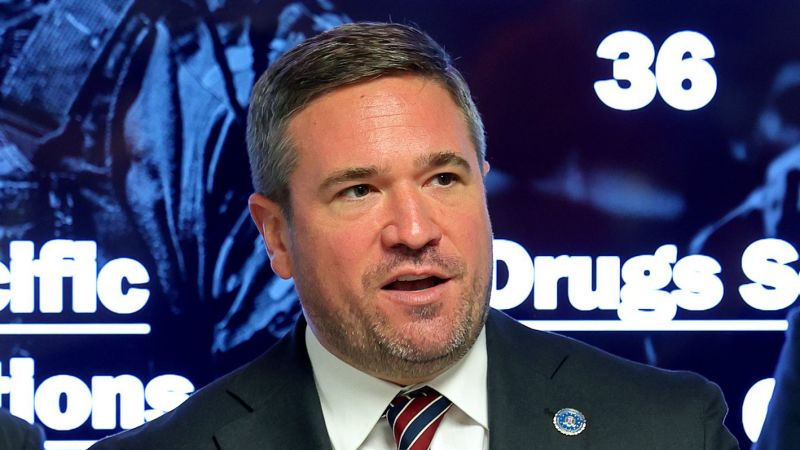
Earthguardiansonline.com – Andrew Bailey, the former Missouri attorney general who joined the FBI in an unconventional senior leadership arrangement, has told agency employees that he is stepping down to spend more time with his family. His departure removes one of Director Kash Patel’s “co-deputy” leaders at a moment when the bureau’s management structure remains in transition.
Bailey informed the workforce of his decision early Monday. He later confirmed on social media that he plans to return to Missouri, describing his time at the agency as a period that produced major progress toward the administration’s public-safety priorities.
“Historic results in our mission to Make America Safe Again.”
Bailey arrived at the FBI last year after serving as Missouri’s attorney general. His hiring was notable because the bureau had traditionally relied on a single career FBI official as deputy director, with responsibility for the day-to-day operation of an organization employing roughly 38,000 people.
An Unusual Co-Deputy Arrangement
The co-deputy model emerged during a period of tension surrounding the bureau’s leadership. Bailey was brought in to share deputy-level responsibilities with Dan Bongino, the conservative podcaster who had joined the FBI leadership team and later left the agency.
Bongino’s tenure was marked by a disagreement with former Attorney General Pam Bondi over the handling of records connected to the investigation of convicted sex offender Jeffrey Epstein. He resigned earlier this year and returned to podcasting.
A career senior FBI agent subsequently took Bongino’s place, but Bailey remained part of the co-deputy director structure. With Bailey now departing, it is uncertain whether the FBI will retain that model or restore the long-standing practice of having one career agent serve as deputy director.
The question carries practical importance for the bureau. The deputy director role has historically been central to internal management, including oversight of the FBI’s broad workforce and its daily operations. Bailey’s portfolio included election security matters, placing him in an area that attracts intense public and political attention.
Speculation About a Larger Role
Inside the bureau, Bailey had been viewed by some as a potential successor to Patel. That possibility never came to pass. His exit instead follows a period in which his relationship with the director reportedly became strained soon after he joined the FBI.
One person familiar with Bailey’s departure said the two men were not close after their relationship cooled. Still, Bailey used his resignation announcement to express support for Patel’s continued leadership of the agency.
“I am confident Director Patel will continue to reform the FBI, combat violent crime” and “defend the homeland.”
Patel publicly responded by thanking Bailey for his work and for carrying out the Trump administration’s mandates.
Bailey Was Once Considered for Director
Bailey’s path to the FBI began before President Donald Trump’s second inauguration. He was among those considered to lead the bureau and met with Trump at Mar-a-Lago in 2024, around the same time Patel was being evaluated for the role.
Trump ultimately selected Patel. Bailey was later brought into the agency as a senior official rather than as director, creating a leadership arrangement that differed from the FBI’s traditional hierarchy.
The decision to place a former elected state official in a prominent FBI role also underscored the unusual character of the co-deputy structure. Career FBI agents have historically played a major role in the bureau’s operational leadership, particularly in the deputy director position.
Bailey’s resignation now leaves open several questions: whether his duties will be reassigned internally, whether the current career deputy will take on a more traditional role, and whether the bureau will continue using shared deputy-level authority. No public decision on the structure’s future was included in Bailey’s announcement.
What His Departure Means for the Bureau
For the FBI workforce, a leadership change can affect how responsibilities are distributed even when the agency’s core mission remains the same. The bureau’s work spans criminal investigations, counterterrorism, intelligence matters, cyber threats, public corruption cases and election-related security concerns. Senior managers help translate broad priorities into operational direction across field offices and headquarters divisions.
Bailey’s departure does not by itself establish a change in those responsibilities or in the FBI’s mission. It does, however, remove a key figure from a leadership experiment that had departed from a decades-old precedent.
His return to Missouri also closes a brief federal chapter for a Republican official whose name had once been considered for the FBI’s top job. The agency now faces a choice about whether its co-deputy approach was a temporary response to a turbulent period or a model it intends to preserve.
Related Reading
Frequently Asked Questions
What is One of Kash Patel s deputies?
One of Kash Patel s deputies is the main topic of this guide. The article explains the context, practical details, and next steps readers should understand.
Why does One of Kash Patel s deputies matter?
One of Kash Patel s deputies matters because readers are looking for a useful answer, not just a short summary. Good content should match search intent and help them decide what to do next.