It’s official: Trump’s midterm convention was a bust

Daftar Isi
Trump’s Texas Midterm Gathering Failed to Produce a Clear GOP Lift
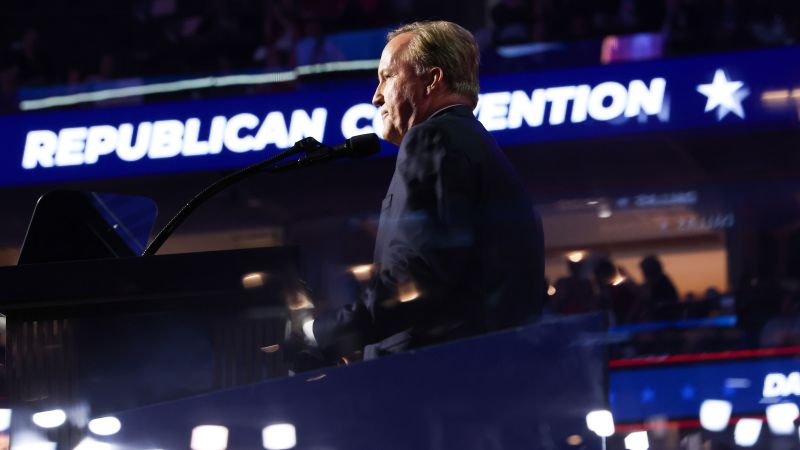
Earthguardiansonline.com – Republicans entered their unusual September gathering in Dallas hoping it would energize voters, strengthen their congressional prospects and showcase President Donald Trump’s influence heading into the midterms. Instead, the event now appears to have delivered little measurable benefit — and may have coincided with worsening numbers for the party.
The convention, held September 9 and 10 in Texas and informally branded “Trump-a-palooza,” was an unconventional political bet. Midterm conventions are rare, and this one put an especially heavy focus on Trump, a president with historically weak popularity ratings. Despite doubts about the approach, Republican officials moved ahead without public resistance.
Private remarks attributed to Texas Attorney General Ken Paxton, who is running for the Senate, suggest concern inside the party about the result. Paxton’s race was a major feature of the Dallas event, making him one of the candidates most likely to benefit if the convention had created momentum.
“So to be honest with you, the numbers — when we did that convention — it dropped our numbers,” Paxton said. “Everybody’s numbers dropped. Right now, yeah, not good.”
Paxton senior adviser Nick Maddux rejected the characterization of those remarks, calling the account “manipulated nonsense” intended to “create a story that doesn’t exist.” Maddux did not provide additional detail on why he believed the account was misleading.
Generic ballot movement favors Democrats
Available polling does not show the kind of post-convention boost that parties often seek from major political events. Presidential nominating conventions can sometimes create a temporary rise in support, particularly when they introduce candidates to a broad television audience or unify a divided party. The Texas event did not appear to generate a similar effect.
On the generic congressional ballot, which asks voters whether they would prefer an unnamed Republican or Democrat for Congress, the movement since early September has generally gone in Democrats’ direction. Major polling averages maintained by Nate Silver and FiftyPlusOne indicate that Democrats expanded their advantage by at least two points after September 9.
The shifts remain modest and fall within the uncertainty common to polling. Still, the pattern is notable because it offers no evidence that the Dallas convention reversed the GOP’s standing or produced a detectable Republican surge.
Several individual surveys reached a similar conclusion. Polls from CNN, NBC News and Fox News each found no change from their earlier results. A lack of movement is not necessarily a political disaster, but it undercuts the case for staging a high-profile national event designed to improve the party’s position.
One major survey, conducted by The New York Times and Siena College, found a better generic-ballot result for Republicans after the convention. Its previous comparable measure, however, dated to May, making it harder to isolate whether the September gathering caused the difference.
Enthusiasm remains a challenge
The convention also does not appear to have eliminated a significant motivation gap. In a Marist poll, 76% of Democrats said they cared a great deal about which party controls Congress. The same response came from 67% of Republicans.
That difference matters in a midterm campaign. Voters who feel the stakes most intensely are generally more likely to follow the campaign, participate in political activity and ultimately cast ballots. A party entering an election with a weaker level of urgency among its supporters may struggle even in places where its candidates have traditionally been competitive.
There are important limits to drawing a direct line between the convention and any single poll result. Many events can affect voter attitudes at once, and the changes in the available data are relatively small. The gathering also appears to have drawn limited attention beyond highly engaged political audiences, despite Trump’s claims of enormous ratings. If many voters did not watch, its practical impact may simply have been minimal.
But the lack of a clear benefit is especially striking in Texas, where the event was held and where Paxton was prominently featured. A home-state gathering centered in part on a Republican Senate candidate might reasonably have been expected to improve that candidate’s standing with conservative voters.
Paxton still faces difficult Texas numbers
Instead, recent polling indicates that Paxton’s problems have not disappeared. A ReconMR-Siena College survey conducted across the convention period and a Marist College poll taken last week both showed Democratic state Rep. James Talarico ahead by 6 points. The ReconMR-Siena result measured likely voters, while the Marist survey measured registered voters.
Those were Talarico’s largest leads during the general-election period. A Texas Southern University poll found a far narrower contest, with Talarico leading 47% to 46%, but it still placed the Democrat ahead.
Paxton’s personal ratings remain another obstacle. In the Siena poll, his favorability stood at 38%, compared with 55% unfavorable — a net rating 17 points below zero. Marist found him at 33% favorable and 54% unfavorable, leaving him 21 points underwater. The Texas Southern survey showed some improvement, although his net rating was still negative by more than 10 points.
Maddux argued that Paxton’s standing had improved since early September, saying that “every serious pollster will tell you that our numbers have improved since early September.” The competing polls illustrate the uncertainty surrounding a race that remains closely watched, but they do not show an unmistakable convention-driven turnaround.
Trump’s role may also have been complicated by his own treatment of Paxton during the event. Rather than exclusively promoting the candidate, Trump spent portions of the convention making disparaging comments about Paxton’s appearance, clothing and manner of speaking. Such moments can attract attention, but they do not necessarily reinforce the disciplined message a candidate needs in a difficult contest.
For Republicans, the broader lesson is less about one candidate than about the limits of political spectacle. A large convention can concentrate media attention and rally committed supporters, yet it cannot automatically solve weak favorability ratings, an enthusiasm shortfall or a deteriorating generic ballot. The Dallas gathering was meant to demonstrate Republican strength before the midterms. So far, the measurable political payoff has been difficult to find.
Related Reading
Frequently Asked Questions
What is It s official?
It s official is the main topic of this guide. The article explains the context, practical details, and next steps readers should understand.
Why does It s official matter?
It s official matters because readers are looking for a useful answer, not just a short summary. Good content should match search intent and help them decide what to do next.