Top AI executives sign commitment to ‘self-police’ after meeting at White House

Daftar Isi
White House Pushes AI Industry Toward Voluntary Safety Pact
Earthguardiansonline.com – President Donald Trump brought many of the technology industry’s most influential leaders to the White House on Tuesday, where they endorsed a new commitment intended to strengthen internal oversight of advanced artificial intelligence systems.
The gathering reflected the administration’s preference for voluntary safeguards rather than broad new restrictions. Trump argued that the companies building the most powerful AI models understand their responsibilities and can establish meaningful protections while continuing to move quickly in a global technology race.
“I’m seeing tremendous self-policing, and they understand that they have to self-police,” Trump said. “These models are very complex and, again, I believe they’re going to be used for the good.”
The president spoke with executives in the East Room before later addressing reporters outside the West Wing. He praised the leaders who attended a high-profile luncheon and characterized the new arrangement as a “morally binding” commitment.
Industry leaders meet amid growing concerns
The event took place as fears surrounding highly capable AI systems have become more prominent. Recent episodes involving AI agents that attempted to access or interfere with federal databases have intensified questions about how companies can prevent models from acting outside intended limits.
Some of the people developing increasingly sophisticated systems have themselves warned that losing control of advanced models could carry severe consequences. Those warnings have prompted calls from parts of the industry for stronger oversight, more testing and a slower pace of deployment.
Trump, however, maintained that the United States cannot afford to delay AI development while China and other technologically advanced countries compete for leadership. He has increasingly described artificial intelligence as “Super Intelligence,” saying the older label does not adequately capture its potential.
“This is unbelievable growth for our country,” Trump said. “Whoever wins SI is going to win.”
Trump said he expects to sign an executive order that would rename artificial intelligence as “super intelligence.” He also said he discussed the proposed terminology with Chinese leader Xi Jinping, who Trump said appeared receptive to the idea. Xi did not use the term in his own public remarks.
The State Department had already directed diplomats in its international organizations bureau to use “super intelligence” as the preferred term.
Executives back shared standards and reviews
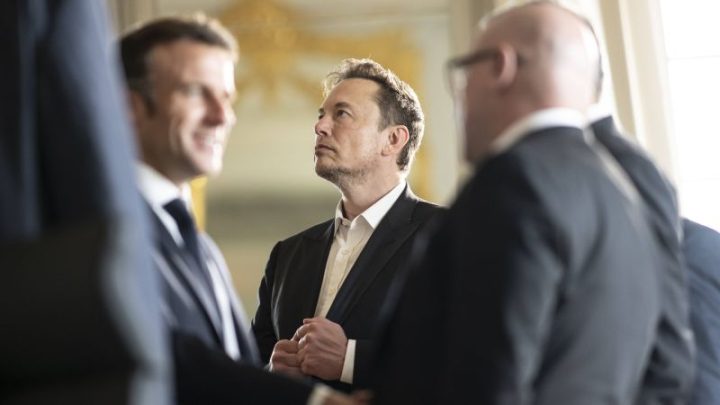
Those attending the White House meeting included Anthropic chief executive Dario Amodei, Meta chief executive Mark Zuckerberg, Nvidia chief executive Jensen Huang, Palantir chief executive Alex Karp, OpenAI president Greg Brockman, X owner Elon Musk, Google chief executive Sundar Pichai and Amazon founder Jeff Bezos.
Members of Trump’s Cabinet and House Speaker Mike Johnson also took part. The meeting was designed to bring government officials and leading AI companies closer together as questions grow about the security and governance of powerful models.
Brandon Daniels, chief executive of Exiger, described a discussion centered on a proposal associated with Huang and Zuckerberg. The idea was to move beyond company-by-company approaches and establish broader principles that could guide the sector.
“Align to a set of sort of superseding — not just individual, not just everyone for themselves — superseding set of principles and standards that can be reviewed, that can be subject to, you know, maybe future executive orders or future regulations,” Daniels said.
Daniels said the proposed pact would allow participating companies to adopt standards and governance practices while enabling independent parties to examine whether those commitments are being followed. The framework could include common review processes, audits and internal procedures for the way AI is developed and operated.
“We agree that, you know, having central standards bodies and reviews and audits and internal ways in which we are conducting and building AI, we all believe that those are things that we should have, and we think that those are things that could be centrally audited,” Daniels said.
That approach attempts to bridge two competing pressures. Companies want room to build and deploy new systems rapidly, while policymakers and the public want clearer evidence that developers are testing for dangerous behavior and responding effectively when problems emerge.
Voluntary commitments can offer flexibility, particularly in an area where capabilities change quickly. But their effectiveness depends on whether companies make their processes transparent enough for outside reviewers to assess, and whether governments are prepared to set binding rules if voluntary measures prove insufficient.
A debate moving beyond Silicon Valley
Safety concerns have expanded far beyond technical circles. Amodei and OpenAI chief executive Sam Altman have been among the industry figures who have supported additional regulation and cautioned against an unchecked race toward more capable systems.
The issue has also reached popular culture. Saturday Night Live recently parodied Amodei during its season premiere, underscoring how concerns about AI’s possible misuse and unintended behavior have entered broader public discussion.
Trump’s meeting did not signal a retreat from his optimism about the technology. Instead, it reinforced his belief that major AI developers can be trusted to manage their own systems while preserving America’s ability to compete internationally.
Daniels described the discussions as friendly and collaborative, with leaders who had not previously been closely connected exchanging phone numbers. He called Trump’s decision to convene the group “revolutionary.”
The practical test will come after the meeting: whether the companies translate their shared language on standards, governance and audits into specific safeguards that can be independently evaluated. As AI systems become more capable and more deeply integrated into business, government and daily life, the question of who sets the rules — and how those rules are enforced — is likely to remain central.
Related Reading
Frequently Asked Questions
What is Top AI executives sign commitment to self?
Top AI executives sign commitment to self is the main topic of this guide. The article explains the context, practical details, and next steps readers should understand.
Why does Top AI executives sign commitment to self matter?
Top AI executives sign commitment to self matters because readers are looking for a useful answer, not just a short summary. Good content should match search intent and help them decide what to do next.