Why Zelensky insists it’s not personal with Trump — even though it is

Daftar Isi
Zelensky Faces a War That Is Becoming More Personal in Washington
Earthguardiansonline.com – Ukraine’s struggle against Russia is increasingly shaped by a question that would once have seemed extraordinary: whether Washington is still acting as Kyiv’s indispensable partner or is moving closer to Moscow’s preferences.
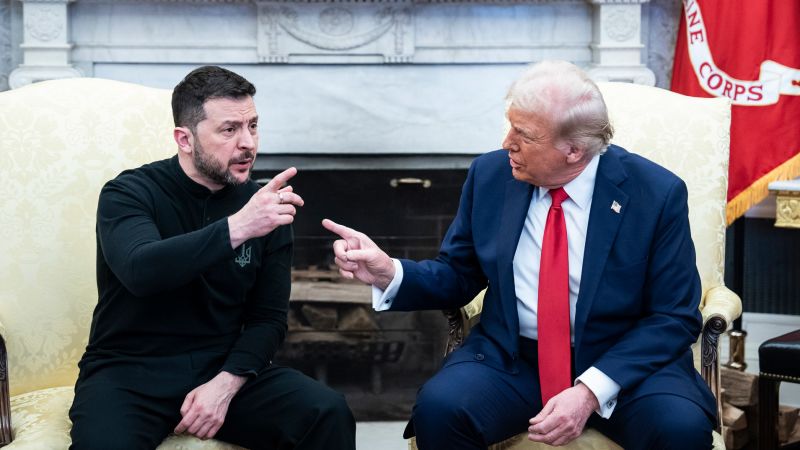
Volodymyr Zelensky has tried to avoid turning that concern into an open personal confrontation with President Donald Trump. In an interview Thursday, the Ukrainian president stressed that he does not want a feud with the American leader. Yet Trump’s individual priorities, political resentments and preference for dealing with powerful autocrats have become central to Ukraine’s position in the war.
“It’s not about personalities. It’s not something personal between me and President Trump.”
For Zelensky, maintaining a working relationship with Trump is not optional. The United States remains the one country with the influence, military capacity and diplomatic weight to exert meaningful pressure for a serious peace effort if its president chooses to do so. Ukraine’s leader therefore has strong reasons to keep his criticism measured, even as he objects to policies that could strengthen Russia.
A Relationship Marked by Political History
Trump has never concealed his dislike of Zelensky, whose interactions with Trump became entangled in the events that led to Trump’s first impeachment. That history continues to cast a shadow over their relationship. It also helps explain why Zelensky’s public insistence that the dispute is not personal carries a difficult irony: Trump’s approach to foreign policy is often deeply personal.
Rather than following the postwar American instinct to support democratic allies against expansionist authoritarian powers, Trump has emphasized displays of leverage, transactional bargaining and relationships with strongmen. That outlook has left Ukraine confronting pressure to make concessions while Russia has continued its assault.
Trump has echoed Moscow’s demand that Ukraine choose a new president. He has also pressed Kyiv to stop one of its more effective methods of weakening Russia’s war effort: drone strikes against Russian oil refineries. Such attacks target infrastructure that helps generate revenue for the Russian state, but Trump’s stance has coincided with domestic pressure to demonstrate that he can bring down fuel costs before the midterm elections.
Energy Deals and Military Constraints
Zelensky has been especially critical of a diesel arrangement that could direct billions of dollars toward Vladimir Putin’s war machine. He also voiced alarm over Trump’s decision to waive a new US sanctions law aimed at Russia. In Kyiv’s view, money flowing into Russia’s economy can ultimately be converted into weapons, drones and missiles used against Ukrainian cities.
“It will only give much more money for Putin for this war. And that’s why I’m against it.”
Ukraine has also said that access to a military version of Elon Musk’s Starlink network remains disrupted. The limitations reportedly force Ukrainian drones to operate at lower speeds, reducing their effectiveness. It remains unclear who within the administration bears responsibility for the problem, although Trump has said he was not personally involved.
These issues matter because the war is no longer defined only by battles along the front line. It is also a contest of industrial capacity, energy revenue, communications technology and sustained political will. A restriction on drone operations or a measure that increases Russian oil income can have consequences far beyond a single policy dispute.
Diplomacy That Favors the Invader
Trump’s posture has become more concrete in recent weeks. He invited Putin to the G20 summit and has considered a meeting with Putin and Chinese President Xi Jinping to discuss ending the war without Ukraine at the table. At the same time, he has declined to provide Patriot missiles, a system Ukraine needs as Russia continues its aerial campaign.
The pattern is alarming for Kyiv because it reverses the normal logic of diplomacy between an aggressor and the country under attack. Instead of increasing the cost of Russia’s invasion, Washington has repeatedly urged Ukraine to yield. Putin, meanwhile, has not matched conciliatory rhetoric with a halt to violence.
Russian missile and drone attacks have continued to kill civilians, including in recent strikes that hit buses and killed a 1-year-old girl in a stroller. Trump did not publicly condemn those attacks. For Ukrainians living with daily air-raid warnings and the threat of destruction, silence from a major ally can carry its own political message.
The White House’s willingness to accommodate Putin was underscored by envoy Steve Witkoff’s comments in St. Petersburg this week. Witkoff praised Putin, who is accused of war crimes, as a “humanitarian” during an effort to secure the release of American prisoner Stephen Hubbard. Trump defended the language as necessary for obtaining Hubbard’s freedom.
Prisoner releases are an important humanitarian objective. But each concession offered to Moscow also raises a broader question: what has been gained in exchange? The strategy of repeatedly extending incentives to Putin has not stopped the war. Russia has continued launching deadly attacks, while the prospects for a durable settlement remain remote.
Ukraine’s Case for Principles and Pressure
Zelensky’s interview reflected the burden of leading a country that must fight on the battlefield while preserving support abroad. His expression conveyed the toll of a conflict that has inflicted immense hardship on Ukraine. Still, he projected a clear refusal to trade away the country’s independence for a settlement that rewards the invasion.
“We will survive and we will stay strong. We will do everything to bring peace closer. But we will not give (a) chance (to) Putin to win this war.”
That message was also an appeal to the older principles of American foreign policy: that democracies should not be abandoned when they are attacked and that aggression should not be rewarded with political gains. Zelensky knows that direct criticism of Trump can bring repercussions. But he argued that Ukraine’s survival leaves him no choice but to speak.
The stakes extend well beyond the relationship between two presidents. If Russia can secure advantages through invasion, intimidation and prolonged attacks on civilians, the consequences will shape how other authoritarian governments judge the costs of using force. If Ukraine is excluded from decisions about its own future, any agreement risks becoming a pause rather than a genuine peace.
As the conflict grows more brutal, two questions remain unavoidable: how can the war be brought to an end, and what will happen if it is allowed to continue without a credible strategy for restraining Russia? Zelensky’s challenge is to keep Ukraine visible in a diplomatic process that increasingly appears willing to decide its fate without it.
Related Reading
Frequently Asked Questions
What is Why Zelensky insists it s not personal?
Why Zelensky insists it s not personal is the main topic of this guide. The article explains the context, practical details, and next steps readers should understand.
Why does Why Zelensky insists it s not personal matter?
Why Zelensky insists it s not personal matters because readers are looking for a useful answer, not just a short summary. Good content should match search intent and help them decide what to do next.