
WHO chief raises alarm over scale of Ebola outbreak after death toll climbs
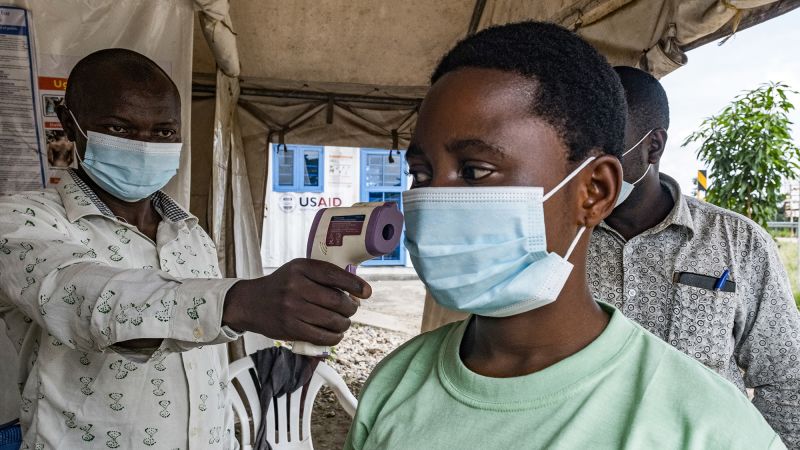
WHO Chief Alarms Over Ebola Outbreak’s Escalating Scale
WHO chief raises alarm over scale – On Tuesday, the World Health Organization’s (WHO) director-general, Dr. Tedros Adhanom Ghebreyesus, issued a stark warning about the growing crisis of the Ebola outbreak in the Democratic Republic of Congo (DRC) and Uganda. The alarming spread of the Bundibugyo virus, one of the several Orthoebolaviruses capable of causing the disease, has raised urgent concerns. This strain, which is primarily impacting the remote northeastern Ituri province of the DRC, has seen a rapid increase in cases, prompting international attention and heightened fear among public health officials.
Outbreak Overview and Regional Impact
As of Tuesday, the DRC’s health minister, Dr. Samuel Roger Kamba, reported 131 confirmed deaths linked to the outbreak, with over 500 cases suspected. While the majority of cases remain concentrated in Ituri, Ghebreyesus noted that 30 have been officially verified there. Meanwhile, Uganda has faced its own challenges, with two laboratory-confirmed cases reported in the capital, Kampala, according to WHO. The spread across borders has intensified questions about the virus’s origins and how it evaded detection for so long.
Global Response and Travel Restrictions
Amid the rising number of infections, the U.S. government invoked a public health law on Monday to restrict entry from the affected regions, just as a U.S. citizen tested positive for the Bundibugyo strain in the DRC. The Africa Centres for Disease Control and Prevention (Africa CDC) criticized the decision, arguing that broad travel bans could disrupt communities and economic activities. Ugandan authorities, however, sought to ease fears on Tuesday, stating that no local transmission has occurred within the country. The two cases in Kampala, they clarified, involved Congolese nationals who had entered Uganda from the DRC.
Concerns Over Delayed Detection
The delayed identification of the outbreak has sparked debates about preparedness. Dr. Craig Spencer, a physician who survived Ebola in 2014, told CNN on Monday that the most troubling aspect is how swiftly the virus was recognized once symptoms emerged. “I’ve been saying the most concerning thing to me has been how much we learned, how quickly we learned it,” he stated. “There’s no doubt that this is probably much worse than what we think right now. I suspect the true case total is much higher than what’s being reported.”
Jeremy Konyndyk, former head of the U.S. Agency for International Development’s (USAID) pandemic response, echoed these concerns. He noted that multiple “generations of transmission” likely went unnoticed before the outbreak was officially confirmed. The rapid response team, deployed on May 13, confirmed the Bundibugyo virus on May 15, following an alert about an “unknown illness” with high mortality rates on May 5. The first suspected case was identified as a health worker in Ituri, whose symptoms began on April 24 and led to their death at a medical center in Bunia, the provincial capital.
WHO Declares Global Health Emergency
On Sunday, the United Nations health agency declared the epidemic a “public health emergency of international concern.” This designation, which is the highest level of alert under the International Health Regulations, signals the need for coordinated global action. Ghebreyesus emphasized that the high positivity rate and accelerating number of cases and deaths suggest a “potentially much larger outbreak.” Notably, this is the first time a WHO director-general has triggered such a declaration without first convening an emergency committee, which he announced would meet later Tuesday. “I did not do this lightly,” he added, underscoring the gravity of the situation.
Spreading to New Regions
Further complicating the response, WHO’s representative in the DRC, Anne Ancia, confirmed that the outbreak has expanded to the neighboring North Kivu province. This province, which shares a direct border with Ituri, adds another layer of complexity to containment efforts. Despite this spread, Ancia highlighted the “significant uncertainty” surrounding the actual number of infections, as the remote and underserved regions pose challenges for accurate tracking.
Transmission Dynamics and Public Health Measures
According to Africa CDC, Ebola spreads through direct contact with bodily fluids of an infected individual, as well as contaminated materials or surfaces. The virus can also transmit via contact with a person who has died from the disease, making it particularly dangerous in areas with limited medical resources. While there are no approved treatments or vaccines specific to the Bundibugyo strain, ongoing research and international collaboration are critical to combating its spread.
Following the WHO’s emergency declaration, the U.S. State Department urged Americans to avoid all travel to the DRC, South Sudan, and Uganda, and to reconsider visits to Rwanda. This advisory comes as the outbreak continues to evolve, with the potential for further regional and global repercussions. The situation highlights the need for a unified approach to prevent the virus from establishing new footholds in densely populated areas or healthcare facilities.
Historical Context and Future Implications
The DRC has a history of dealing with Ebola outbreaks, yet the current crisis has exposed gaps in surveillance and response. Ghebreyesus pointed to the lessons learned from previous epidemics, but the speed at which this outbreak has taken hold is unprecedented. “This is a clear sign that the virus is not just spreading locally but has the potential to disrupt entire regions,” said a health official in a statement. The Bundibugyo strain, though less commonly reported than the Zaire virus, remains a serious threat due to its virulence and the difficulty of containing it in remote settings.
As the humanitarian effort intensifies, the focus is shifting toward both immediate containment and long-term strategies. With 131 deaths and over 500 suspected cases, the scale of the outbreak is now more than double the initial estimates. Experts warn that without swift intervention, the virus could spiral out of control. The combination of local transmission in multiple provinces and the movement of infected individuals across borders has created a perfect storm for rapid spread.
Looking Ahead: Challenges and Opportunities
While the WHO’s emergency declaration marks a critical turning point, it also brings pressure to accelerate vaccine development and treatment options. The Bundibugyo virus, though not as well-known as other Ebola strains, requires specialized attention. Researchers are now racing to understand its genetic makeup and transmission patterns, hoping to tailor responses effectively. Meanwhile, the global community is watching closely as the outbreak continues to challenge public health systems and test the resilience of international cooperation.
In the meantime, the DRC and Uganda are under increased scrutiny. The capital cities, particularly Kampala, have become focal points for both fear and optimism. As the outbreak progresses, the interplay between local efforts and global support will determine its trajectory. With 131 deaths reported and the situation still evolving, the stakes have never been higher for the regions and populations most at risk. The WHO’s alarm serves as a reminder of the virus’s capacity to spread rapidly, even in the face of prior experience and preparedness.
