
Kentucky voters make their choice today: Thomas Massie, or a former Navy SEAL picked by Trump to beat him
Kentucky voters make their choice today: Thomas Massie, or a former Navy SEAL picked by Trump to beat him
Kentucky voters make their choice today – The Republican primary race in Kentucky’s 4th District has become a battleground where the nation’s political tensions are laid bare. At the center of the contest is Rep. Thomas Massie, a longstanding figure in the district’s political landscape, and Ed Gallrein, a farmer and former Navy SEAL who was handpicked by President Donald Trump to challenge him. As the Tuesday vote approaches, the showdown between the two candidates has drawn national attention, with Trump’s influence casting a long shadow over the race. The results may offer critical insight into the balance between personal loyalty to the president and the shifting priorities of Republican voters in a pivotal congressional race.
Massie, who has built a reputation as a contrarian in a party increasingly aligned with Trump’s agenda, finds himself on the defensive. His campaign has been embroiled in a series of attack ads and public critiques from Trump’s allies, who argue that his policies have diverged too far from the administration’s vision. Despite this, Massie remains a formidable candidate, supported by a base that values his independence and fiscal conservatism. Gallrein, in contrast, has positioned himself as a Trump loyalist, emphasizing his steadfast commitment to the president’s priorities and framing his campaign as a direct response to Massie’s perceived defiance.
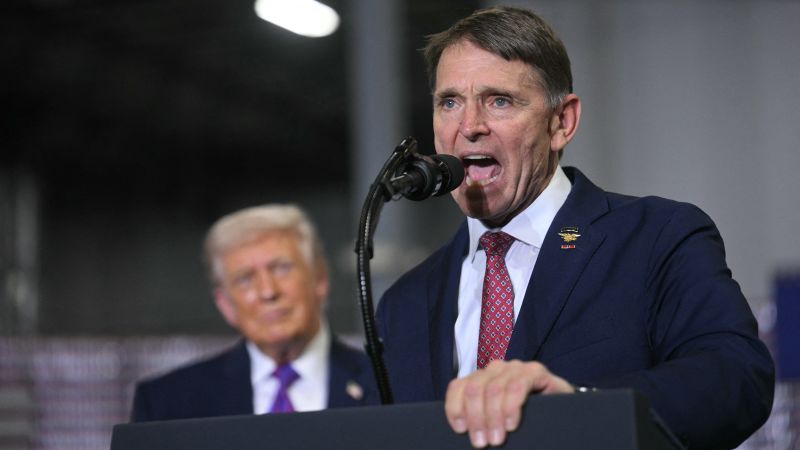
Trump’s involvement in the race has been decisive, with the former president leveraging his political machinery to bolster Gallrein’s candidacy. The 68-year-old Navy SEAL, who previously fell short in a state senate race in 2024, is now seen as a key asset in Trump’s strategy to reclaim control of the House. Gallrein’s selection by the White House underscores his appeal as a relatable figure—someone who embodies the values of service, community, and patriotism. “He’s a true American hero,” Trump said during a visit to Kentucky earlier this spring, standing side by side with Gallrein. “He’s a great patriot and he’s doing it because he saw what this guy was doing to our country.”
Yet Trump’s focus has remained on Massie, who has been a vocal critic of the president’s policies. Massie’s opposition to Trump’s Iran war, his vote against the One Big Beautiful Bill Act, and his role in releasing the Epstein files have made him a target of the administration’s ire. In recent months, the president has repeatedly called for Massie’s removal, declaring at a rally: “He’s got to be voted out of office as soon as possible.” This relentless criticism has framed the race as a referendum on Massie’s loyalty to the party’s core values, a narrative that Gallrein’s campaign has sought to amplify.
Gallrein’s background as a fifth-generation farmer in Shelby County, east of Louisville, has been a cornerstone of his campaign. His military service and community roots provide a contrast to Massie’s more polished, Washington-centric image. However, Gallrein’s political experience is limited, and his lack of a fiery speaking style has been a point of contention. Despite this, his connection to Trump’s base has allowed him to gain traction, particularly in areas where the president’s influence is strongest. “If we do not take advantage of this narrow window of advantage we have,” Gallrein said in a recent statement, “history will punish us.”
The campaign dynamics have been unconventional. While Massie has actively participated in debates and public forums, Gallrein has opted to avoid direct confrontations, instead using his platform to speak to the American people without intermediaries. At the final stages of the race, he told voters: “I’m debating him every day. I’m talking right to the American people, just like the president does, with no middleman.” This approach has been both praised and questioned, with some analysts suggesting it highlights Gallrein’s reliance on Trump’s endorsement rather than his own political appeal.
Massie, meanwhile, has remained resolute in his stance. During a campaign rally, he addressed the growing pressure from Trump’s allies, stating: “They’re tried to turn me into a villain. The more they try to punish me, the more powerful I get.” His message has resonated with voters who appreciate his willingness to challenge the status quo, even as his opponents argue that his independence has cost him support within the party. The contrast between the two candidates has become a microcosm of the broader ideological divide in the Republican Party, with Massie representing a more traditional, populist approach and Gallrein symbolizing the administration’s vision for the future.
The stakes are high for Kentucky’s 4th District, which has long been a microcosm of the nation’s political landscape. With the potential to shape the outcome of the House elections, the primary has drawn significant attention from national figures and media outlets. Gallrein’s campaign has also been strategic, seeking to align with Trump’s broader goals while maintaining a degree of autonomy. “He’ll take my call. I’ll be able to have a conversation with him,” Gallrein said, aiming to reassure voters that his support for Trump does not equate to blind obedience. “Rest assured, I’ll have a relationship so he will let me speak my mind. I don’t lack for independence.”
The race has also seen a notable absence: Massie has been a regular presence at local Republican events, often sitting by an empty chair to underscore Gallrein’s underdog status. This tactic has been effective in drawing attention to the candidate’s lack of name recognition, though it has also been interpreted as a subtle acknowledgment of the challenges he faces. In a recent appearance with Defense Secretary Pete Hegseth at an America First Works event, Gallrein avoided naming Massie directly, allowing Hegseth to deliver sharp critiques of the congressman’s record. The event served as a platform for Trump’s allies to reinforce their argument that Massie’s departure is essential for the party’s unity.
As the ballots are counted on Tuesday night, the outcome will have broader implications beyond Kentucky. It may signal whether Trump’s strategy of using personal attacks and presidential endorsements can secure victories in districts where his influence is waning. The race has already become the most expensive US House primary in history, with millions spent on advertising and campaign infrastructure. For GOP voters, the decision between Massie and Gallrein is not just about one representative but about the direction of the party itself. “It’s Trump versus Massie,” said Jonathan Ruggles, vice chairman of the Lewis County Republican Party. “The ones that will not vote for Massie are voting for Trump indirectly. They’re not voting for Gallrein outright.”
The contrast between the two candidates is stark. Massie represents a faction of Republicans who prioritize principled opposition to Trump’s policies, while Gallrein embodies the administration’s strategy of rewarding loyalty and cultivating a more unified party base. As the election draws near, the question remains: will voters prioritize their relationships with Massie, or will they embrace Gallrein as the chosen representative of Trump’s vision for the future? The answer could determine the trajectory of the Republican Party in the months to come.
