
Trump and Netanyahu diverge on Iran war’s future in tense phone call
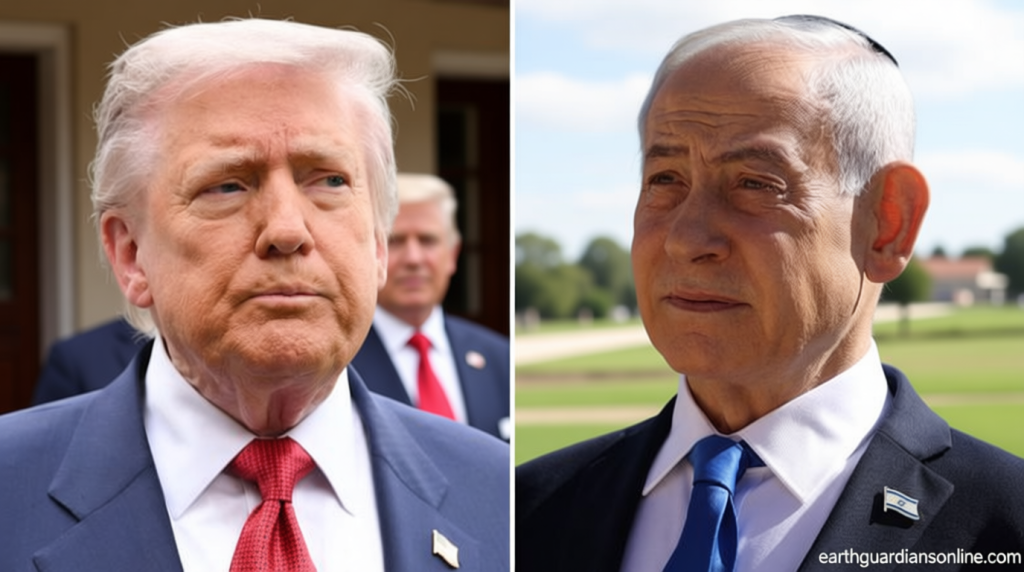
Trump and Netanyahu diverge on Iran war’s future in tense phone call
Trump and Netanyahu diverge on Iran – On Tuesday, U.S. President Donald Trump engaged in a pivotal exchange with Israeli Prime Minister Benjamin Netanyahu, revealing starkly contrasting perspectives on the trajectory of the ongoing conflict with Iran. A U.S. official shared details of the call with CNN, highlighting the growing rift between the two leaders as they grappled with the decision to escalate or temper military action against Tehran. This conversation marked a critical juncture in their alliance, with Trump’s approach appearing to waver under pressure from regional allies.
Strategic Shifts and the Gulf Nations’ Influence
Although this was not their first dialogue in recent days, the Tuesday call underscored a shift in strategy. According to the official, Trump had previously signaled on Sunday that he intended to launch a new series of targeted strikes on Iran, potentially under the banner of Operation Sledgehammer—a name the administration had considered for the operation. However, within 24 hours, Trump reversed course, announcing that he would suspend the planned attacks at the urging of Qatar, Saudi Arabia, and the United Arab Emirates. These Gulf nations, key players in the region, had reportedly pressed for a pause to facilitate diplomatic outreach.
Since then, the Persian Gulf states have collaborated closely with White House representatives and Pakistani mediators to draft a framework that could pave the way for further talks. The U.S. official noted that these efforts have progressed significantly, with the goal of securing a deal that could ease tensions. Trump, speaking to reporters on Wednesday, described the situation as being “right on the borderline,” emphasizing that additional time for diplomacy might be worth the lives saved. “We’ll either have a deal or we’re going to do some things that are a little bit nasty,” he stated, hinting at the potential for a more aggressive stance if negotiations fail.
Netanyahu’s Frustration and the Push for Military Action
Israeli Prime Minister Benjamin Netanyahu, who has consistently advocated for a hardline approach to Iran, expressed mounting dissatisfaction with Trump’s decision to delay strikes. During the Tuesday conversation, the prime minister conveyed his belief that the pause was an error, urging Trump to proceed with the original plan. An Israeli source confirmed that Netanyahu’s frustration was palpable, with his inner circle also echoing the sentiment that the delay was detrimental to Israel’s strategic interests.
Netanyahu’s concerns centered on the perception that Iran was gaining ground by prolonging the conflict. He argued that a delay would only strengthen Tehran’s position, particularly given Iran’s refusal to cede control of its enriched uranium—a key sticking point in the negotiations. This issue has long been a point of contention between Israel and the United States, with Netanyahu insisting that Iran’s nuclear program poses an existential threat. “We’re in the final stages of Iran. We’ll see what happens,” Trump had previously told reporters, signaling his openness to diplomacy, while Netanyahu anticipated a different outcome.
The divergence in their positions became evident during the call. While Trump sought to explore diplomatic avenues, Netanyahu pushed for immediate military action, according to an Israeli source. This contrast reflects a broader debate within the alliance: Trump’s focus on securing a deal versus Netanyahu’s desire for swift retaliation. The prime minister’s frustration with the U.S. approach is not new, as past interactions have revealed differences in objectives between Washington and Tel Aviv.
Iran’s Stance and Media Statements
Meanwhile, Iran has maintained its position on the nuclear issue, with its Foreign Ministry spokesperson, Esmaeil Baghaei, dismissing recent claims about a potential breakthrough. Speaking to the official Islamic Republic News Agency (IRNA) on Thursday, Baghaei asserted that “claims about nuclear issues—such as enriched uranium or enrichment levels—are merely media speculation and have no basis in reality.” He also downplayed rumors of progress, stating that “none of the rumors” about a diplomatic resolution between Tehran and Washington were credible.
Reuters reported that Iranian Supreme Leader Mojtaba Khamenei had issued a directive to ensure that the country’s near-weapons-grade uranium stockpile would not be sent abroad. However, a U.S. official noted that this directive had not yet been communicated to the White House as of Thursday morning. This gap in information highlights the complexity of the negotiations, where Iran’s stance remains a central obstacle to reaching a compromise.
Broader Implications and Israeli Perspectives
Netanyahu’s impatience with the U.S. approach has extended beyond the immediate call, affecting Israeli officials at all levels. A senior source revealed that the prime minister’s inner circle is increasingly urging a return to military action, viewing the current diplomatic efforts as insufficient. “There is a strong desire in the upper echelons of the Israeli government for renewed combat,” the source said, emphasizing that the delay has fueled frustration among those who see Iran’s diplomatic foot-dragging as a threat to national security.
Despite this pressure, Trump has continued to champion the diplomatic path, even as tensions rise. In a Wednesday press briefing, the president suggested that he was in control of the situation, stating, “He’ll do whatever I want him to do.” This remark underscored Trump’s confidence in his ability to guide the negotiations, though it also highlighted the delicate balance between his goals and Netanyahu’s demands. The prime minister’s insistence on military action reflects Israel’s strategic priorities, which prioritize rapid retaliation over prolonged diplomacy.
As the talks continue, the question remains: can the U.S. and Israel find common ground? Trump’s commitment to diplomacy, coupled with the Gulf nations’ mediation, offers hope for a resolution. Yet Netanyahu’s skepticism and Iran’s resistance to concessions cast doubt on the possibility of a quick agreement. The outcome of this tense standoff will have significant implications for the region, shaping the future of the Iran war and the strength of the U.S.-Israel alliance.
“We don’t need it; we don’t want it,” Trump added. “We’ll probably destroy it after we get it, but we’re not going to let them have it.”
The call also revealed the role of Pakistan as a neutral mediator in the talks, with the country facilitating communication between the U.S. and Iran. This dynamic has added another layer to the negotiations, as Pakistan seeks to maintain its position as a key player in the region’s geopolitics. The Iranian Foreign Ministry’s spokesperson, Baghaei, emphasized that the current diplomatic process is not yet settled, with both sides prepared to adjust their strategies as needed.
As the situation evolves, the interplay between military action and diplomacy will remain central to the conflict. Trump’s ability to navigate this tension will determine whether the U.S. and Israel can align on a unified front against Iran. For now, the call serves as a reminder of the fragile balance between aggression and negotiation in a war that has already reshaped international relations.
In the days following the Tuesday conversation, the White House has been working closely with Israeli officials to bridge the gap between their approaches. While Netanyahu continues to push for immediate strikes, Trump’s administration remains committed to exhausting all diplomatic options. The final stages of the Iran war, as Trump described, are now defined by this evolving partnership, with the outcome hinging on the ability of both leaders to reconcile their differing priorities.
