
Blanche insists violent conduct will be weighed when applying for new anti-weaponization fund payouts
Blanche Insists Violent Conduct Will Be Weighed When Applying for New Anti-Weaponization Fund Payouts
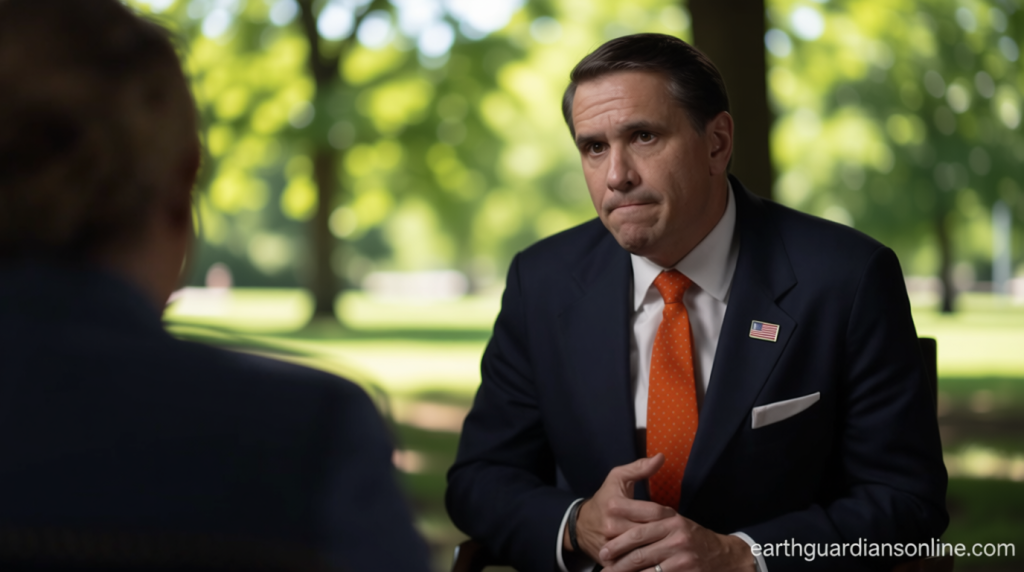
Blanche insists violent conduct will be weighed – Acting Attorney General Todd Blanche clarified Wednesday that the behavior of January 6, 2021, rioters who targeted law enforcement personnel will be a central consideration during the review of applications for the upcoming anti-weaponization fund. During an interview with CNN’s Paula Reid, Blanche highlighted that the commission overseeing the fund will assess claimants based on their actions during the Capitol attack. “The conduct of the claimant is a significant factor,” he stated, emphasizing that individuals seeking compensation must demonstrate their role in the events of that day.
“The claimant would have to say, ‘I assaulted a cop and I want money,’” Blanche explained. “Whether the commissioners decide to award that person funds is up to them, but their conduct will be a key part of the evaluation process.”
Blanche also pointed out that President Trump has consistently opposed the mistreatment of law enforcement officers. “Trump does not stand for assaulting law enforcement,” he said, adding that the fund’s purpose is to provide restitution while ensuring accountability for those who participated in the attack. However, he acknowledged that the possibility of violent claimants receiving payments remains open, depending on the discretion of the commission. “So, whether the commissioners will give that person money—it’s up to them,” Blanche reiterated, underscoring the balance between compensation and responsibility.
The comments come amid growing concerns from Democrats and advocacy groups that individuals involved in the January 6 assault could access substantial taxpayer funds if they meet minimal criteria. Critics argue that the fund’s structure allows for broad eligibility, enabling those who attacked Capitol police to seek millions in compensation. CNN reported earlier in the week that many of these applicants are actively preparing to submit claims, regardless of their actions on that day.
Blanche addressed fears of excessive payouts, calling the process “not a ‘you’re going to get rich’ scenario.” He compared it to other compensation programs, where large groups of claimants are evaluated, but not all receive large sums. “There’s a claims process set up all the time when there are numerous potential victims,” he noted. “It doesn’t mean every victim gets wealthy—it just means money is allocated based on established guidelines.”
The $1.8 billion allocated to the fund is intended to streamline the legal process for the Justice Department. Blanche explained that without this mechanism, the government would face an overwhelming number of lawsuits from individuals who participated in the Capitol riot. “This fund prevents the government from being bogged down by a flood of claims,” he said, adding that the money will be used to resolve disputes efficiently.
Blanche also dismissed concerns about rising gas prices, framing the fund as a necessary use of taxpayer resources. “The work we’ve done in the fraud space has already saved hundreds of millions of dollars,” he argued. “So, this isn’t about spending money when gas is expensive—it’s about settling claims in a timely manner.”
Blanche labeled the public backlash against the fund as “fake,” citing the lack of actual applications or payouts to date. “There’s nothing to be outraged about yet,” he said, pointing out that the commission members have not been officially named and the criteria for compensation are still being finalized. “The outrage is over us,” he concluded, suggesting that critics are reacting to the potential rather than the current reality.
Commission Structure and Selection Process
The anti-weaponization fund will be managed by a commission composed of five members, all selected by the current attorney general. Blanche noted that while the president has the authority to remove commissioners at any time, one member will be chosen in consultation with Congress. However, he admitted that the exact role of congressional input and the extent of the attorney general’s influence remain uncertain.
Blanche expressed confidence in the ability to assemble a qualified panel, stating, “I believe we’ll find suitable individuals to serve on the commission.” He added that political affiliation may not be a determining factor in selection, though he acknowledged openness to including Democrats if they meet the required qualifications. “They’re going to be smart people,” he said, “and they’ll understand the political sensitivities involved.”
Despite the fund’s focus on restitution, Blanche highlighted its potential to address financial claims from those who attacked the Capitol. “This is long overdue,” he said, referencing the fund’s creation as a response to the needs of January 6 defendants. The fund’s structure aims to provide a clear framework for compensation, but Blanche stressed that the process is still in its early stages.
As the administration moves forward with setting up the fund, Blanche emphasized the importance of balancing fairness with efficiency. “We’ve had many people apply since the announcement,” he said, “but the final selection of commissioners and the establishment of parameters will come after further deliberation.” This approach ensures that the commission can operate independently once formed, though its composition and rules may still face scrutiny.
Legal and Financial Implications
The fund’s creation has sparked debates about its impact on justice and public trust. Critics argue that the inclusion of violent conduct in the evaluation process is a way to justify payouts to those who attacked law enforcement. Meanwhile, supporters see it as a practical solution to resolve disputes without protracted litigation.
Blanche acknowledged the political nature of the situation, noting that the commission’s members may reflect the administration’s priorities. “We’re not going to be a partisan machine,” he said, though he admitted that the selection process could influence perceptions of the fund’s impartiality. The lack of payment for commissioners adds to the perception that the panel is primarily a political tool, rather than an independent body.
With the fund set to provide restitution, Blanche suggested that its primary goal is to offer financial relief to those affected by the January 6 riot. “This is about ensuring that people who were wronged can receive compensation,” he said. However, the inclusion of those who engaged in violence raises questions about whether the fund will serve as a form of redemption or a reward for misconduct.
As the commission prepares to evaluate applications, the spotlight remains on the balance between accountability and compensation. Blanche’s comments aim to reassure the public that the fund’s process is designed to be fair, but the ongoing debate reflects the broader political and social tensions surrounding the events of January 6, 2021.
Overall, the anti-weaponization fund represents a significant step in addressing the aftermath of the Capitol attack. Blanche’s emphasis on conduct and the potential for restitution underscores the administration’s commitment to resolving claims efficiently. Yet, the fund’s success will depend on how its criteria are interpreted and applied, as well as the public’s perception of its fairness and transparency.
