
Unusual stars may be the leftovers of ancient galaxy gobbled up by the Milky Way
Unusual stars may be the leftovers of ancient galaxy gobbled up by the Milky Way
Unusual stars may be the leftovers – In a groundbreaking discovery, a group of peculiar stars might signify the remnants of a dwarf galaxy consumed by the Milky Way nearly 10 billion years ago. This ancient celestial body, named Loki by astronomers, has sparked new theories about the formation and growth of our galaxy. The findings, detailed in a May 2026 study published in the journal *Monthly Notices of the Royal Astronomical Society*, challenge existing models of galactic evolution and offer a deeper glimpse into the cosmic events that shaped the Milky Way’s history.
The Milky Way’s Evolutionary Journey
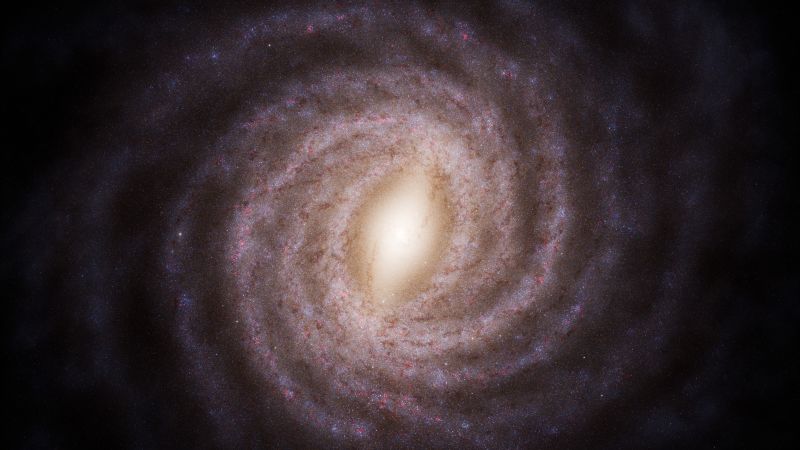
The Milky Way, our cosmic home, is not a static entity but a dynamic structure that has grown over billions of years. According to NASA, it spans roughly 100,000 light-years and hosts between 100 billion and 400 billion stars. A light-year, as defined, is the distance light travels in one year—approximately 5.88 trillion miles or 9.46 trillion kilometers. However, its original size and mass remain uncertain, prompting scientists to seek evidence of its past mergers and interactions.
Galactic evolution is often likened to a process of accretion, where smaller systems are absorbed into larger ones. The Milky Way, for instance, is believed to have evolved gradually by incorporating numerous dwarf galaxies over time. Yet, the details of these ancient collisions are still elusive. The new study suggests that some of these interactions left behind detectable traces—specifically, a cluster of stars with unusually low metal content found unexpectedly close to the galactic disk.
Spotting the Faint Echoes of the Past
Stars in the Milky Way’s stellar halo, a diffuse cloud surrounding the galactic disk, have long been a primary focus for researchers studying the galaxy’s origins. These stars, rich in metal-poor characteristics, are often linked to early cosmic mergers. However, the recent discovery shifts attention to the disk itself, a massive rotating structure that hosts the majority of the galaxy’s stars. The key clue lies in the chemical composition of these stars, which hints at their ancient origins.
The study, led by Dr. Federico Sestito of the University of Hertfordshire’s Centre for Astrophysics Research, identified 20 such stars in proximity to the galactic disk. These stars, located approximately 7,000 light-years from our solar system, exhibit similar chemical signatures, pointing to a common origin. Their presence challenges the assumption that all metal-poor stars are confined to the halo, suggesting that the Milky Way may have devoured a significant galaxy much earlier than previously thought.
“The discovery of these stars within the disk is a game-changer,” Sestito explained in an email. “They provide direct evidence of a major merger event that occurred during the galaxy’s formative years.” The stars’ chemical makeup, dominated by hydrogen and helium, aligns with the composition of the universe’s earliest stars. This connection implies that Loki, the ancient dwarf galaxy, may have contributed to the Milky Way’s growth by merging with it over 10 billion years ago.
Revealing the Milky Way’s Hidden History
The Milky Way’s disk, typically associated with younger, more metal-rich stars, has long been considered a less likely location for ancient galactic debris. However, the study’s findings indicate that the disk could harbor remnants of past mergers. These stars, moving in both prograde and retrograde orbits—directions parallel and opposite to the galaxy’s rotation—may represent the remnants of Loki’s gravitational disruption.
Dr. Cara Battersby, an associate professor of physics at the University of Connecticut, emphasized the significance of such stars in unraveling the galaxy’s history. “Very-metal-poor stars are like time capsules, preserving information about the first stars in the universe,” she wrote in an email. “By analyzing their composition and motion, we can reconstruct the environmental conditions of the early cosmos.”
The research team relied on data from the European Space Agency’s Gaia telescope, which mapped the movements and chemical properties of 2 billion stars across the Milky Way between July 2014 and January 2025. This dataset, combined with observations from the Canada-France-Hawaii Telescope in Hawaii, allowed scientists to pinpoint the stars’ unusual distribution. The Gaia mission’s precision in tracking stellar trajectories has been instrumental in identifying these faint, ancient traces within the disk.
The Significance of Metal-Poor Stars
Metals, in astronomical terms, refer to elements heavier than helium. The absence of these elements in the stars suggests they formed in the early universe, when only hydrogen and helium were abundant. This characteristic is often linked to dwarf galaxies, which are believed to have been consumed by larger systems like the Milky Way. However, the recent discovery complicates this narrative, indicating that some of these ancient galaxies may have been swallowed by the Milky Way in a more substantial event.
“If the Milky Way devoured a galaxy as massive as Loki, it could have significantly altered its structure and dynamics,” said Sestito. The remnants of such a merger would not only contribute to the galaxy’s mass but also influence its star formation processes. This aligns with the broader theory that large galaxies like the Milky Way grow by repeatedly absorbing smaller ones, a process known as hierarchical galaxy formation. The identification of Loki’s stars provides a concrete example of this mechanism in action.
The study’s implications extend beyond the Milky Way. By examining the distribution and properties of metal-poor stars, scientists can piece together the timeline of cosmic mergers and the role of dark matter in these interactions. Some researchers speculate that the gravitational pull of dark matter could have played a critical role in the formation of such structures. The presence of these stars in the disk suggests that the Milky Way’s evolution was more complex than previously modeled, with significant contributions from ancient mergers.
A New Chapter in Galactic Archaeology
Galactic archaeology, the field dedicated to studying the Milky Way’s history through its stellar components, has now gained a new dimension. The discovery of Loki’s stars near the disk highlights the importance of exploring regions beyond the traditional stellar halo. While the halo has been a primary focus for decades, the disk’s potential as a repository for ancient galactic material is now being recognized.
“The Milky Way is a puzzle, and these stars are key pieces we’ve overlooked,” Battersby noted. “They offer a unique perspective on the galaxy’s past, revealing interactions that may have shaped its structure.” The study’s results could refine models of galactic evolution, showing that the Milky Way’s growth was not solely driven by mergers with small systems but also by the absorption of a larger, more substantial galaxy.
Further research is needed to confirm the exact origins of these stars and their connection to Loki. Scientists will analyze their motion in greater detail to determine if they align with the predicted dynamics of a major merger. This work also opens the door to exploring other regions of the galaxy for similar traces, potentially uncovering more about its ancient interactions. As our understanding of the Milky Way’s formation deepens, so too does our appreciation for the complex processes that have shaped the universe over billions of years.
The discovery underscores the importance of persistent observation and innovative techniques in astrophysics. By leveraging advanced telescopes and spectroscopic analysis, researchers are now able to detect the faint echoes of galactic collisions that once reshaped the cosmos. These stars, like detectives, reveal stories of the Milky Way’s past, offering insights into its growth and the role of mergers in cosmic history. As the field continues to evolve, the study of metal-poor stars may yet unlock more secrets hidden within the galactic disk.
