
Exclusive: Israel sent troops to Azerbaijan during Iran war as part of secret network across region, sources say
Exclusive: Israel’s Covert Military Network Expands into Azerbaijan Amid Iran Conflict
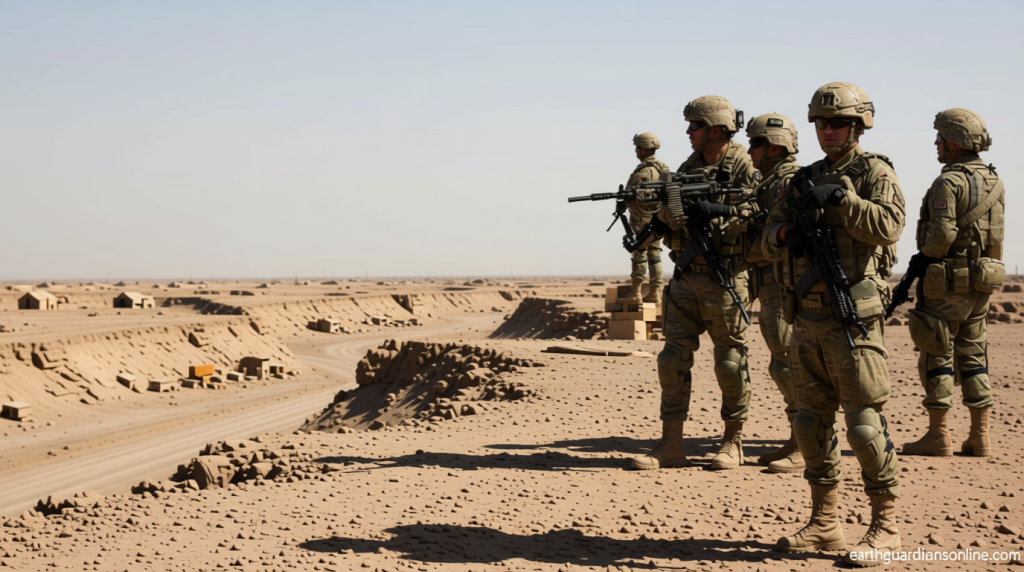
Exclusive – CNN has uncovered new details about a hidden Israeli military initiative during the ongoing war with Iran, revealing that the country deployed elite forces to Azerbaijan as part of a broader strategy to disrupt Iranian operations. Four sources with knowledge of the operation confirmed that Israeli troops and intelligence units were stationed in the region, operating from sites near Iran’s northern border. These positions, located in southern Azerbaijan, provided Israel with critical access to monitor and strike targets deep within Iranian territory, including the city of Tabriz, which was reportedly targeted during the conflict.
Strategic Moves Across the Region
The deployment was not an isolated effort but part of a coordinated system of secret military installations spanning multiple countries. Sources detailed how Israel established forward bases in locations such as Somaliland, the United Arab Emirates, and Iraq, enabling the nation to extend its operational reach across the Middle East and beyond. These bases, described as “unseen” by most, allowed for rapid response capabilities and intelligence gathering, according to the informants.
“We firmly reject unfounded claims regarding the alleged use of Azerbaijan’s territory for operations against third countries,” stated a spokesperson for the Azerbaijani embassy in the United States, addressing the reported activity.
The Azerbaijan operation, initially planned as a contingency measure for emergency evacuations, evolved into a significant military presence. The site reportedly housed several dozen personnel, including members of Israel’s special operations forces, its elite heliborne unit, and Mossad agents. These forces were tasked with conducting reconnaissance missions and managing drone operations, which provided Israel with a vantage point to observe Iranian military movements and infrastructure.
Covert Bases and Regional Alliances
In addition to Azerbaijan, Israel maintained two secret facilities in Iraq, which were first reported by the Wall Street Journal and New York Times. These sites served as logistical hubs and potential rescue stations, enhancing Israel’s ability to sustain prolonged operations. Iraq’s military, in a statement released early in March, denied the existence of “unauthorized bases or forces” on its soil, though the exact scope of Israel’s activities remains unclear.
Somaliland, a breakaway republic on the Horn of Africa, also played a role in Israel’s covert strategy. One source noted that the region provided an additional military position, allowing Israeli aircraft to refuel or conduct short-range surveillance during long missions targeting Iran. This partnership was further solidified in December, when Israel became the first country to officially recognize Somaliland’s independence. The UAE, meanwhile, maintains a strong commercial and military footprint in the port city of Berbera, facilitating Israel’s presence in the region.
“The publication of this information is aimed at creating confusion with the international community, undermining regional stability and interstate relations, and generating tensions in the region … Such fabricated claims constitute blatant information manipulation,” said the Media Development Agency of Azerbaijan, responding to CNN’s initial report.
Israel’s expansion into Azerbaijan was part of a larger campaign to position itself along Iran’s three main borders—south, west, and north—during the war. This geographical advantage enabled the military to launch sustained attacks on Iranian targets, as well as to conduct rescue operations for downed pilots. The strategic value of Azerbaijan’s location, just 60 miles from Tabriz, was a key factor in the decision to establish a forward base there.
Defense Systems and Operational Reach
Alongside its troop deployments, Israel quietly installed an Iron Dome missile defense system in the UAE, with personnel trained to operate it. This move, first reported by Axios, was part of Israel’s efforts to secure its southern flank while simultaneously striking deep into Iranian territory. The Iron Dome, known for its ability to intercept short-range projectiles, would have provided a defensive layer for Israeli aircraft conducting operations near the Iranian border.
Earlier this year, CNN reported that Prime Minister Benjamin Netanyahu, alongside the head of the Mossad and Israel’s military chief, visited the UAE during the conflict. The UAE swiftly denied the visit, suggesting that the presence of Israeli forces in the region may have been a point of contention. Despite this, the UAE’s support for Israel’s military infrastructure highlights the complex web of alliances and rivalries shaping the Middle East.
Implications for Regional Stability
The coordinated network of Israeli bases across the Middle East has raised questions about the extent of Iran’s neighbors’ involvement in the conflict. Some countries, like Azerbaijan, may have granted Israel access with permission, while others might have done so without official acknowledgment. This dual approach—public and covert—allows Israel to maintain a strategic edge while minimizing direct diplomatic friction.
Analysts suggest that these deployments reflect Israel’s long-term vision for countering Iran’s regional influence. By establishing forward positions in Azerbaijan, the UAE, and Iraq, Israel has created a logistical and operational network that spans hundreds of miles. This infrastructure not only supports military strikes but also enables intelligence sharing and rapid mobilization, according to the sources.
While Azerbaijan has denied the allegations, the country’s proximity to Iran and its existing ties to Israel have made it a valuable asset. The strategic partnership, which began weeks before the war’s outbreak, underscores the importance of geographic positioning in modern warfare. With Iran’s focus on suppressing internal dissent, Israel seized the opportunity to expand its presence in key locations, ensuring a foothold in the region’s volatile dynamics.
Conclusion: A Hidden Front in the Iran War
The revelation of Israel’s covert military network has added a new dimension to the conflict with Iran. These hidden bases, operating in tandem with the UAE’s commercial ties and Iraq’s logistical support, have allowed Israel to conduct operations with minimal visibility. As the war continues, the role of these partner nations may become even more critical, influencing the balance of power in the region and the trajectory of future conflicts.
With CNN’s initial report sparking debate, the international community now grapples with the implications of Israel’s expanded military footprint. The Azerbaijan operation, alongside similar efforts in other countries, demonstrates how Israel is leveraging regional alliances to achieve its strategic objectives. As the situation evolves, the effectiveness of these covert positions and their impact on Iran’s capabilities will likely remain a topic of discussion among global observers and policymakers.
