
Justice Department rushes to defense of Chicago US attorney after weeks of turmoil
Justice Department rushes to defense of Chicago US attorney after weeks of turmoil
Acting AG Todd Blanche publicly backs Boutros amid mounting scrutiny
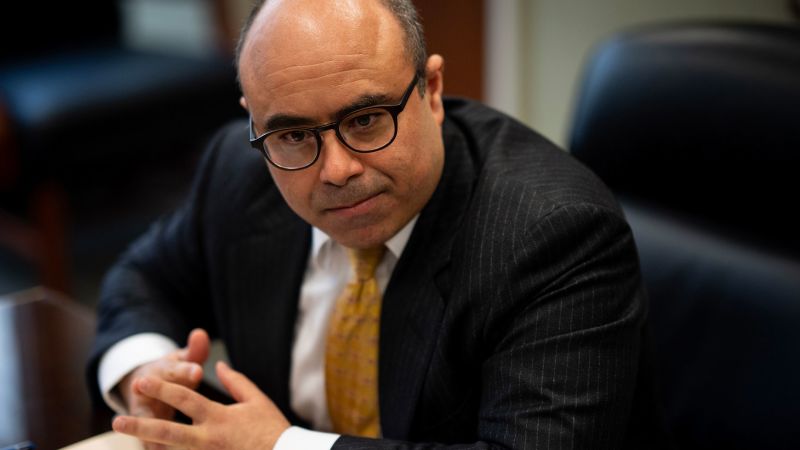
Justice Department rushes to defense of Chicago – Less than a week after the controversy surrounding the U.S. Attorney’s Office in Chicago escalated, Acting Attorney General Todd Blanche has taken a firm stance in support of Andrew Boutros, the embattled leader of the Northern District of Illinois. Blanche’s recent social media post on X emphasized the department’s confidence in Boutros’ leadership, highlighting his focus on combating violent crime, drug trafficking, and corruption. This endorsement comes as the Trump administration seeks to reinforce its commitment to Boutros’ tenure, despite growing skepticism about the integrity of his office.
Boutros, a former line prosecutor who transitioned to defense work, has faced increasing pressure since his appointment in April 2025. His office has been at the center of a major political storm following its handling of the Broadview Six case, which implicated several Democratic politicians and activists. The allegations of mismanagement in that investigation, particularly the way it was conducted, have sparked questions about Boutros’ ability to lead effectively. Now, the spotlight has shifted to another high-profile case under his supervision—the investigation into E. Jean Carroll, a vocal critic of former President Donald Trump.
The mounting criticism against Boutros has led to a tense atmosphere within the Chicago legal community. Legal experts who have worked with him in the past note that his career prior to joining the Trump administration was marked by a reputation for neutrality and professionalism. However, the dual investigations into both the Broadview Six and Carroll have exposed what some see as a politicization of the federal justice system. “This Department fully supports U.S. Attorney Boutros and his efforts to combat violent crime, drug trafficking, immigration violations, and fraud,” Blanche stated in a recent X post, reinforcing the administration’s stance as the president formally announced Boutros’ nomination for a second term.
“I am grateful to all of you,” Boutros responded in his own X post, thanking colleagues who have stood by him during the backlash. “I will not forget how you all stood by me when others capitalized on the opportunity to attempt to destabilize the Office … under the guise that they love or even really care about this incredible and storied Office.”
Blanche’s support is part of a broader effort to shield Boutros from further fallout. The acting AG has argued that the controversies surrounding his office are the result of a coordinated campaign to undermine the administration’s legal initiatives. This narrative has been echoed by Boutros, who claims that the Justice Department has been working to sabotage his leadership. “We have fixed — and continue to fix — an Office I inherited in April 2025 that was doing less than even the bare minimum,” he wrote, referencing the initial criticisms that emerged when the Broadview Six case was first unveiled.
Grand jury scandal intensifies scrutiny of Trump’s Justice Department
The crisis in Chicago’s U.S. attorney’s office reached a critical point two weeks ago when a grand jury scandal emerged. The Broadview Six, a group of individuals accused of obstructing federal officers during a September 2025 incident at an Immigration and Customs Enforcement detention center, had been indicted based on evidence that defense attorneys now claim was improperly handled. The revelation of this misconduct has prompted the Justice Department to drop charges against several of the accused, raising concerns about the transparency and fairness of the process.
Legal analysts have pointed to this development as a sign of deeper issues within the department. The Broadview Six case is not an isolated incident; it has been cited by critics as part of a pattern of politicized prosecutions aimed at silencing Trump’s political opponents. Defense lawyers argue that the grand jury process was manipulated to ensure convictions, regardless of the strength of the evidence. “You have Todd Blanche out there telling everybody, ‘Don’t worry about [the] grand jury indictments of Comey, Don Lemon, Southern Poverty Law Center,’” said Chris Parente, a defense attorney representing defendant Brian Straw. Parente, an elected municipal trustee near Chicago, highlighted how Blanche’s statements have attempted to deflect attention from the broader implications of the department’s actions.
The current investigation into the Broadview Six case has also drawn the attention of federal judges, who are now probing the decisions made during the grand jury proceedings. Court hearings have intensified this week as prosecutors and legal staff face questions about their conduct. The controversy has sparked a debate about the role of grand juries in politically charged cases, with some arguing that their independence is being compromised. “This is not just about one case,” Parente said, “but about how the Justice Department has used the grand jury process to secure indictments in other high-profile cases against Trump’s enemies.”
Political allies and legal adversaries clash over judicial independence
The situation in Chicago has become a focal point for those questioning the extent of Trump’s influence over the Justice Department. Critics, including former legal professionals and civil rights advocates, claim that the department has been systematically targeting individuals who oppose the president’s policies. This approach, they argue, has led to a form of grand jury abuse, where prosecutors leverage the secrecy of the process to push through charges that might otherwise be contested.
While Blanche insists the department’s choices are independent, defense attorneys have pointed to inconsistencies in the handling of multiple cases. The Broadview Six investigation, which initially appeared to be a straightforward criminal matter, has been described as a rushed and partisan effort. The indictment of several politicians, which was later withdrawn, has raised doubts about the reliability of the evidence and the motives behind the charges. “There’s a clear pattern here,” Parente noted. “The same tactics are being applied to other cases, like those involving James Comey, to ensure political accountability.”
Despite the criticisms, the Trump administration remains steadfast in its support of Boutros. The acting AG has emphasized that the Office of the U.S. Attorney in Chicago is a cornerstone of federal law enforcement, and that its recent reforms have restored its credibility. However, the ongoing scrutiny has made it clear that the department’s credibility is still under threat. The Broadview Six case has not only exposed internal tensions but also highlighted the broader challenges of maintaining impartiality in a politicized justice system.
Questions remain about the future of the Chicago US attorney’s office
While Blanche’s backing of Boutros offers a temporary reprieve, the long-term stability of the Chicago office remains uncertain. Legal observers suggest that the alliance between Boutros and Blanche may not be enough to quell the growing concerns about the department’s handling of high-profile cases. The judge’s inquiry into the Broadview Six indictment could lead to further revelations, potentially impacting the reputation of the Justice Department as a whole.
Some legal experts warn that the situation in Chicago is a microcosm of the larger issues facing the federal judiciary. The department’s approach to grand jury proceedings has been criticized for prioritizing political goals over procedural rigor. “This isn’t just about one office,” said a Justice Department official based in Washington, who dismissed claims of political bias as “absurd.” “The grand jury process is designed to be independent, and we’re confident in our decisions.”
Yet, the controversy continues to fuel debate. The Broadview Six case has prompted calls for greater oversight of how federal prosecutors handle politically sensitive investigations. With the president’s endorsement of Boutros, the legal community is now closely watching how the Office of the U.S. Attorney navigates this crisis. The outcome of the judge’s inquiry may determine whether the department’s reputation is salvaged or further damaged by its actions in Chicago.
