
Scott Pelley speaks: ‘CBS News is on fire’ and Bari Weiss should be removed
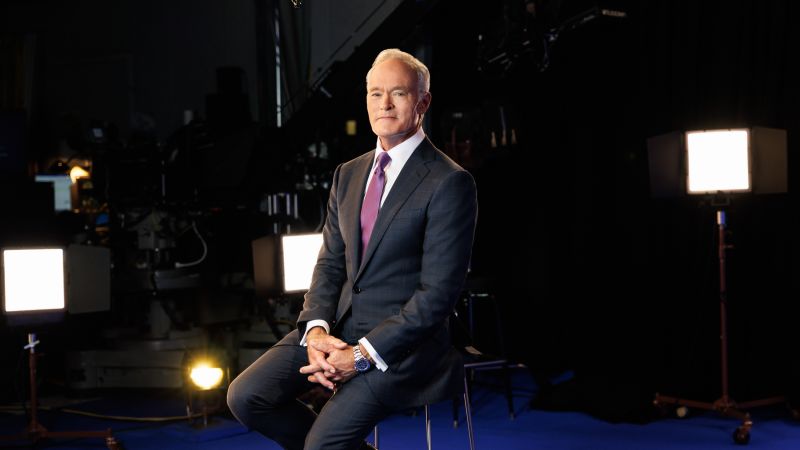
Scott Pelley Criticizes CBS News Leadership Amid Staff Changes
Scott Pelley speaks – Scott Pelley, the former anchor of CBS News’ flagship program “60 Minutes,” has publicly denounced the network’s leadership, calling CBS News “on fire” and asserting that its editor-in-chief, Bari Weiss, should be removed from her post. The remarks, made in an exclusive interview with The New York Times, mark Pelley’s first public statement since his abrupt departure from CBS on June 2. During the conversation, Pelley expressed frustration with the direction of the news division, particularly its perceived alignment with the Trump administration during the most recent season of “60 Minutes.”
Leadership Reckoning and Political Allegations
According to Pelley, the current leadership at CBS News has been “putting a thumb on the scale” in favor of the Trump administration, which he believes has compromised the network’s integrity. “My hope is that the leadership of Paramount will say to themselves, this isn’t working,” Pelley said, emphasizing his belief that political influence has begun to overshadow journalistic standards. While CBS News’ spokesperson dismissed his claims as “not credible,” Pelley argued that the core issue was not political interference but a deeper problem of “incompetence.”
“My hope is that the leadership of Paramount will say to themselves, this isn’t working,” Pelley said.
The interview, published on Sunday morning, underscores Pelley’s refusal to accept the status quo following the recent shakeup at “60 Minutes.” He described the situation as a “controversial housecleaning” and suggested that the network’s management was seeking to reshape the program for political gains. A spokesperson for Weiss did not respond to CNN’s request for comment, leaving the public to interpret her role in the turmoil.
Staff Reorganization and Internal Strife
At the end of May, Weiss implemented a sweeping restructuring of “60 Minutes,” leading to the departure of several key figures. Executive producer Tanya Simon, along with multiple top producers and two correspondents—Cecilia Vega and Sharyn Alfonsi—were let go. Simon, who remained silent on the matter, reportedly felt “completely blindsided” by the sudden changes. However, Weiss had anticipated this upheaval, as rumors of her overhaul had been circulating for months.
According to insiders, Weiss believed the existing team was resisting necessary transformation to adapt to the evolving media landscape. “The current ‘60 Minutes’ team was failing to evolve,” one source noted, adding that Weiss’s goal was to “ensure that ‘60 Minutes’ — and its DNA of hard-hitting interviews, probing investigations, deep journalism — is built to survive a changing media landscape.” Her decision to replace Simon with Nick Bilton, a former tech reporter, further intensified staff tensions, with Pelley describing the team as “heartbroken.”
CBS’s Insular Culture and External Pressures
Known for its insular and protective culture, “60 Minutes” has long prided itself on independence and editorial integrity. However, some veterans of the program argue that this tradition is now under threat. They claim that CBS is attempting to align itself with political interests, particularly through its parent company Paramount, which has maintained a close relationship with former President Donald Trump. This alliance is seen as a factor in the network’s decision to buy Warner Bros. Discovery, a move that has drawn criticism from within the organization.
“CBS is trying to soften ‘60 Minutes’ to appease Trump,” one veteran alleged, a charge that network spokespeople have denied. Pelley, echoing these sentiments, accused management of pushing a “subtle political bias” that undermines the program’s credibility. During a heated staff meeting last Monday, he directly confronted Bilton, calling him “unqualified” and questioning his ability to lead the show effectively.
“There’s a subtle political bias being pushed by management,” Pelley told Times interviewer Lulu Garcia-Navarro.
Despite the controversy, Pelley defended the show’s past achievements, highlighting its 9% ratings growth during the previous season. He called this “unheard-of in broadcast television,” noting that even the network’s NFL coverage saw an 11% increase, which bolstered “60 Minutes”’ visibility for much of the year. Yet, he argued that these successes should not be ignored in favor of political overhauls.
Ratings, Innovation, and the Debate Over Change
Some “60 Minutes” veterans have questioned why Weiss would pursue changes if the program was already thriving. Pelley, however, challenged this view, stating that the show had already taken steps to modernize. He pointed to the launch of “60 Minutes Overtime” in 2010, an online segment that demonstrated the program’s commitment to digital evolution. “I shoot TikTok verticals, or I used to shoot TikTok verticals on every assignment,” he said, underscoring the show’s adaptability.
Despite these efforts, Weiss’s management team, composed largely of outsiders, has expressed surprise at the program’s reluctance to embrace newer formats. They argue that “60 Minutes” needs a fresh perspective to compete in today’s media environment. Pelley, meanwhile, remains skeptical, suggesting that Weiss’s approach risks alienating the show’s core audience. “This is like somebody walking up to me and saying, ‘There’s a 747,’” he remarked, metaphorically critiquing the scale of the changes.
A Legacy in Question
Pelley’s criticism highlights a growing rift between the show’s long-standing traditions and its new direction. He emphasized that the recent season’s success in ratings should be a reason to keep the status quo rather than overhaul it. “We’re there. We’re everywhere,” he said, defending the program’s ability to adapt to modern platforms without losing its essence.
The clash between Weiss and the staff has deepened, fueled by mutual distrust and the shadow of political drama. Pelley’s dismissal was framed by Bilton as a response to his “performative display of hostility,” which allegedly showed a lack of willingness to collaborate. But Pelley insists his actions were driven by a desire to protect the show’s legacy. “Somebody had to stand up not just for the broadcast but for the people,” he said, reflecting his commitment to journalistic values over political conformity.
