
Lawsuit aims to stop UFC fight at the White House
Lawsuit aims to stop UFC fight at the White House
A legal challenge emerges over the use of presidential grounds for a private event
Lawsuit aims to stop UFC fight – A legal action has been launched to prevent the Ultimate Fighting Championship (UFC) from holding a high-profile fight at the White House, scheduled as part of commemorations for the nation’s 250th birthday. The lawsuit, filed on Saturday by the Public Integrity Project, was brought on behalf of a Vietnam War veteran and a civic activist, challenging the event’s legitimacy. The plaintiffs argue that the temporary structure erected on the White House lawn lacks formal approval, as it has not secured congressional consent or undergone an environmental impact assessment. They contend that the event’s location, which will host the June 14 match, is being used for commercial purposes, undermining its status as a public celebration.
The event, set to take place on the South Lawn, coincides with President Donald Trump’s 80th birthday, drawing attention to the overlap between personal milestones and official functions. The UFC, however, maintains that the gathering aligns with congressional authority to host events honoring the country’s 250th anniversary. The lawsuit counters this claim, asserting that the match is more about promoting the UFC brand than marking historical significance. Plaintiffs emphasize that the use of the White House grounds for a for-profit sports spectacle prioritizes private interests over public service, citing a recent report that Trump invested $50,000 in shares of the UFC’s parent company as evidence of financial entanglement.
One of the central arguments in the lawsuit revolves around the commercialization of national landmarks. The plaintiffs highlight that the UFC’s promotional activities, including the sale of VIP packages priced between $1 million and $1.5 million, will generate substantial revenue for the organization’s leadership and Trump. Paul Romano, a retired Air Force sergeant and Vietnam veteran, has been vocal about his concerns. In a statement, he described the Lincoln Memorial weigh-in the day before the main event as a symbolic act of disrespect, calling it “a desecration of sacred ground.” The memorial, he said, is a tribute to those who served in the military, and its use for a cage fight “so the President and his friends can make money” diminishes its cultural and historical value.
“The Lincoln Memorial is sacred ground, and it honors everyone who has ever worn this country’s uniform,” plaintiff Paul Romano said in a news release. “Using it as a backdrop for a for-profit cage fight so the President and his friends can make money is a desecration.”
The lawsuit also critiques the White House’s role in the event, suggesting that the administration’s support is driven by self-interest rather than public benefit. Brendan Ballou, founder of the Public Integrity Project, characterized the UFC fight as a “profoundly corrupt scheme to enrich the President and his friends.” He warned that if the event proceeds, it could set a precedent for the commercialization of national monuments, reducing their status as symbols of collective heritage. “Our national monuments will become little more than branding opportunities for the rich and well-connected,” Ballou added, emphasizing the broader implications of the decision.
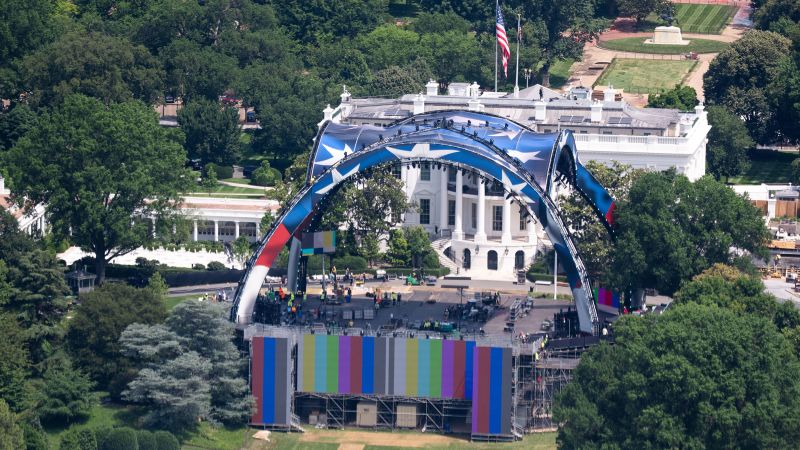
Meanwhile, the UFC has unveiled plans to transform the White House grounds with a massive arched lighting grid, which it has dubbed “The Claw.” This structure, intended to enhance the visibility and grandeur of the event, has drawn criticism for its scale and the way it overshadows the historic setting. Construction crews are actively assembling the fight cage, which will serve as the venue for the June 14 showdown. The organization has framed the event as “the greatest show on Earth,” positioning it as a high-energy celebration of American culture and unity.
Despite the legal pushback, the White House and UFC remain confident in their plans. The administration has defended the event as a legitimate use of presidential resources, arguing that it falls under existing congressional mandates for anniversary celebrations. The UFC, however, has focused on the entertainment value of the fight, highlighting its role in bringing together fans and showcasing the sport’s appeal. Trump’s public enthusiasm for the event has further fueled its anticipation, with the president expressing optimism about its success.
The lawsuit has sparked a debate over the balance between private enterprise and public space. Critics argue that allowing the UFC to use the White House grounds for a commercial event blurs the line between national tradition and personal profit. Supporters of the event, on the other hand, view it as a creative way to engage the public with American history and celebrate the nation’s achievements. The legal battle will determine whether the fight can proceed as planned, with implications for how national landmarks are utilized in the future.
As preparations continue, the lawsuit has intensified scrutiny of the event’s motives. The plaintiffs’ emphasis on the financial gains for Trump and UFC President Dana White has raised questions about transparency in the use of public resources. The case also underscores growing concerns about the influence of private interests in shaping public events, particularly during times of national significance. With the weigh-in at the Lincoln Memorial just a day before the main event, the tension between tradition and commercialization is now at the forefront of public discourse.
The White House has yet to formally respond to the lawsuit, but it has acknowledged the legal challenge. UFC officials have reiterated their commitment to the event, stating that it will provide a unique opportunity to showcase the sport to a national audience. As the June 14 date approaches, the outcome of the lawsuit will likely have a lasting impact on the perception of the event and its place in the nation’s cultural calendar. For now, the fight continues to attract attention, with both supporters and critics watching closely for the final decision.
This story has been updated with additional information. CNN’s Devan Cole contributed to this report.
