
Inside the growing police use and misuse of Flock’s license-plate reader cameras
Police Departments Face Scrutiny Over License-Plate Camera Oversight
Earthguardiansonline.com – Law enforcement agencies nationwide are confronting mounting questions about how they utilize automated license-plate reader technology. These incidents range from officers secretly monitoring romantic interests to more serious violations involving unauthorized tracking. The Milwaukee Police Department’s internal affairs division initiated its inquiry last December, focusing on an employee accused of improper use of the Flock system. According to a criminal complaint filed in February, detective Josue Ayala utilized the automated reader to determine his partner’s whereabouts on 124 separate occasions. He also tracked her former partner 55 times without authorization. Court documents indicate Ayala accepted a plea agreement to attempt misconduct in public office and agreed to step down from his position.
Adding to the controversy, Tehrangi Chapman—one of the detectives who examined Ayala’s conduct—faced her own allegations earlier this month. Chapman confessed to employing the Flock system to monitor two individuals and covertly placing a GPS tracker on one person’s automobile, as detailed in criminal proceedings. These situations represent just a fraction of the documented incidents. The Institute for Justice, a nonprofit organization specializing in public interest law, compiled data showing at least twenty-four cases where officers either resigned or encountered arrest for allegedly exploiting the automated reader technology to stalk people in their personal lives.
Recent Arrests Highlight Widespread Concerns
The pattern of misuse extends beyond Milwaukee. During the previous month alone, authorities in Albany, Georgia, detained and terminated five police officers for suspected Flock violations. Meanwhile, law enforcement in Greer, South Carolina, dismissed two additional officers for similar infractions. These events illuminate both the expanding deployment and the occasional misapplication of ALPR systems—automated license-plate readers that numerous police departments have integrated into their operations over recent years.
Supporters of the technology praise its investigative capabilities, while critics characterize it as an expansive surveillance network that potentially infringes upon privacy rights and civil liberties. Regardless of perspective, instances of police overreach, such as those documented in Milwaukee, have shaken public confidence. Matthew Torbenson, Milwaukee County’s deputy district attorney, addressed the issue during Ayala’s sentencing proceedings on Wednesday. He noted that the situation demonstrates both an abuse and misapplication of authority, ultimately eroding community trust.
“That’s the story that is going to end and be printed today is about police misuse of the Flock system, when the truth of the matter is the vast majority of law enforcement appropriately uses that tool to investigate crime.”
Company Response and Technology Overview
Flock has implemented measures to address these concerns. Garrett Langley, the company’s co-founder and chief executive officer, explained to CNN that the organization introduced an “audit assistance tool” last month. This feature notifies auditors when the system registers unusual patterns of usage. Langley emphasized that the technology remains valuable for the overwhelming majority of officers who utilize it responsibly. “This is such a powerful tool, we don’t want to reduce the efficacy of the 99.99% of officers who go to work every single day and want to do good for their community,” he stated.
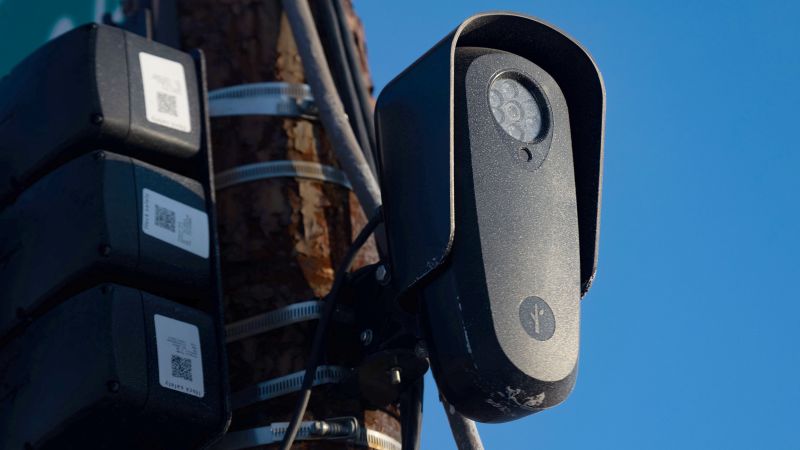
ALPR systems consist of cameras positioned either on patrol vehicles or mounted on stationary poles alongside public thoroughfares. These devices capture photographs of license plates along with other vehicle identifiers, storing the data within centralized databases. When a vehicle appearing on a “hotlist”—such as one connected to criminal activity or a missing person—passes near a camera, the system generates an alert. Officers can also conduct searches for particular license plate numbers to review recent vehicle movements. Additionally, departments have the ability to exchange information with nearby agencies to improve coordinated responses.
Flock Safety, headquartered in Atlanta, stands as the premier ALPR provider, collaborating with more than five thousand law enforcement organizations. The corporation reports operating a network encompassing over 120,000 cameras distributed across forty-nine states. Since its establishment in 2017, Flock has experienced significant growth. The company revealed in March of last year that it achieved a valuation of $7.5 billion following a $275 million investment round led by prominent Silicon Valley backers, including Andreessen Horowitz and the Peter Thiel-supported Founders Fund.
Police leaders have consistently highlighted the technology’s utility in resolving criminal matters, especially incidents involving stolen automobiles. One prominent example occurred last year when law enforcement employed Flock cameras to identify the individual responsible for the mass shooting at Brown University. The Milwaukee Police Department provided CNN with documentation covering twenty-four cases utilizing ALPRs during April, followed by twenty-six additional cases in May. These records include instances where the system assisted in apprehending suspects accused of domestic violence, vehicle robbery, and firearm possession. In another scenario, officers leveraged the ALPR network to locate and detain a suspect carrying a warrant for strangulation. While these outcomes represent only a portion of the technology’s overall impact, they demonstrate considerable effectiveness in supporting law enforcement objectives.
Related Reading
Frequently Asked Questions
What is Inside the growing police use and misuse?
Inside the growing police use and misuse is the main topic of this guide. The article explains the context, practical details, and next steps readers should understand.
Why does Inside the growing police use and misuse matter?
Inside the growing police use and misuse matters because readers are looking for a useful answer, not just a short summary. Good content should match search intent and help them decide what to do next.
