Trump’s European after-party spoiled by irksome realities

Trump’s European after-party spoiled by irksome realities
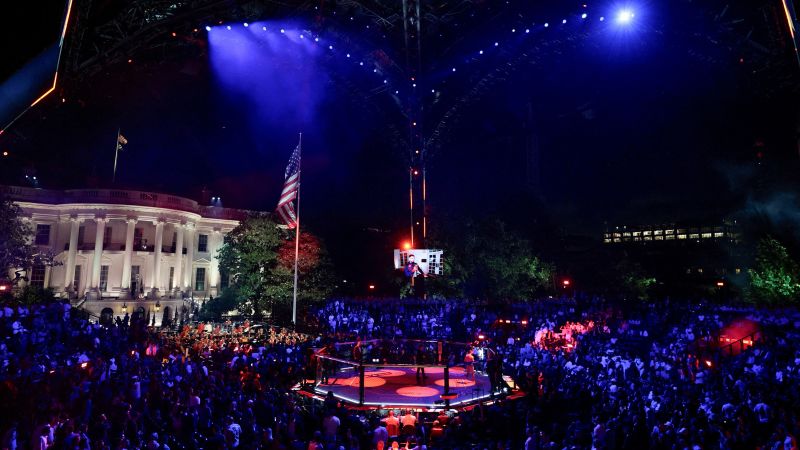
Trump s European after party spoiled – President Donald Trump’s 80th birthday celebration on Sunday night was a spectacle of grandeur, blending military pageantry with the chaotic energy of UFC bouts. Yet, as the sun rose over Monday, the remnants of that evening’s exuberance began to fade, revealing the challenges that loom over his final days in office. While the White House’s elaborate plans for the occasion—complete with a flyover and a series of high-octane combat events—were meant to showcase his flair for the dramatic, they also underscored the growing unease among allies about his leadership style and policies.
The White House’s Extravagant Farewell
Trump, ever the showman, described the night as “one of the most incredible evenings in the history of the White House.” The event, however, was more than just a personal milestone; it was a strategic move to highlight his accomplishments. A memorandum of understanding to end the Iran war was unveiled, a document he claimed would usher in “Middle East peace,” though critics dismissed the assertion as overly optimistic. The president’s ability to spin challenges into triumphs has long been a hallmark of his tenure, and this birthday bash was no exception. Despite the political realities, the festivities were a testament to his knack for turning even the most mundane occasions into memorable events.
“We all have questions. No one’s seen it.” — Republican Sen. James Lankford, addressing the Iran agreement’s transparency
A G7 Summit in the Wake of Excess
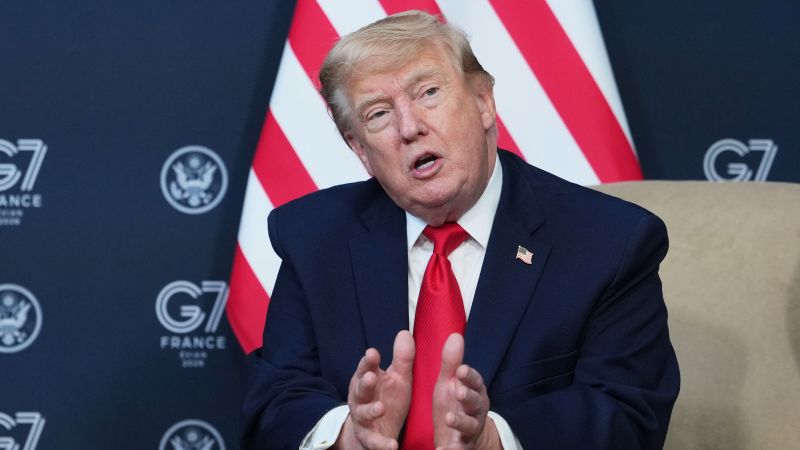
As Air Force One departed the tarmac at 3:15 a.m. Monday, Trump’s voice carried the telltale signs of fatigue, a quiet acknowledgment of the “morning after” that followed his wild celebration. The G7 summit in France, set against the backdrop of the serene Évian-les-Bains, provided a stark contrast to the rowdy festivities. European leaders, ever wary of Trump’s unpredictable nature, braced themselves for another round of diplomatic friction. Yet, the president’s efforts to project confidence were complicated by lingering issues, including the algae infestation that had taken over the newly painted blue bottom of the Reflecting Pool on the National Mall—a subtle yet persistent reminder of the costs of his ambitious projects.
The algae outbreak, a result of a $14 million no-bid contract for renovations, has become a symbol of the administration’s spending habits. While Trump’s supporters hailed the project as a bold statement of his vision for Washington, opponents questioned the sustainability of such lavish expenditures. The incident also highlighted the political fallout from his Iran agreement, which, though celebrated as a breakthrough, faces mounting scrutiny. Critics argue that the memorandum, a “general document” spanning just over a page, lacks the depth required to address Iran’s nuclear ambitions and its control of the Strait of Hormuz—issues that have plagued U.S. foreign policy for years.
The Cleanup of a Political Image
Back home, the cleanup of Trump’s birthday revelry was swift, with the towering “Claw” lighting rig—the centerpiece of the event—soon to be dismantled. The president’s tendency to outdo himself with grand displays of power and pageantry has often overshadowed the substance of his decisions. Even the Kennedy Center, a venue he once sought to immortalize with his name, proved temporary. After a judge ordered its removal from the marble facade, a white tarp temporarily shielded the embarrassment, allowing repairs to proceed without exposing the full extent of the blunder.
“What the MOU does is set up a framework whereby the Iranians get the benefits of the bargain by meeting their obligations under the bargain.” — Vice President JD Vance, defending the Iran agreement
Vance’s remarks offered a glimmer of hope, suggesting that the agreement’s framework could pave the way for lasting peace. However, the revelation that the MOU was based on a “general document” raised concerns about its effectiveness. Trump’s strategy, critics argue, may have only delayed the inevitable, with Iran’s nuclear and missile programs remaining unresolved. The president’s ability to frame complex issues as simple victories has often been both a strength and a weakness, particularly in a landscape where allies are increasingly skeptical of his approach.
Fractures in Transatlantic Relations
Trump’s relationship with European leaders has always been a delicate balancing act. While he once shared a warm rapport with French President Emmanuel Macron, the pair’s friendship has frayed under the weight of geopolitical tensions. The wars in Ukraine and Iran, coupled with Trump’s MAGA worldview, have strained the transatlantic alliance. Macron, ever the diplomat, attempted to mend relations by hosting a lavish dinner at the Palace of Versailles after the G7 summit, a gesture designed to underscore the importance of American presence in Europe. Yet, the evening’s mood was tinged with the reality that Trump’s “America First” agenda has left many European nations questioning his commitment to collective security.
Despite these challenges, Trump’s penchant for public theatrics has remained unchanged. His birthday celebration, with its mix of military displays and UFC combat, mirrored his approach to international diplomacy: bold, brash, and occasionally divisive. The event also served as a reminder of the president’s ability to command attention, even as the underlying issues of his policies continued to gnaw at his reputation. The “clean-up” of the White House after the party was a microcosm of the broader political landscape, where the spectacle of leadership often overshadows the substance of its impact.
The Legacy of a Turbulent Term
As the G7 summit commenced, the weight of Trump’s legacy became increasingly apparent. His name, once etched beside that of John F. Kennedy, now stood as a symbol of both ambition and controversy. The no-bid contract scandal, combined with the algae problem and the Iran agreement’s mixed reception, painted a picture of a presidency that prioritized image over detail. Yet, Trump’s ability to rally his base through such spectacles ensured that his influence, though waning in Europe, remained strong among his core supporters.
While the European after-party may have been disrupted by reality, Trump’s vision of a “very powerful document” in the Iran agreement remains a point of contention. The delay in publishing the memorandum, pending a signing ceremony in Switzerland, has only added to the skepticism. Nonetheless, the president’s flair for the dramatic continues to shape his narrative, even as the practicalities of governance demand more than just showmanship. The road ahead for Trump is uncertain, but the legacy of his tenure—marked by both triumphs and missteps—will endure, a testament to the unique blend of charisma and controversy that defined his leadership.
The tension between Trump’s grandiose ideals and the pragmatic challenges of leadership is a recurring theme. From the UFC fights to the G7 summit, his actions have been both a source of admiration and a catalyst for criticism. As he moves forward in his ninth decade, the question remains: can the same blend of exuberance and unpredictability that made his birthday celebration unforgettable also secure the political stability he seeks in Europe? The answer, it seems, lies in the balance between spectacle and substance—a balance that has eluded him for much of his presidency.