Oldest known evidence of plague reveals the disease’s deadly impact 5,500 years ago

Daftar Isi
New Evidence of an Ancient Plague Outbreak
Oldest known evidence of plague reveals – A groundbreaking discovery in the remote regions of southeast Siberia has uncovered new strains of plague that date back 5,500 years, challenging long-held beliefs about the disease’s origins and its historical impact. This revelation, detailed in a recent study published in the journal *Nature*, suggests that the deadly pathogen *Yersinia pestis* may have affected human populations far earlier than previously thought. The findings were made by analyzing ancient DNA from burial sites, offering a glimpse into how this bacterium devastated communities in prehistoric times.
Plague’s Role in Human History
Known for its catastrophic effects throughout history, plague has been responsible for some of the most devastating pandemics. The infamous Black Death of the 14th century, which swept across Europe, claimed an estimated 25 million lives within five years. However, the origins of this disease remain a subject of intense study. Before this latest research, the earliest known strains of *Yersinia pestis* associated with bubonic plague were dated to roughly 3,800 years ago. Scientists had long theorized that these early versions of the bacterium lacked the genetic traits necessary for widespread outbreaks, casting doubt on their ability to cause mass mortality.
Now, new evidence from Siberian cemeteries suggests that the pathogen’s capacity for devastation may have emerged much earlier. The discovery of plague bacteria in a significant number of individuals from ancient communities has raised questions about how the disease spread and what conditions allowed it to thrive. This research not only pushes back the timeline of plague’s emergence but also highlights its potential to impact diverse groups of people, including those who lived as hunter-gatherers.
Unraveling the Mystery of a Prehistoric Outbreak
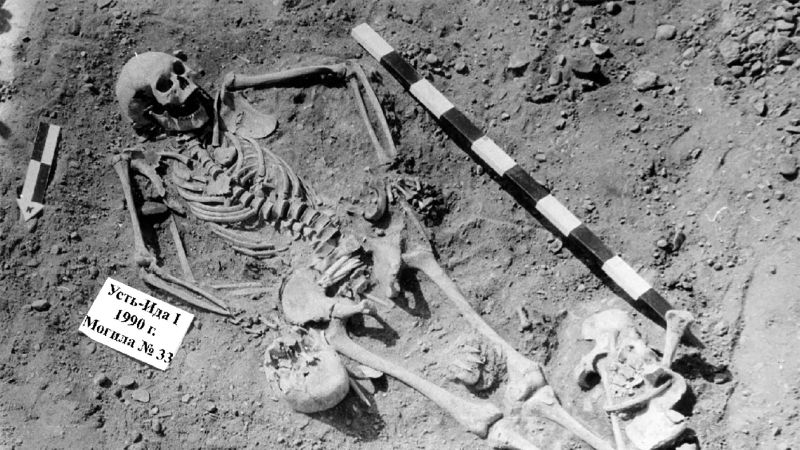
The study’s focus on the Lake Baikal region brought unexpected insights. Archaeologists had been investigating the remains of hunter-gatherers buried in four cemeteries there for decades, but the search for answers led them to an intriguing revelation. Among the 46 individuals examined, 18 showed signs of *Yersinia pestis* infection, indicating that the disease was already present in this isolated group. This finding is particularly striking because the communities were mobile, and their burial practices suggest a close-knit social structure.
The cemeteries, located near the shores of Lake Baikal, reveal a pattern of burial that may have been intentional. Despite their mobile lifestyle, the hunter-gatherers appeared to have consistently buried their dead in these sites for generations. Some researchers speculate that this practice could have been a way to claim the land or honor ancestors. The presence of plague in such a population adds a new layer to this tradition, suggesting that the disease may have been a persistent threat even in these early societies.
Genetic Clues and Disease Transmission
Advanced DNA sequencing techniques played a critical role in uncovering the evidence. By analyzing the genetic material preserved in the remains, scientists were able to identify the presence of plague bacteria and trace its transmission patterns. One of the most remarkable discoveries was a genetic factor that may have heightened the severity of the infection. This trait, found in some of the remains, could explain why the disease had such a profound impact on the community.
Further analysis of the kinship relationships among the buried individuals provided additional insights. Many of the graves contained families, with siblings, parents, and children interred together. This suggests that the plague may have spread within households, as individuals cared for one another. The study also notes that some relatives were buried separately, possibly due to dying in different waves of the disease. These findings support the idea that the outbreak occurred in multiple phases, with two distinct waves of infection separated by a few centuries.
Lead author Ruairidh Macleod, a research fellow at the University of Oxford, emphasized the significance of these results during a news conference. “Hunter-gatherers are constantly moving around the landscape,” Macleod explained. “The theory is that infectious disease can’t really take hold and devastate entire communities in this way. Typically, if somebody gets ill, they’ll move somewhere else. The fact that we’re finding this happening in an isolated group of prehistoric hunter-gatherers challenges that epidemiological theory.”
Rewriting the Timeline of Plague’s Spread
The implications of this discovery are far-reaching. It suggests that *Yersinia pestis* may have originated in human populations much earlier than previously believed, potentially even before its association with livestock. This challenges the prevailing view that the bacterium first infected fleas and then spread to humans through domesticated animals. Instead, the evidence points to a more complex transmission history, with the disease affecting both humans and animals simultaneously.
Eske Willerslev, a coauthor of the study and evolutionary geneticist from the University of Copenhagen and the University of Cambridge, highlighted the importance of the kinship analysis. “The genetic research sheds light on how closely related individuals were buried together,” Willerslev noted. “This implies that the disease was transmitted within families, possibly through close contact or shared environments. It also suggests that early humans may have had limited understanding of how the pathogen spreads, leading to higher mortality rates.”
The study’s authors combined DNA sequencing, archaeological data, and radiocarbon dating to create a comprehensive picture of the ancient outbreak. Radiocarbon evidence indicated that the mass mortality event occurred over a very short period, with many deaths happening simultaneously. This rapid spread of the disease within the community raises questions about the role of environmental factors, such as climate change or resource scarcity, in exacerbating its impact.
Implications for Understanding Pandemics
These findings could reshape our understanding of how pandemics develop and spread. Ian Light-Maka, a postdoctoral associate at the Max Planck Institute for Infection Biology in Berlin, described the results as “astoundingly high” in their implications. “The authors are able to detect probable *Y. pestis* infections at a rate of 39% across the cemeteries investigated,” Light-Maka said. “This is a significant leap from previous research, which found sporadic and isolated cases of the earliest versions of the bacterium. The high prevalence suggests that the pathogen may have been more virulent or better adapted to human hosts than previously assumed.”
The research also highlights the resilience of ancient human societies in the face of such a deadly disease. Despite their mobile lifestyle and the lack of advanced medical knowledge, these communities managed to survive for generations, perhaps through cultural practices that helped them endure the outbreaks. The discovery of plague in hunter-gatherers adds a new chapter to the story of human history, showing that the disease’s reach extended beyond settled populations and into the most nomadic of societies.
As scientists continue to explore the genetic and archaeological records, they may uncover more about the ancient origins of plague and its role in shaping human history. This study not only deepens our understanding of the disease’s timeline but also underscores the importance of interdisciplinary approaches in unraveling the past. By combining genetic data with historical and environmental context, researchers are painting a more complete picture of how *Yersinia pestis* has influenced human populations for millennia.