Qantas locks in launch date for Sydney-London nonstop flights as it debuts the custom jet designed for the trip

Qantas Set to Launch Sydney-London Nonstop Flights with Custom Ultra-Long-Range Aircraft
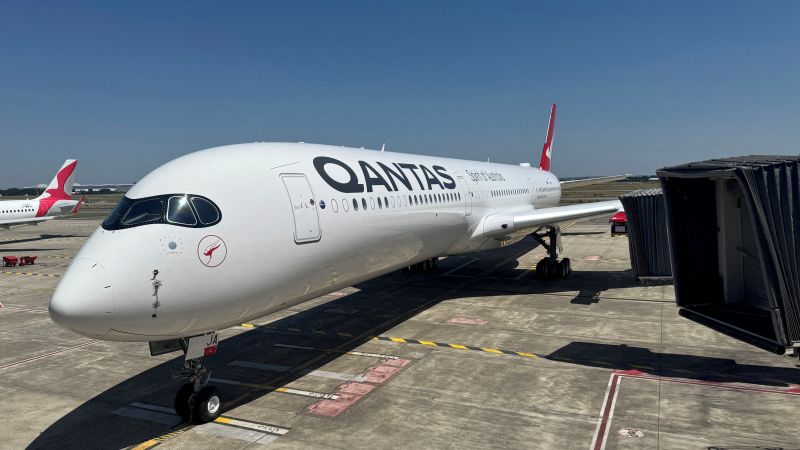
Qantas locks in launch date for Sydney – Commercial aviation has long been driven by the dream of bridging vast distances with direct, uninterrupted travel. After nearly a century of striving, Qantas is nearing the realization of this goal with its ambitious Project Sunrise initiative. The Australian carrier announced this week that its highly anticipated Sydney-to-London and Sydney-to-New York nonstop services will debut in October 2027, marking a pivotal step in the evolution of ultra-long-haul travel. Central to this milestone is the Airbus A350-1000ULR, a specially modified aircraft unveiled at Airbus’ Toulouse facility, which will power these groundbreaking routes.
A New Era of Aviation Innovation
The Airbus A350-1000ULR, designed for extreme range, represents a collaborative effort between Qantas and Airbus to redefine global connectivity. This week’s event showcased the aircraft in its Qantas livery, highlighting the extensive modifications that make it suitable for transcontinental flights. Airbus Commercial Aircraft CEO Lars Wagner emphasized the project’s significance, stating that the plane symbolizes a shift toward becoming a “technology leader” in the industry. The unveiling also drew attention to the aircraft’s engineering breakthroughs, such as an additional fuel tank and a 1,000-nautical-mile range extension, enabling routes previously deemed impractical.
“The fact that Airbus has put so much into this tells you how significant this is,” said CNN aviation expert Richard Quest, who attended the event. “This isn’t just another widebody—it’s a flagship.”
Quest noted that the project’s scale and ambition are reminiscent of the A380 superjumbo’s debut with Singapore Airlines two decades ago. The A350-1000ULR’s development involved rigorous testing and collaboration across multiple departments, with Airbus guiding journalists through its facilities to showcase the aircraft’s capabilities. The CEO, chairman, and CFO of the company were present, underscoring the investment and strategic importance of the project. Executives also shared insights on the economic potential of ultra-long-haul flights and the science behind reducing jet lag for passengers.
Revamping the Passenger Experience
Surviving a 22-hour flight requires more than just a longer runway—it demands a complete overhaul of the passenger journey. Qantas has reimagined the aircraft’s interior to prioritize comfort and well-being, reducing passenger capacity from the standard 400 to just 238. This shift allows for larger cabins, more legroom, and specialized zones tailored to the unique challenges of extended air travel. A wellness area featuring stretching stations and interactive screens aims to keep passengers active, while advanced lighting systems simulate the destination’s time zone to ease the transition from one hemisphere to another.
The cabin’s layout is a key innovation. First class will include private suites arranged in a 1-1-1 configuration, each equipped with an 80-inch flat bed, a separate armchair, and a full-length wardrobe. Business class will offer 52 suites in a 1-2-1 format with sliding doors, providing a balance between luxury and efficiency. Premium economy will feature 40 seats in a 2-4-2 layout, and economy will accommodate 140 passengers in a 3-3-3 configuration. These changes reflect Qantas’ commitment to creating a seamless, comfortable experience for travelers who will spend nearly a full day airborne.
“Project Sunrise has not been based on a leap of faith that customers will want this,” said Qantas CEO Vanessa Hudson. “Those routes are delivering some of the highest customer satisfaction of any flight that we have.”
Qantas has long been a pioneer in long-haul aviation, with routes like Perth to London and Auckland to New York already proving the demand for such services. Hudson explained that the airline’s mission to overcome the “tyranny of distance” dates back over a century, and Project Sunrise is the latest chapter in that legacy. The new aircraft builds on this history, combining proven routes with cutting-edge technology to create a new standard for commercial travel. The airline’s focus on passenger health is also a response to feedback from travelers who have endured the physical and mental challenges of ultra-long flights.
The Science Behind the Flight
Ultra-long-haul travel introduces complex challenges, from cabin pressure to circadian rhythm disruption. Airbus engineers worked closely with Qantas to address these issues through advanced design. The A350-1000ULR’s expanded range allows it to fly direct routes without intermediate stops, but the cabin’s layout and amenities are equally critical. The wellness zone, for example, is intended to combat the effects of prolonged sitting, while lighting systems use a gradual shift in color temperature to help passengers adjust to their destination’s time zone. These features are part of a broader effort to make 22-hour flights not only possible but also tolerable.
The aircraft’s success also hinges on its economic viability. Wagner acknowledged that the project required overcoming skepticism about the cost-effectiveness of such long routes. However, Qantas’ existing ultra-long-haul services, which have consistently met high demand, provide a strong foundation for the new flights. The airline’s experience on these routes, including Perth to London and Auckland to New York, has demonstrated that passengers are willing to pay a premium for the convenience of direct travel. This market validation is a key reason why Airbus has invested so heavily in the A350-1000ULR’s development.
Preparing for Takeoff
The first modified A350-1000ULR has already completed its maiden test flight, with deliveries set to begin next year. This marks a crucial phase in the project’s timeline, as Qantas prepares to introduce a new era of commercial aviation. The aircraft’s performance during testing has been promising, with engineers confirming its ability to sustain the demanding 22-hour journeys. For passengers, the impact is significant: faster travel times, fewer layovers, and a more comfortable experience. For the airline, it represents a bold expansion into the global market, reinforcing its position as a leader in innovation.
As the launch date approaches, the focus remains on ensuring every detail of the aircraft and its operations is optimized for success. From the cabin’s ergonomic design to the fuel efficiency of the aircraft, Qantas and Airbus are working to set a new benchmark for transcontinental travel. The Sydney-London route, in particular, is expected to become a flagship service, showcasing the capabilities of the A350-1000ULR and the potential for even longer flights in the future. With October 2027 fast approaching, the aviation world is watching closely to see how this milestone reshapes the way we travel across the globe.
The project’s culmination is not just a technical achievement but a cultural shift in how distance is perceived. By eliminating the need for stopovers, Qantas is offering a glimpse into a future where global travel is more fluid and interconnected than ever before. Whether it’s through the science of jet lag mitigation or the luxurious amenities designed for endurance, the A350-1000ULR is more than an aircraft—it’s a symbol of humanity’s drive to push the boundaries of the skies.