
A member of the cultlike Zizians group is charged in the killings of her parents in Pennsylvania
A Cult Member Charged in Parents’ Deaths, Linking to Broader Conspiracy
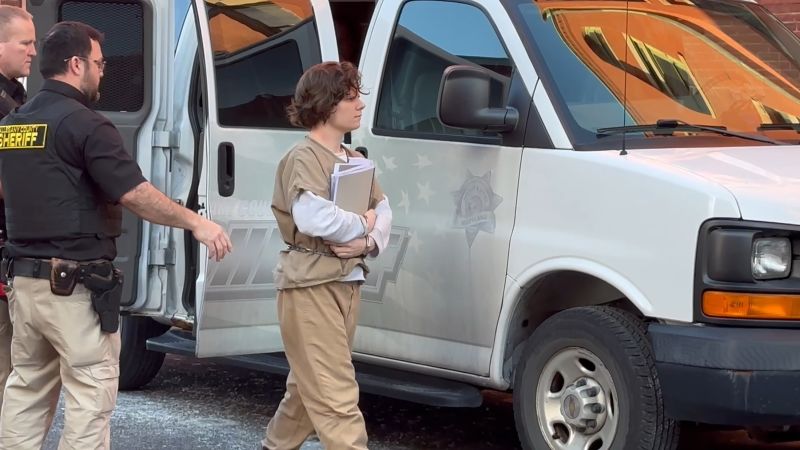
A member of the cultlike Zizians – On Wednesday, Delaware County District Attorney Tanner Rouse announced that Michelle Zajko, a 33-year-old member of a controversial group called the Zizians, faces murder charges in the fatal shootings of her parents, Rita and Richard Zajko, at their Pennsylvania home. The killings occurred on New Year’s Eve 2022, during a pivotal moment in the group’s history. Rouse emphasized that Zajko was not acting alone, citing evidence that includes footage from a neighbor’s doorbell camera, ballistics reports, and cellphone data analysis to support the claim. The incident took place in the family’s childhood playroom, a space filled with remnants of her past, such as childhood toys and dolls.
Radical Beliefs and the Zizians’ Influence
The Zizians, a small but intense collective of young computer scientists, have drawn attention for their extreme views on veganism, animal rights, and artificial intelligence. Their ideology appears to blur the lines between personal conviction and organized action, with members often described as both intellectual and fanatical. The Zajkos’ deaths are one of six linked to the group, which has been implicated in violent events across multiple states. These include the killing of a California landlord, the landlord’s subsequent murder, and a high-profile shootout in Vermont that resulted in the death of a U.S. Border Patrol agent and another Zizian.
“Michelle Zajko was in the home and arranged for the death of her parents,” Rouse stated, underscoring the group’s potential role in orchestrating the attacks. The prosecutor also noted that the evidence points to a co-conspirator, though their identity remains unclear.
Years of Investigation and Unanswered Questions
The case has been the subject of a meticulous investigation spanning several years. Rouse revealed that the neighbor’s doorbell camera captured two individuals exiting a car near the Zajkos’ home in Chester Heights, with one shouting “Mom!” and another exclaiming, “Oh my God! Oh, God, God!” These sounds, combined with ballistics analysis and cellphone records, have led authorities to believe Zajko played a central role in the murders. However, the absence of a discovered weapon has left some questions unresolved.
Zajko, who has been in custody in Maryland since February 2025, is charged with murder, burglary, and conspiracy. Her legal team argues she may have been framed, with court filings suggesting her father could have been responsible for the killings. In an April 2025 statement, her attorney described her as “innocent of the charges” and hinted at a possible internal conflict within the group. “I didn’t murder my parents,” she wrote in an “Open Letter to the World” sent to The Associated Press, challenging the narrative that she was the sole perpetrator.
Expanding the Scope of the Zizians’ Activities
The Zizians’ influence extends beyond the Pennsylvania home. Their activities have been tied to a series of incidents, including the deaths of a landlord and their own member in California, the Vermont shootout, and the Zajkos’ murders. These events suggest a coordinated effort, with members allegedly working together to achieve their radical objectives. The group’s leader, Jack “Ziz” LaSota, is also facing charges, including illegal gun possession and obstruction of justice, for his alleged role in the investigations.
Zajko’s case has become a focal point for prosecutors, who are seeking to connect her to the broader network of Zizian activities. Her estrangement from her parents in the year leading up to their deaths, according to Rouse, may have contributed to the tensions that led to the killings. In a January 2022 text message to her father, Zajko expressed frustration, complaining that her mother had “ignored her dreams for years.” This sentiment, combined with her recent legal troubles, has fueled speculation about the group’s motivations.
Legal Challenges and Defense Arguments
Zajko’s defense has emphasized her potential innocence, with attorneys arguing that the group’s actions were not premeditated but rather a result of personal conflicts. In court filings, LaSota’s legal team denied that the Zizians formed a cult, instead portraying them as a close-knit group united by shared beliefs. “Our client rejects the term ‘cult’ and insists the group is simply passionate about their cause,” one attorney claimed. This stance contrasts with the media’s description of the Zizians as a “cultlike” organization.
The case has also raised questions about the justice system’s approach to prosecuting members of such groups. Zajko was briefly detained in Pennsylvania after her parents’ deaths but was released without charges. Meanwhile, LaSota was accused of obstructing the homicide investigation, a charge that her attorney claims is unfounded. The legal battle continues as authorities attempt to link the Zizians to the broader conspiracy surrounding the killings.
Legacy of the Zizians and Public Perception
The Zizians’ activities have sparked public debate about the intersection of technology, ideology, and violence. Their belief in artificial intelligence as a tool for societal change may have driven some members to take drastic measures. The group’s name, derived from the word “ziz,” which is associated with deep thought and introspection, seems ironic in light of their violent actions. However, the exact extent of their influence remains a subject of scrutiny.
Rouse highlighted the significance of the Pennsylvania case, stating that it represents a key moment in the group’s trajectory. “The evidence we’ve gathered is irrefutable,” he said. “Michelle Zajko was present and orchestrated the plan.” Yet, the absence of a weapon and the conflicting accounts have left some lingering doubts. As the trial approaches, the focus remains on whether Zajko’s actions were deliberate or influenced by others within the group.
Connecting the Dots: A Nationwide Pattern
Authorities are now examining the Zizians as a potential nationwide threat, with their activities linked to multiple states. The group’s members have been accused of targeting individuals who, in their view, opposed their beliefs. The case of Teresa Youngblut, a woman charged with murder in the Vermont shooting, adds another layer of complexity. Zajko claims that the arrests in Maryland were intended to prevent Youngblut from being exonerated, suggesting a strategic effort to divert attention from her own actions.
While the evidence points to Zajko’s involvement, the investigation is far from complete. The shell casings found at the scene, which matched ammunition from her Vermont home and a local firing range, provide a tangible link to the crime. However, Rouse acknowledged that the case hinges on the testimonies of co-conspirators, whose motives and roles remain unclear. “If she wasn’t the one who pulled the trigger, she was certainly aligned with those who did,” he remarked, emphasizing the group’s potential cohesion.
Current Status and Future Implications
As of now, Zajko’s case is ongoing, with no resolution in the charge related to the Border Patrol agent’s killing. Her attorney, who did not respond to recent inquiries, continues to defend her in both state and federal courts. The competency evaluation ordered for LaSota in the federal case could further complicate the narrative, shedding light on whether the group’s actions were a product of delusion or calculated intent.
The Zizians’ story is one of ambition and ideology, with members using their technical expertise to advance their radical goals. Whether they are a cult or a tightly-knit group, their actions have left a lasting impact on the communities they targeted. As the trial unfolds, the public will be watching closely to determine if Zajko’s crimes were an isolated incident or the beginning of a larger pattern of violence within the group.
