
Hunting a ghost through Sherwood Forest: On the elusive trail of the real Robin Hood
Hunting a Ghost in Sherwood Forest: The Real Robin Hood’s Elusive Legacy
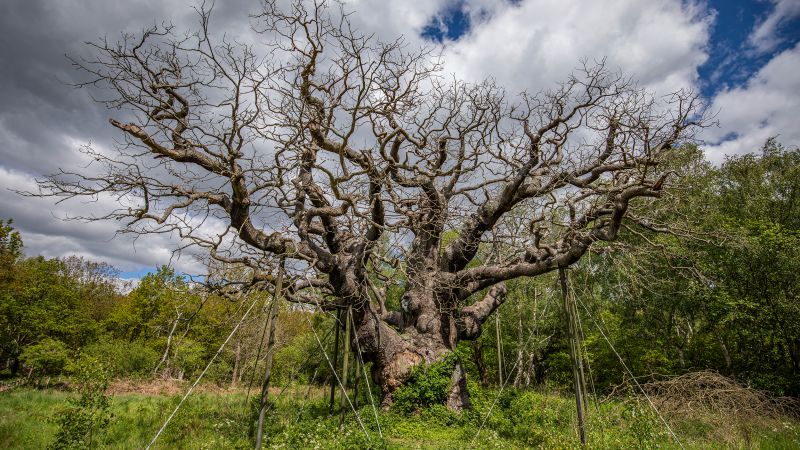
Hunting a ghost through Sherwood Forest – Hunting a ghost through Sherwood has long been a pursuit of myth and memory, but for Ade Andrews, it’s a tangible journey into history. Over the past three decades, he’s transformed the English forest into a living time machine, allowing visitors to step back centuries with every rustle of leaves. Last week, the legend took a somber turn with the passing of the Major Oak—a 1,000-year-old tree believed to have sheltered Robin Hood and his band of outlaws. While the tree’s demise marks a loss, the story of the outlaw continues to captivate millions, proving that the spirit of the legend is far from extinguished.
The Legend’s Evolution
Robin Hood’s tale has evolved dramatically since its roots in medieval ballads. From a disreputable 13th-century bandit to a global cultural icon, the figure now embodies both rebellion and chivalry. The Major Oak, which has stood for over a millennium, symbolizes this transformation. As the tree’s life force wanes, its role as a physical anchor to the legend becomes even more poignant. Yet, the forest itself remains unchanged, preserving the essence of a world where outlaws once roamed and knights still dreamed.
Historical Echoes in the Greenwood
Though the Major Oak’s story is now a chapter in the forest’s history, its significance stretches beyond its own existence. The tree has witnessed pivotal moments in British history, from the Norman conquest to the Industrial Revolution. Today, Sherwood Forest spans just 800 acres, but its heart is as vibrant as ever. Andrews, who has guided tours through this space for over 30 years, describes it as a place where the past is alive. “You don’t need to imagine,” he says. “Your mind is receptive to the experience of being in the past.”
“It’s a magical landscape. In the city, you’re in the 21st century, in a concrete jungle. In Sherwood Forest, as soon as you step from the visitor center onto the greenwood path between the oaks, you step back in time.” — Ade Andrews
This sentiment captures the allure of the forest, where every towering oak whispers tales of a bygone era. The modern visitor center serves as a gateway, offering a curated experience that blends history, folklore, and the mythic aura surrounding Robin Hood.
Andrews, who once served as a heritage ranger, now embodies the legend as a living figure. His role as Robin Hood is both an homage and an interpretation, reflecting the many faces of the outlaw. While the forest remains the setting for his adventures, the city of Nottingham has transformed dramatically. Yet, the ceremonial Sheriff—a nod to the medieval era—still lingers, reminding visitors of the legend’s enduring roots.
Historians argue that the myth of Robin Hood was born from real people and events. In 1262, a man named William Robehod was tried for theft in Reading, a rare surname that hints at the possibility of a historical figure. The name “Robin Hood” first appeared in literary form in the 1370s, within the poem Piers Plowman, where he is portrayed as a rogue who rejects religious authority. This early reference sets the stage for a character who would become both a symbol of rebellion and a cultural touchstone.
As the Major Oak’s legacy fades, the question remains: was Robin Hood a man of legend or a figure rooted in reality? While the forest offers a sense of place, the story continues to unfold in the minds of those who chase its elusive traces. Whether through film, literature, or the whispered tales of the greenwood, the legend of Robin Hood endures—a ghost that haunts the imagination as fiercely as it once haunted the halls of Nottingham Castle.
