
Second cannonball found at the Alamo reveals more information about the historic battle
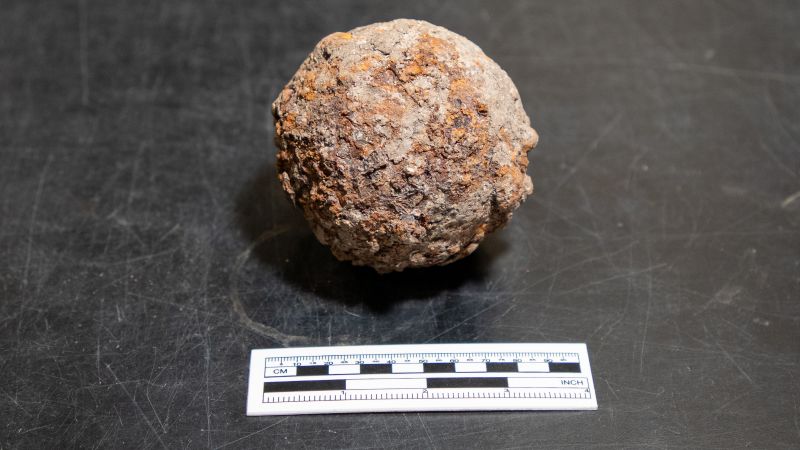
Historic Battle of the Alamo Gets New Clue with Unearthed Cannonball
Second cannonball found at the Alamo – In a significant archaeological breakthrough, a previously unknown iron cannonball linked to the 1836 Battle of the Alamo has been uncovered in San Antonio, Texas. This discovery, made in June by researchers at the Alamo Trust, marks the second time an intact cannonball from the pivotal conflict has been found at the site, offering fresh insights into the battle’s weaponry and tactics. The artifact was unearthed just three feet beneath the surface near the Alamo Church, an area that had remained undisturbed for over a century.
The team, led by Dr. Tiffany Lindley, director of archaeology at the Alamo Trust, has been conducting excavations to map the site’s historical layers. The newly found cannonball, which is believed to have been fired from a 6-pound cannon, stands in stark contrast to the first artifact of its kind, a 4-pound bronze cannonball discovered in March. That earlier find, made just one day before the 190th anniversary of the battle, was located approximately six feet away. Together, these two cannonballs represent a rare glimpse into the military equipment used during the Texas Revolution.
A Symbol of Defiance and Sacrifice
The Battle of the Alamo, a defining moment in Texas history, was more than just a military engagement—it became a rallying cry for independence. For 13 days, a coalition of Texians, Anglo-American settlers, and Tejanos, Mexican Americans born in Texas, held the mission against a vastly outnumbered Mexican army. Despite their valiant efforts, the defenders were ultimately defeated, and the phrase “Remember the Alamo!” emerged as a powerful emblem of their struggle.
The Mexican forces, after securing their victory, systematically removed all remaining artillery from the site. According to Lindley, this action essentially “wiped clean” the battlefield, leaving few remnants of the conflict’s weaponry. However, the two cannonballs discovered this year were overlooked during that process. “What’s so amazing about this find is that one, they were missed by the Mexican army,” Lindley said, emphasizing the rarity of such intact artifacts. “And two, they remained untouched for 190 years. And then there they are, they’re still there.”
Metals and Missiles: Tracing the Battle’s Tools
Researchers have been analyzing the distinct materials of the two cannonballs to determine their origins. The bronze specimen, found earlier this year, is believed to have belonged to the Mexican army, while the iron version is thought to have been used by the Texians. Lindley explained that this distinction is based on historical records of the artillery deployed during the battle. “The use of different metals helps us piece together which side utilized these weapons,” she noted, highlighting the importance of such details in understanding the battle’s dynamics.
Despite centuries of activity, construction, and previous excavations, parts of the Alamo site have remained undisturbed. “Whenever there’s a new artifact discovered from whatever era of that mission, it’s exciting,” said Lee Spencer-White, founder and president of the Alamo Defenders Descendants Association. “Not only to the descendants, but everyone else because it highlights our local history.” Spencer-White’s words underscore the emotional and cultural weight of these discoveries, which connect modern Texans to their ancestors’ struggles.
Preserving the Past for Future Generations
The Alamo Trust, a nonprofit dedicated to the site’s preservation, has announced a $700 million renovation project to protect the original structures and battlefield. This initiative includes the construction of a new visitor center and museum, which will showcase the artifacts, including the recently uncovered cannonballs, as part of an expanded exhibit. “We might not be able to preserve all of the artifacts,” Lindley acknowledged, “but we’re able to preserve that knowledge and make sure the voices of the past are still being spoken today.”
The museum is set to open in the spring of 2028, providing visitors with a deeper understanding of the battle’s significance. The Alamo, one of five missions that compose the UNESCO World Heritage site of the San Antonio Missions, holds a unique place in American and Mexican history. Its role in the Texas Revolution, which culminated in the creation of the Republic of Texas, remains a cornerstone of regional identity. The cannonballs, as tangible relics of this era, reinforce the site’s historical narrative and the sacrifices made by those who fought there.
While the Mexican army salvaged much of the artillery after the battle, some pieces were left behind. These undetected remnants have now surfaced, offering researchers a chance to re-examine the conflict’s equipment. “The army went through, and they don’t have the privilege we have today of just going to the store and buying new ammunition,” Lindley remarked. “They’re going and they were picking up everything that can be salvaged.” This comment highlights the resourcefulness of the Mexican forces, who repurposed battle materials for future campaigns.
Legacy and Lessons in a Modern Context
For many Texans, the Alamo’s history is more than a tale of bravery—it’s a reflection of their heritage and values. The battle’s legacy continues to inspire, with its lessons on perseverance and unity resonating in contemporary society. “The sacrifices made during the battle and the values fought for continue to carry a meaningful impact to this day,” said Spencer-White, emphasizing the enduring relevance of the Alamo’s story.
The recent discoveries also spark curiosity about the broader historical context of the Texas Revolution. The Alamo’s role as a strategic stronghold was crucial, and the presence of these cannonballs adds to the site’s significance as a repository of wartime history. While the battle itself ended in defeat for the Texians, it ignited a movement that eventually led to Texas’s independence from Mexico. The artifacts now being uncovered help bridge the gap between the past and present, ensuring that the battle’s legacy remains vivid for future generations.
As the Alamo Trust works to complete its renovation, the site is poised to become a more immersive historical landmark. The new visitor center will not only display the cannonballs but also provide educational resources to deepen public understanding of the Texas Revolution. “Discoveries like this validate, they reinforce the consciousness of the battle,” said Dr. Andrés Tijerina, a professor of history emeritus at Austin Community College. Tijerina’s statement underscores the importance of these findings in preserving the collective memory of the conflict and its impact on American history.
Together, the two cannonballs serve as a testament to the resilience and ingenuity of those who fought at the Alamo. Their survival through nearly two centuries of neglect and activity is a reminder of the enduring nature of historical events. As researchers continue their work, the Alamo’s story is being told in new ways, ensuring that its lessons remain a part of the American consciousness for years to come.
