
Pete Buttigieg was briefly separated from his children after police say he was target of false report
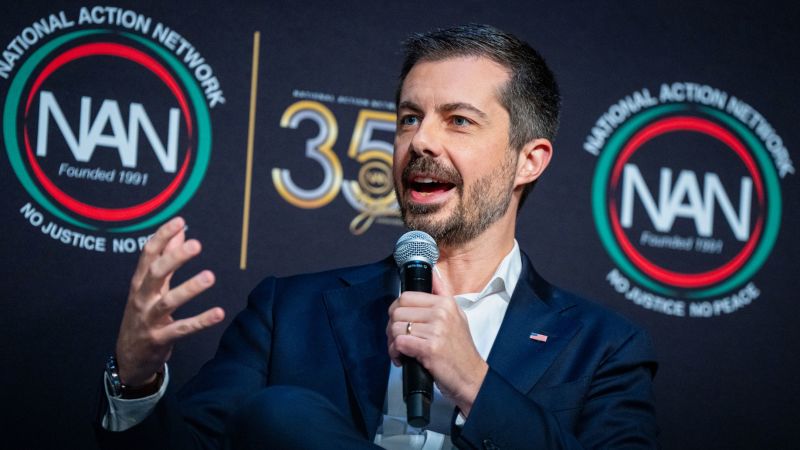
Pete Buttigieg’s Children Separated in False Allegation Incident
Pete Buttigieg was briefly separated – Former U.S. Transportation Secretary Pete Buttigieg faced a harrowing experience when his children were temporarily removed from his care following a false report, according to a statement he shared on Substack. The incident, which unfolded during Pride Month, left him grappling with a mix of emotions, as he recounted it as “one of the most challenging periods of my life.” The report, which claimed he was a danger to his four-year-old twins, was deemed unfounded by Michigan State Police after a thorough investigation. Despite the allegations, authorities concluded the report was politically motivated, prompting a brief separation from his children.
Buttigieg described the ordeal as a 24-hour crisis that began when an anonymous caller accused him of endangering his family. The police responded swiftly, sending an officer to his home to investigate the claim. While the exact details of the report remain unclear, Buttigieg emphasized that the accusation was based on a fabricated story. He stated that the officer and a child protective services worker arrived at his residence, instructing him not to be alone with his children until forensic interviews were completed. The process involved questioning the twins, who were just four years old, about their safety in the household.
“I cannot describe the mix of rage and sadness that I feel at the idea that someone brought our children into this,” wrote Buttigieg. “They are four years old. Four. They do not know or care what a Democrat or a Republican is.”
The false report was linked to an anonymous allegation that Buttigieg had confessed years earlier to violent crimes during a chance meeting in Alabama. He clarified that he had never visited the town in question, yet the claim was used to justify the scrutiny. Michigan State Police confirmed that the report was “anonymous” and that they and Child Protective Services “responded and determined the report was false.” This conclusion, however, did not prevent the temporary separation, which left Buttigieg feeling vulnerable and betrayed.
As a prominent figure in the Democratic Party and a potential presidential candidate for 2028, Buttigieg has long been a target of conservative criticism. Anti-LGBTQ activists and some Republican officials have repeatedly attacked him for his role as a same-sex parent, often highlighting his work with the Biden administration to challenge traditional family norms. The incident with the false report is seen by many as an extension of this pattern, where political opponents use personal matters to undermine his public image.
The timing of the report was notable, as it occurred shortly after Buttigieg shared photos of his family online for Father’s Day. This act of public visibility, meant to celebrate his role as a parent, became a catalyst for the false accusation. The former transportation secretary had previously faced backlash for taking paternity leave while his husband Chasten and he adopted their twins. Critics argued that his time off was an example of “selfish” behavior, despite the fact that adoption is a common and widely accepted practice among LGBTQ families.
Buttigieg’s experience is not unique. Law enforcement agencies across the country have noted a rise in swatting incidents, where individuals make false emergency calls to divert resources and create chaos. This tactic, often used for political or personal reasons, has increasingly targeted public officials. The recent case against Buttigieg exemplifies how such attacks can escalate quickly, placing both the victim and the authorities in a precarious situation.
In a statement, Michigan State Police reiterated that the report was anonymous and that their investigation found no evidence to support the claims. They also mentioned that Child Protective Services played a key role in verifying the false nature of the allegations. However, the separation of Buttigieg’s children from their father for a night left a lasting impression. He described the event as a reflection of a broader trend in political warfare, where personal relationships are weaponized to challenge a candidate’s credibility.
The incident took place during June, a month traditionally associated with Pride Month, which celebrates LGBTQ rights and visibility. In contrast, Alabama has designated June as Strong Families Month, emphasizing the role of fathers in family structures. Gov. Kay Ivey’s proclamation highlights the belief that “fathers are the head of the household,” and that homes led by a father and mother are essential for children’s development. This ideological clash underscores the growing polarization around family definitions and the political implications of such debates.
Buttigieg’s situation also brings to light the emotional toll of false accusations on families. He noted that the incident was “the ugliest thing that has happened to me since my career in service began,” emphasizing the personal stakes involved. The temporary removal of his children from his care, while not causing long-term harm, was a stark reminder of how quickly a personal narrative can be twisted in the political arena. For a couple who had already faced scrutiny over their parenting choices, the ordeal added another layer of difficulty.
Experts suggest that the use of swatting as a political tool is becoming more common. By fabricating emergency scenarios, attackers can disrupt public officials’ lives and draw media attention to their cause. In Buttigieg’s case, the false report was not just a personal attack but also a strategic move to challenge his image as a family-friendly leader. The incident highlights the intersection of personal life and political strategy, where even the most intimate moments can be manipulated for public gain.
Despite the initial separation, Buttigieg’s children were eventually reunited with him. However, the experience has left a lasting impact. He has since spoken about the importance of protecting LGBTQ families from such attacks, calling the incident a “symbol of the increasing intensity of political battles.” As the nation continues to debate the role of same-sex parents in society, cases like this serve as a reminder of the challenges faced by public figures who advocate for inclusive family structures.
Looking ahead, the incident may influence the political landscape, particularly as candidates prepare for future elections. Buttigieg’s story is one of many that illustrate how personal lives are intertwined with public perception. Whether through adoption, paternity leave, or family celebrations, LGBTQ leaders are often under scrutiny. The false report against Buttigieg is a testament to how these tensions can escalate, turning a simple family moment into a political crisis. As he continues his career, the experience may shape his approach to advocacy, reinforcing the need for support and understanding for all families, regardless of their structure.
