
National Geographic’s new $300 million museum lets you relive 138 years of exploration
National Geographic’s $300M Museum Lets You Relive 138 Years of Exploration
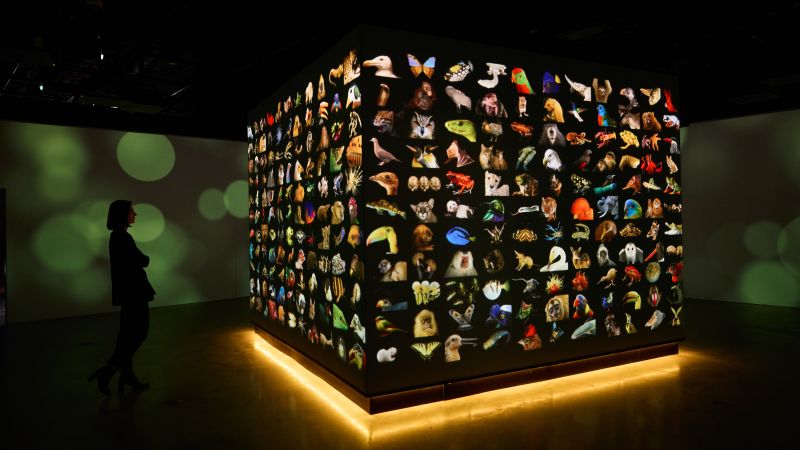
National Geographic s new 300 million – Opening its doors on June 26, National Geographic’s $300 million museum in Washington, DC, invites visitors to step into the shoes of explorers who have shaped the world’s understanding of nature and culture. This 100,000-square-foot space, situated near the National Geographic Society’s headquarters, merges technology with tradition to showcase the society’s legacy from its 1888 founding to modern scientific advancements. The museum’s design is a testament to the enduring power of visual storytelling, offering an engaging experience that spans the globe through interactive exhibits and iconic imagery.
A Fusion of History and Innovation
The museum’s layout is a masterclass in blending historical reverence with cutting-edge interactivity. On the first floor, a digital wall scrolls through every National Geographic cover, capturing the evolution of photography that has defined public perception of the natural world. This living archive, paired with a digital darkroom and immersive storytelling zones, allows visitors to explore the lifecycle of a documentary from research to publication. The “In Focus” exhibit highlights pivotal moments, such as the first nocturnal wildlife photographs and the poignant final image of Sudan, the last male northern white rhinoceros, who died in 2018.
“This museum tells the story of amazing humans who’ve explored, from our founding in 1888 all the way up to people doing work in the field today,” said Emily Dunham, chief campus and experiences officer. “It’s not just about the discoveries—it’s about the people behind them.”
Interactive Journeys Across Continents
Every corner of the museum is designed to foster curiosity and connection. The lobby features dynamic displays that bring glaciers, deep-sea trenches, and remote communities to life through immersive video projections. A circular skylight bathes the space in natural light, while life-sized wildlife statues—such as a jaguar hunting a capybara—create a sense of presence. These elements, combined with the museum’s focus on exploration, ensure that visitors feel as though they are part of the narrative unfolding around them.
For families, the museum offers tailored experiences that bridge education and entertainment. A hidden passage accessible via a bookcase leads to the “Geoverse,” a 270-degree theater where children can virtually explore the Peruvian cloud forests or the Australian outback. The design emphasizes storytelling, with each exhibit weaving a narrative that connects past discoveries to present-day challenges. This approach not only educates but also inspires a deeper appreciation for the planet’s diverse ecosystems.
Tools of Discovery: Science and Conservation in Action
Upstairs, the “Rolex Explorers Landing” highlights the technology and methods that drive modern exploration. Here, visitors can see replicas of tools like the JIM suit, the pressurized diving apparatus used by oceanographer Sylvia Earle to explore 1,250 feet of the ocean in the 1970s. The exhibit also showcases the mokoro, a traditional canoe used to map the Okavango basin, alongside personal stories from explorers like Steve Boyes, who recounted his grandfather’s binoculars—once used to spot four leopards in a single frame.
“These are my grandfather’s binoculars,” Boyes reflected, recalling the moment he first glimpsed the hidden world of the Okavango through them. “They remind me of the patience and precision required to document nature’s secrets.”
Interactive maps trace the evolution of field research, from the 2019 expedition that installed the world’s highest weather station near Everest’s summit to ongoing efforts to chart the Amazon’s waterways. These maps are not just visual tools but living records of scientific progress, demonstrating how innovation and human determination continue to expand the boundaries of knowledge. The use of multimedia, such as whale projections that drift across walls, further enhances the sensory experience, immersing guests in the environments they are exploring.
