
Iran says it hit US targets as tensions over Strait of Hormuz strain agreement
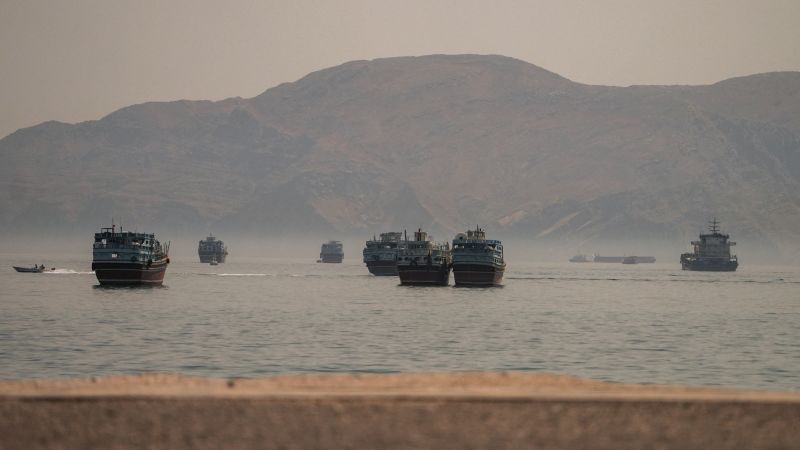
Iran says it hit US targets as tensions over Strait of Hormuz strain agreement
Iran says it hit US targets – Amid rising hostilities, Iran announced it had launched attacks on U.S. military installations across the Middle East, directly responding to recent U.S. strikes near the strategic Strait of Hormuz. This escalation threatens to unravel the fragile peace deal between the two nations, signed just days earlier. The Iranian Revolutionary Guards, as reported by state media Press TV, claimed responsibility for targeting U.S. positions, with the foreign ministry accusing Washington of breaching the agreement. While the U.S. military has not yet confirmed the attacks, the incident marks the first major clash since the accord was inked last week.
Escalation in the Strait of Hormuz
Bahrain, home to a U.S. military base, faced its own disruption when Iranian drone strikes hit its territory early Saturday. The country’s foreign affairs ministry labeled the attacks a “clear violation of its sovereignty.” Though the exact targets remain unspecified, the strikes have intensified regional concerns. Meanwhile, an unidentified projectile struck a tanker in the Strait of Hormuz, damaging the vessel but leaving its crew unscathed, according to the United Kingdom Maritime Trade Operations (UKMTO). The incident has prompted UKMTO to advise ships to exercise caution when transiting the strait, highlighting the growing risks.
The Joint Maritime Information Center (JMIC), a U.S. Navy-led body, raised the threat level in the strait to “substantial” on Saturday, citing attacks on merchant vessels as the catalyst. This move suggests the U.S. is preparing for heightened activity in the region. The JMIC also announced an expansion of the strait’s navigational routes near Oman, aiming to accommodate increased traffic in both directions. This adjustment appears to be a strategic effort to counter Iran’s influence over the waterway, which is vital for global oil shipments.
Back-and-Forth Strikes
Iran’s attacks came after U.S. military operations on Friday, which targeted Iranian missile and drone storage facilities as well as coastal radar sites. Central Command (CENTCOM) confirmed the strikes, stating they were aimed at “Iranian military assets near the strait.” The U.S. argued that these actions were necessary to deter Iranian aggression toward commercial shipping, which had previously been a point of contention. “The unwarranted aggression against commercial shipping by Iranian forces clearly violated the ceasefire,” a CENTCOM spokesperson noted.
However, the Iranian response has been equally assertive. By striking U.S. positions, Tehran has signaled its dissatisfaction with the agreement, which was signed in June and outlines the gradual resumption of normal maritime traffic through the strait. The deal, a key component of the broader U.S.-Iran peace accord, mandates that Iran “make arrangements using its best efforts” to ensure the safe passage of vessels. Despite this, the terms have left room for interpretation, particularly regarding Iran’s right to impose fees on ships passing through the strait. This ambiguity has fueled disputes, with U.S. officials insisting the waterway will remain toll-free, while Iran maintains it has the authority to charge fees.
The recent clashes have reignited tensions over the strait, one of the world’s most critical shipping chokepoints. The agreement, which aims to stabilize the region, was signed amid hopes of reducing conflict and restoring economic cooperation. Yet, the attacks have cast doubt on its effectiveness. The Joint Maritime Information Center (JMIC) has been monitoring the situation closely, raising the threat level as a precautionary measure. This development underscores the fragile nature of the truce, with both sides accused of undermining the accord through military actions.
Political Responses and Uncertainty
As the conflict escalated, U.S. President Donald Trump characterized the Iranian attack on a commercial vessel near the strait as a “foolish violation” of the peace deal. The incident, which occurred on Thursday, marked the beginning of the current phase of hostilities. Trump’s sharp critique of Iran’s actions highlights the political stakes of the situation, even as a U.S. official sought to temper concerns. “These strikes do not indicate a return to major combat operations, at least for now,” the official told CNN, suggesting the conflict may remain limited.
“Violence will be met with violence,” said Vice President JD Vance, who played a central role in negotiating the June agreement with Iran. His statement reflects the hardline stance adopted by some U.S. leaders, emphasizing that Iran’s aggression will not go unanswered. This sentiment aligns with the broader geopolitical context, where the U.S. and Iran continue to vie for control over strategic assets in the region.
The agreement’s provisions, however, have left room for disagreement. While the U.S. has pledged to protect commercial vessels, Iran’s actions suggest it may be prioritizing military deterrence over economic cooperation. The tension over the strait’s control has become a focal point of the dispute, with the U.S. accused of imposing its influence and Iran defending its sovereignty. The recent strikes have not only disrupted maritime traffic but also raised questions about the durability of the peace deal.
Analysts note that the strait’s strategic importance makes it a prime location for conflict. As a vital artery for global trade, its security directly impacts energy markets and international commerce. The current situation, with both nations engaging in targeted strikes, highlights the delicate balance between diplomacy and military readiness. While the agreement was intended to ease hostilities, the back-and-forth attacks have reignited fears of a renewed war, particularly as the U.S. and Iran continue to interpret the terms of the deal differently.
In response to the escalating crisis, CNN has sought comments from the White House and CENTCOM to clarify the situation. The U.S. military remains focused on maintaining stability in the region, though its actions near the strait have been met with Iranian retaliation. The latest developments, including the drone strikes on Bahrain and the damaged tanker, underscore the complexity of the conflict. As the JMIC raises its threat level and expands navigational routes, the international community watches closely, aware that the Strait of Hormuz remains a flashpoint for potential escalation.
The Iran-U.S. agreement, though a significant step toward peace, now faces scrutiny over its practicality. The dispute over the strait’s control has exposed underlying tensions, with each side seeking to assert dominance. As the situation unfolds, the success of the agreement will depend on the willingness of both nations to uphold its terms, even as they navigate the challenges of military confrontations and geopolitical rivalry.
