
They were the ‘unsung heroes’ of firefighting. Their deaths mark a grim milestone for the new wildland fire service
Tragic Loss Marks First Deaths for US Wildland Fire Service
They were the unsung heroes of firefighting – On a Saturday in Rifle County, Colorado, the Helitack crew’s routine firefighting operation turned into a harrowing confrontation with nature. The Knowles Fire, a rapidly advancing blaze along the western edge of the state, caught the team off guard. Within moments, a critical radio call — “Get out of there now” — signaled the impending danger. The firefighters, already in the heart of the flames, were swiftly trapped and forced to deploy foil-lined shelters as their last resort. Three members of the crew — Emily Barker, 38; Nick Hutcherson, 27; and Sydney Watson, 27 — perished in the burnover, according to the US Department of Interior. Two others sustained injuries, requiring immediate medical attention.
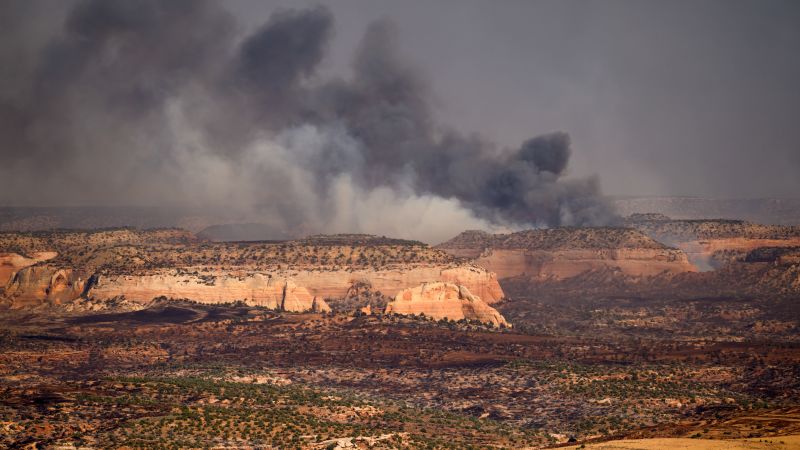
The incident marks a somber milestone for the newly established US Wildland Fire Service, which began operations in January. As the first fatalities attributed to the agency, the tragedy underscores the heightened risks faced by those dedicated to combating wildfires. While the service aims to streamline coordination across public lands, its debut has already been shadowed by disaster. The Snyder Fire, which later merged with nearby blazes, now stands as a testament to the scale of the crisis, with over 28,000 acres scorched in just a few days.
Fire Behavior Defies Expectations
Utah Governor Spencer Cox described the Snyder Fire as an unprecedented challenge, citing a historic drought and blistering winds as key factors. Gusting up to 60 mph over the weekend, these conditions transformed the landscape into a tinderbox, accelerating the spread of flames and complicating containment efforts. “We are seeing fire behavior that even our most experienced firefighters say they’ve never witnessed before,” Cox remarked, highlighting the chaotic nature of the blaze.
The situation near the Colorado-Utah border has become increasingly dire, with multiple fires converging into a single, sprawling inferno. Despite the service’s modern approach, the risks remain as formidable as ever. The deaths of the three firefighters — occurring early in the dry summer season — serve as a stark reminder of the perilous conditions crews face. Burk Minor, executive director of the Wildland Firefighter Foundation, emphasized the bravery of these responders: “While the wild animals and everything are running out of the woods to escape the flames, our wildland guys are running in.”
Climate Change Intensifies Fire Risks
Minor, who has spent three decades advocating for wildland firefighters, linked the escalating dangers to climate change. “In old-school fire, it just used to be a wildfire deep in the mountains,” he explained. “Now, our fuel conditions out there are changing.” This shift has altered the dynamics of firefighting, making even smaller blazes more unpredictable. According to a study by the American Burn Association, while wildfires have become less frequent over the past decade, the proportion of firefighter deaths attributed to these incidents has risen sharply, from 2% to 10% of all firefighting fatalities.
Wildland firefighters often live among the flames for extended periods, sometimes weeks at a time, to combat the blazes. Helitack crews, like the one from Rifle County, operate in remote areas by parachute, assisting in water drops and coordination efforts. Others focus on digging fire lines or reducing fuel sources. Despite their varied roles, all share a common mission: protecting public lands. Yet, the cost of this service has grown more severe in recent years.
A Procession of Honor and Grief
On Sunday, the American flag-draped caskets of the three federal firefighters arrived in Grand Junction, Colorado, drawing a solemn crowd. Dozens of local firefighters lined the streets to honor their fallen colleagues, a tribute that contrasted sharply with the fiery skies over the nearby area. While the city enjoyed a cloudless blue sky, the Colorado-Utah border remained under siege by the Snyder Fire, which continues to burn unchecked.
The procession from the airport to the coroner’s office was a poignant reminder of the human toll of the crisis. As the caskets were carried through the community, the reality of the situation became even clearer. The fire’s relentless spread has forced agencies to impose restrictions, including limiting fireworks during the July 4 holiday in Utah. This measure reflects the growing urgency of the situation, as the region braces for further devastation.
A Legacy of Sacrifice and Resilience
June 30 marks the 13th anniversary of the Yarnell Hill Fire in Arizona, where 19 Granite Mountain Hotshot crew members were lost in a similar burnover. Minor noted that anniversaries hold particular weight, whether they honor a group or a single firefighter. “All anniversaries are hard,” he said, underscoring the emotional and psychological toll of such events. The Snyder Fire’s tragedy adds another chapter to this legacy, reminding the nation of the sacrifices made by those on the front lines.
As the fire service continues to adapt to evolving threats, the need for preparedness and support has never been greater. The deaths of Barker, Hutcherson, and Watson highlight the vulnerabilities of this workforce, which often operates in extreme conditions without the same level of recognition as other first responders. “When you’re battling Mother Nature, you’re up against the elements all the time,” Minor added. “Bad things happen on bad days.”
With the summer season in full swing, the risk of catastrophic wildfires looms larger. The Snyder Fire, still 0% contained, represents a microcosm of the broader challenges facing the West. As agencies work tirelessly to contain the flames, the memory of those lost serves as both a tribute and a call to action. The story of these three firefighters is not just about their individual sacrifices but about the systemic risks that define the modern era of wildland firefighting.
The incident also raises questions about the long-term viability of the new federal agency. While the Wildland Fire Service was created to enhance coordination, its early struggles reveal the complexities of managing such vast and unpredictable threats. The merging of fires into the Snyder Fire demonstrates the interconnectedness of the region’s environmental challenges, where one blaze can quickly evolve into a larger crisis.
For the families of the deceased, the grief is profound, compounded by the uncertainty of the future. As the fire season progresses, the question remains: how many more will be lost before the skies clear? The answer lies in the resilience of the crews, the support of agencies, and the collective determination to confront the changing landscape of wildfires. Yet, for now, the Snyder Fire stands as a grim reminder of the dangers that persist in the fight to protect our natural resources.
