
Deadly explosions rock Kyiv as Russia says it carried out ‘massive strike’
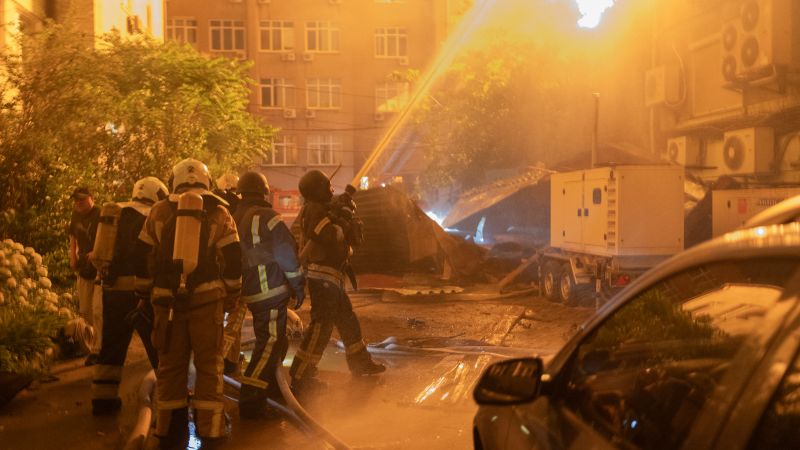
Deadly Explosions Shatter Kyiv as Russia Claims Massive Strike
Deadly explosions rock Kyiv as Russia – On Thursday, a series of devastating blasts rocked Kyiv, leaving at least 10 civilians dead and dozens injured across the city. The attacks, which occurred overnight, targeted multiple locations, with Ukrainian officials reporting over 30 sites damaged. Among the casualties were a child and several medical personnel, who were struck when a drone attack hit an ambulance substation. The scale of destruction prompted urgent calls for international support, as Ukraine’s leaders emphasized the growing threat posed by Russia’s relentless military campaign.
Russian Claims of a Strategic Assault
Russia’s Ministry of Defence announced that its forces executed a “massive strike using high-precision, long-range weapons,” including drones, to disrupt Ukraine’s defenses. The targets included critical military and energy installations in Kyiv and surrounding regions such as Dnipropetrovsk, Poltava, Cherkasy, and Chernihiv. However, Ukrainian authorities disputed this narrative, stating that the strikes had accidentally harmed civilian areas. The city’s military administration head, Tymur Tkachenko, confirmed that residential buildings were hit, with bodies recovered from rubble.
“There have been very significant direct hits on residential buildings, where, unfortunately, the bodies of the deceased are being recovered from under the rubble,” said Tkachenko.
The attacks came hours after Ukrainian President Volodymyr Zelensky issued a warning about intelligence suggesting Russia was preparing a major offensive. His alert urged citizens to remain vigilant and heed air-raid sirens, a precaution that proved critical as the strikes unfolded. The president’s post on X underscored the severity of the threat: “That is exactly the threat we are facing tonight.”
International Reactions and Escalating Tensions
Ukraine’s Foreign Minister, Andriy Sybiha, called for robust international action to counter Russia’s “terror.” He emphasized that the death toll would likely climb, urging allies to take decisive steps against the aggressor. The strikes, which left residents scrambling for safety, were accompanied by images and videos shared by Reuters, showing flames licking at crumbling structures and rescue teams sifting through debris.
“We demand strong international responses. Not only words of condemnation but concrete action to stop Russian terror,” Sybiha stated.
Residents of Kyiv had already taken shelter in metro stations on Wednesday evening, anticipating a prolonged air-raid alert. Sirens began blaring at 8 p.m. local time, marking the start of a night of chaos. The city’s infrastructure, already strained by over four years of war, faced another wave of destruction. This follows a pattern of near-daily attacks from Russian drones and missiles, which have become a defining feature of the conflict since 2022.
Drone Campaigns and Strategic Shifts
In response to Moscow’s relentless assaults, Ukraine has launched an unprecedented drone campaign against Russian territory. The strategy, which Zelensky described as a pivotal move, aims to strike energy facilities and other strategic assets deep within Russia. This offensive has forced Moscow to divert resources to defend its own cities, a shift that has complicated its ability to sustain attacks on Ukraine.
Recent reports indicate that the scale of Ukrainian drone strikes has intensified. Last week, Russia claimed to intercept 660 drones across 12 regions, a figure that highlights the growing intensity of the aerial conflict. These strikes have extended the war’s reach beyond the frontlines, bringing the realities of combat to areas previously untouched by direct attacks.
A Legacy of Destruction and Resilience
Despite the ongoing assaults, Kyiv’s forces continue to adapt and retaliate. The city’s military has transformed into a key hub for counterattacks, leveraging drones to target Russian supply lines and infrastructure. This resilience, however, has not prevented recurring tragedies. Earlier in June, a similar strike damaged the Kyiv Pechersk Lavra, a UNESCO-listed monastery complex in the heart of the capital. The attack set fire to historic structures, symbolizing the encroaching reach of the war into Kyiv’s cultural and religious heart.
The pattern of attacks underscores the intensity of the conflict, which has persisted for over four years. While Russia’s military operations have focused on strategic objectives, the toll on Ukrainian civilians remains high. The combination of missile strikes and drone attacks has created a constant state of alert, with residents learning to live in fear of the next explosion. Yet, the Ukrainian response has shown determination, even as the war continues to reshape the city’s landscape.
Global Implications and Future Outlook
The strikes in Kyiv have reignited discussions about the war’s trajectory and its global impact. As Russia seeks to weaken Ukraine’s ability to resist, the country’s leaders are pushing for international backing to counterbalance Moscow’s military superiority. Zelensky’s recent warnings, coupled with the escalating drone campaign, suggest a shift in tactics aimed at forcing a decisive outcome.
With each attack, the stakes rise. The destruction of civilian infrastructure and the loss of life have galvanized support for Ukraine, but they also highlight the challenges of waging war in a densely populated capital. As the conflict enters its fifth year, Kyiv stands as a testament to both the devastation of war and the enduring spirit of its people. The city’s fate remains intertwined with the broader struggle for survival, as its citizens face the grim reality of a war that shows no signs of slowing down.
Teele Rebane contributed to this report.
