
Britain hopes this man will save its economy. We went to Manchester to find out why
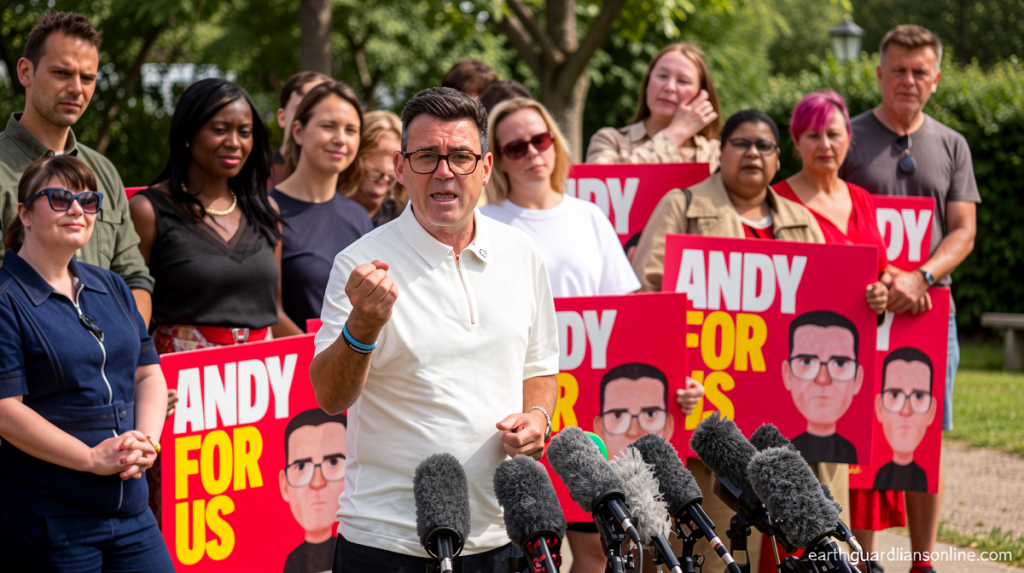
Manchester’s Rising Star: How Andy Burnham Plans to Revitalize Britain
Britain hopes this man will save – Nationwide, there is a palpable sense that Britain requires renewed energy. Economic headwinds continue to challenge growth, while public service delivery faces mounting pressure. For years, progress in everyday living conditions has moved at a glacial pace. Political turbulence has become commonplace rather than exceptional, casting a shadow over the collective spirit. Perhaps Andy Burnham represents the catalyst for change that many have been waiting for.
Previously serving as Greater Manchester’s mayor, Burnham is set to assume the role of Britain’s seventh prime minister within ten years. His ascent follows his succession of Keir Starmer as head of the governing Labour Party. During his campaign, Burnham articulated a vision for “a new era of possibility” — one that contrasts sharply with his predecessor’s more reserved demeanor. Where Starmer lacked natural charm, Burnham possesses an innate ability to connect with audiences. His relaxed personality and talent for inspiring others set him apart. Colleagues describe him as both approachable and humorous, often deploying what can only be described as “dad jokes.” His preference for smart-casual attire further enhances his relatability to ordinary citizens.
Burnham’s political credentials are substantial. Before relocating from London to Manchester in 2017, he served extensively as both an elected representative and cabinet minister. His ambition now extends beyond regional success. He intends to export “Manchesterism” — his distinctive approach combining market-friendly policies with community-centered social democracy — to London and across the nation. “I am going to give Britain the circuit breaker it needs,” he declared during a recent address, marking his third attempt over sixteen years to lead the Labour Party.
A City Transformed
During his nine-year tenure as mayor, Burnham presided over a metropolitan area experiencing economic expansion at approximately double the national average. The transformation has been dramatic enough to impress even longtime residents. Lucy Ellison, now thirty-three and managing a café, relocated to Manchester two years after spending twelve years working in hospitality sectors across America and the Netherlands. “It feels like a different city,” she observed, highlighting the emergence of “quirky wine shops and independent bakeries we never used to have.” Today, specialty coffee establishments, wine bars, and upscale dining venues dot the urban landscape, contributing to an atmosphere of optimism and ambition.
Recognition from Condé Nast Traveller recently crowned Manchester as the United Kingdom’s “brightest foodie destination.” This culinary renaissance has benefited local enterprises significantly. Hip Pop, a beverage company specializing in sodas and kombucha, exemplifies this success. Emma Thackray launched the venture from her kitchen in 2019, initially selling products at northern English markets. Today, the brand occupies shelves in most major British supermarkets and reaches consumers across multiple European nations. “I want to build a global brand, from the heart of Manchester,” Thackray explained, reflecting on the remarkable changes she has witnessed since studying at university in the city over twenty years ago.
Culture and Commerce Converge
Deansgate, a central thoroughfare, showcases Manchester’s creative vitality. Helen Davies, a thirty-two-year-old painter, works in a storefront displaying her series “Love Notes to Manchester” — paintings celebrating a city she describes as one she “continues to fall for.” Brightly colored steps nearby ascend to Deansgate Mews, where diverse restaurants attract a youthful demographic. Many of these young professionals relocated from London, drawn by affordability without sacrificing quality. Banking institution J.P. Morgan established its inaugural British office in the city during 2023, recognizing Manchester’s appeal for high-quality dining, entertainment, and cultural offerings.
Aviva Studios, a substantial cultural facility inaugurated in 2023, currently presents a significant exhibition featuring works by renowned Chinese artist Ai Weiwei. This venue represents the most substantial British investment in cultural infrastructure since the Tate Modern opened in London at the millennium. Fraser Millward, who departed London’s theater and live events sector after two decades to work with Factory International, which operates Aviva, captured the city’s essence: “Manchester is something else. It’s got an energy about it that’s unlike anything else in the UK. It’s got a really exciting buzz.”
Manchester’s current prosperity stands in stark contrast to its struggles during the 1980s, when the once-dominant industrial hub faced “almost terminal decline.” Richard Leese, who directed Manchester City Council from 1996 through 2021, attributed the recovery to sustained strategic planning. This approach fostered collaboration between public and private sectors, channeling resources toward infrastructure development, workforce training, and educational advancement. The city’s remarkable journey from industrial decline to cultural and economic renaissance provides a compelling model for Burnham’s national ambitions.
