
New Yorkers, after days of heavy smoke and torrid temperatures, are met with thunderstorms and flash flooding
New Yorkers After Days of Heavy Smoke Face Flash Flooding
New Yorkers after days of heavy smoke and torrid temperatures are now dealing with a completely different weather challenge. The Big Apple and surrounding regions were hit hard on Saturday with intense thunderstorms, heavy downpours, and widespread flash flooding. According to the National Weather Service, two to four inches of rain accumulated by early Saturday afternoon, with rainfall rates reaching up to an inch per hour. A flood watch remains active for all five boroughs of New York City, southern Westchester County, and northeast New Jersey through 2 a.m. Sunday.
The flooding potential is significant enough to cause major disruptions. “The flooding could be locally significant, which could lead to disruption to transportation, basement flooding, and water rescues,” the National Weather Service in New York explained. Emergency management officials reported that the heaviest rainfall concentrated in lower Manhattan and western Brooklyn and Queens. Residents living in basement apartments received urgent instructions to relocate to higher floors immediately.
“This storm event is not over, and the mayor continues to urge residents and visitors to our city to remain vigilant and stay safe,” Jeremy Edwards, a spokesperson for Mayor Zohran Mamdani, said Saturday afternoon.
Transportation and Infrastructure Impact
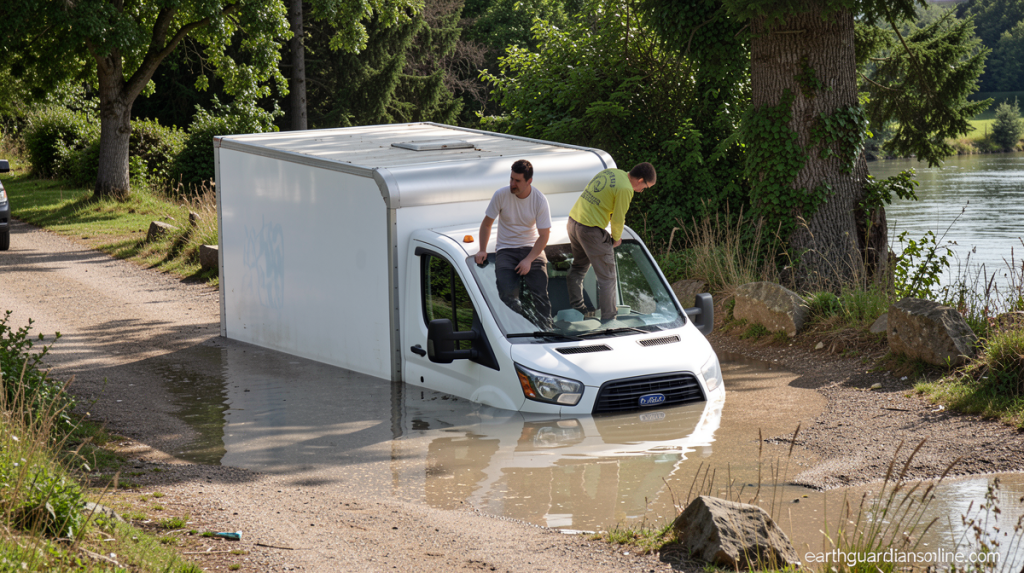
The severe weather created chaos across multiple transportation networks. In the Bronx, Saturday’s Yankees-Dodgers game was rescheduled and will now be played Sunday in a doubleheader at Yankee Stadium, MLB announced in a news release. Video footage captured multiple submerged vehicles on a roadway above the Brooklyn-Queens Expressway, with two men standing in front of a white truck’s windshield. Another man was seen wading through waist-high water in the same area.
Videos from Woodside, Queens, revealed streets covered under several feet of water. The heavy downpours contributed to significant flight delays and cancellations at LaGuardia, Kennedy, and Newark airports. These disruptions occurred on the eve of the World Cup final match in New Jersey on Sunday. All three airports were under ground stops Saturday evening during the storms, according to the Federal Aviation Administration.
The city’s subway system also experienced service disruptions at several locations after water poured onto the tracks, according to the Metropolitan Transportation Authority. All lanes of the Long Island Expressway at 188th Street were blocked in both directions due to flooding for a couple of hours in the early afternoon before reopening, according to the New York City Police Department. The Clearview Expressway at Northern Boulevard also had all lanes blocked in both directions for a brief time.
Regional Weather Outlook
Torrential rains extended into New Jersey, where flash flood warnings were issued for several counties. In Newark, police and firefighters responded to calls of five cars trapped in heavy waters, rescuing drivers and passengers with no reported injuries, according to Newark Public Safety Director Emanuel Miranda. New York Governor Kathy Hochul warned of possible power outages, downed trees, and road closures. “I remind everyone to take this weather seriously,” Hochul said in a statement Friday.
The rains arrived as people in the Northeast have been breathing in dangerous air brought by thick, choking plumes of smoke from wildfires in Canada. There were nearly 1,000 active fires across Canada as of Saturday, according to its government. Rain, shifting winds, and a cold front should eventually help clear the smoke, though air quality may not improve everywhere immediately.
Multiple rounds of severe thunderstorms are expected to inundate the area through Saturday evening, worsening flooding and bringing damaging winds and potential tornadoes, the weather service said. This story has been updated with additional information. CNN’s Dalia Faheid and Graham Hurley contributed to this report.
