There’s a new sheriff in town at the Fed. Markets are still learning his rules

There’s a New Sheriff in Town at the Fed. Markets Are Still Learning His Rules
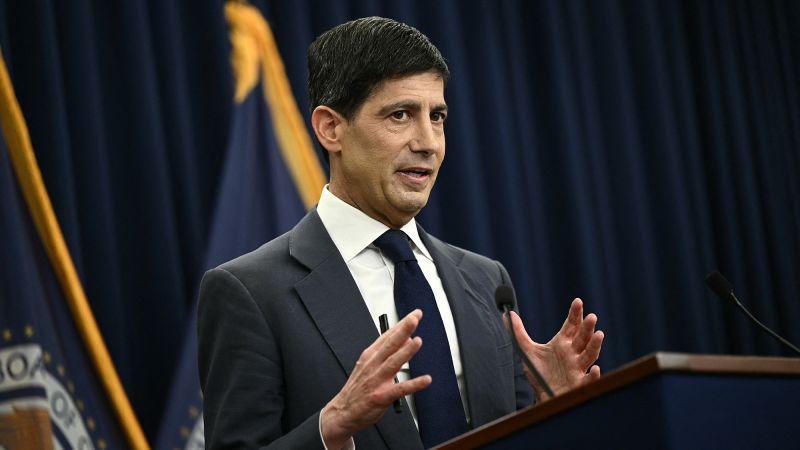
There s a new sheriff in town – Kevin Warsh’s tenure as Federal Reserve chairman has already begun to reshape the central bank’s approach to monetary policy. His first meeting as leader saw immediate shifts in communication strategy, as the Fed issued a more concise interest-rate statement and avoided the customary dot plot forecast. These moves, combined with the announcement of five new task forces, signal a departure from the established norms that have governed the Fed’s messaging for years. Analysts and market participants are now adapting to this new direction, though the transition may not be seamless.
A Focus on Data-Driven Decision-Making
Warsh’s decision to streamline the Fed’s statement reflects his belief in prioritizing clarity and efficiency in communication. By omitting the dot plot—a tool used to convey individual officials’ inflation forecasts—he emphasized a more unified stance on policy. In his press conference, he unveiled the task forces, which aim to address specific areas of the central bank’s operations, including its public relations strategy. This restructuring is part of a broader effort to align the Fed’s actions with a data-centric philosophy, reducing reliance on speculative narratives.
“It’s clear that Chair Warsh plans to run the Fed differently than what Wall Street has grown used to over the past eight years (under Jerome Powell),” Bret Kenwell, a US investment strategist at eToro, noted in a recent analysis. “Investors will adapt, but there may be some growing pains along the way.”
Warsh’s approach to communication has been marked by a preference for simplicity. In an earlier address, he hinted at his desire to minimize the Fed’s output of detailed forecasts, arguing that markets function best when reacting to real-time data rather than anticipating future moves. “I think financial markets operate most efficiently when they respond to current data,” he stated, “rather than speculating on how the Federal Reserve might react to that information.” This philosophy has already begun to influence market behavior, creating uncertainty as traders adjust to the new paradigm.
Market Reactions to the New Leadership
The day of Warsh’s first meeting, financial markets experienced notable volatility. Stocks dipped, short-term bond yields climbed, and the US dollar strengthened, indicating a cautious response to the central bank’s updated messaging. The two-year US Treasury yield, a key indicator of short-term interest rate expectations, surged to its highest level in over a year. This spike followed a signal from nine Fed officials that a rate hike by the end of the year is likely, suggesting a shift toward tighter monetary conditions.
“With the new sheriff in town… markets are scrutinizing everything, every detail,” said Brett Ryan, a senior US economist at Deutsche Bank, prior to the meeting. His words underscore the heightened focus on every Fed decision under Warsh’s leadership.
The changes in communication style have not gone unnoticed. Market participants are now trying to decipher the implications of the Fed’s reduced detail, particularly in light of the recent inflation data. In April, the Fed’s preferred inflation measure reached its peak since 2023, reigniting concerns about the central bank’s ability to stabilize prices. Investors are closely watching whether Warsh’s team will adopt a more aggressive stance on interest rates or continue with a measured approach.
The Task Forces: A Tool for Transformation?
Warsh’s creation of five task forces has sparked debate among economists. While some view them as a means to streamline decision-making, others question their effectiveness in driving meaningful change. One of these task forces is specifically focused on improving the Fed’s communication strategy, a move that could redefine how monetary policy is interpreted by markets. “Will these task forces be agents of regime change, or just more commissions to rehash old debates?” asked Michael Feroli, chief US economist at JPMorgan Chase, highlighting the uncertainty surrounding their purpose.
The task forces are designed to tackle various aspects of the Fed’s operations, from economic forecasting to financial stability. Their formation underscores Warsh’s commitment to modernizing the central bank’s role in the economy. However, the challenge lies in whether these initiatives will lead to tangible reforms or simply add complexity to an already evolving policy landscape. Analysts suggest that the initial impact of these changes may be uneven, with some sectors reacting more quickly than others.
A Broader Economic Context
Warsh’s leadership comes at a critical juncture for the US economy. Stocks are trading near record highs, yet bond yields have climbed above pre-Iran war levels, signaling a mix of optimism and caution. Inflation, which had eased in recent months, is showing signs of resurgence, while the labor market remains stable but with lingering concerns about wage pressures. These factors are shaping the Fed’s current priorities, as it balances the need to curb inflation with the risk of slowing economic growth.
Treasury yields have increased in recent months due to rising oil prices and expectations that central banks will maintain or raise interest rates to counter inflationary pressures. The Fed’s preferred inflation gauge, which tracks core prices, has climbed, prompting discussions about the sustainability of current economic conditions. As Warsh’s team moves forward, the central bank’s ability to navigate these challenges will be closely monitored by both investors and policymakers.
Analysts warn that the transition to Warsh’s leadership could lead to market instability in the short term. “Markets will have to get used to a difficult transition to the new Fed era,” Krishna Guha, vice chairman at Evercore ISI, wrote in a recent note. His comment reflects the broader sentiment that while the Fed’s strategy is evolving, the process of adjusting to it may cause short-term turbulence. Investors are now looking for clarity on how the new administration will approach inflation, economic growth, and the broader financial landscape.
As the Fed continues to refine its communication methods, the market’s reaction will serve as a barometer of the new policies’ effectiveness. The shift from a more verbose, forward-looking approach to a data-driven, concise one is expected to influence how traders interpret future decisions. Whether this change leads to greater efficiency or increased confusion remains to be seen. For now, the financial markets are in a state of adjustment, reacting to the new sheriff’s arrival with a mix of anticipation and uncertainty.
Warsh’s vision for the Fed has set the stage for a new era in monetary policy. His emphasis on simplicity and responsiveness to real-time data marks a significant departure from the previous administration’s style. However, the road ahead will require careful navigation, as the central bank seeks to balance its goals of price stability and maximum employment. The coming weeks will be crucial in determining whether the changes under Warsh’s leadership will bring about a more agile and effective Fed—or simply a new set of challenges for the markets to contend with.