An embarrassing moment for the GOP, a confident witness and other takeaways from Jack Smith’s hearing

Daftar Isi
Jack Smith’s Senate Testimony Exposes a GOP Misfire and a Defiant Former Special Counsel
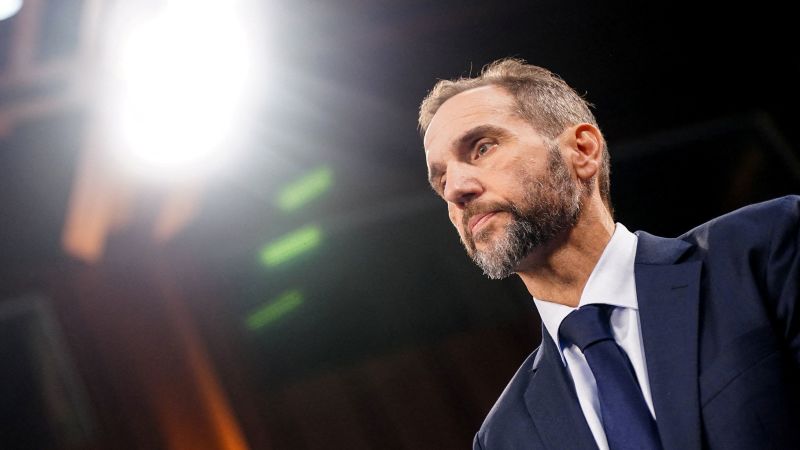
Earthguardiansonline.com – Former special counsel Jack Smith returned to Capitol Hill on Tuesday with Republican senators still pressing for scrutiny of the investigations that led to two 2023 indictments of President Donald Trump. The hearing before the Senate Judiciary Committee was intended, in part, to examine claims that Smith and other Trump adversaries had abused the justice system.
Instead, one of the day’s most dramatic exchanges underscored the difficulty Republicans have faced in producing evidence for allegations that Smith should face criminal consequences. A confrontation involving Sen. Eric Schmitt of Missouri, a set of text messages and a basketball game quickly became the hearing’s clearest example of how an accusation can unravel under examination.
A basketball allegation collapses
Schmitt suggested that Smith had connections to the Fulton County, Georgia, prosecution of Trump. To support that theory, he focused on messages that appeared to discuss reserving a seat for Smith at a February 3, 2024, game. That date was significant to Schmitt because it came one day after Fulton County District Attorney Fani Willis and special prosecutor Nathan Wade acknowledged their romantic relationship.
The Missouri senator framed the matter as potentially serious, asking Smith whether he had attended a Warriors-Hawks game in Atlanta that day. Smith initially appeared puzzled. He said he had not gone to an Atlanta Hawks game and did not recall being in Atlanta at all.
“What would you say if I had a series of text messages from your team that said you were in Atlanta at a Warriors-Hawks game on February 3, 2024 – the day after Willis and Wade announced their affair?”
Schmitt warned Smith against committing perjury and suggested the former special counsel might not understand the evidence available to the committee. Later in the hearing, he referred to Smith as a “dirtbag.”
After Democratic senators pressed Schmitt to let Smith inspect the material itself, the former special counsel reviewed a display containing the messages and an image associated with the Atlanta Hawks’ arena. Smith then identified what he believed had happened: the texts were not about an NBA game in Atlanta. They concerned an Iowa Hawkeyes women’s basketball game against Maryland in the Washington-area region.
That game, played on February 3, 2024, featured Iowa star Caitlin Clark. Smith’s explanation aligned with the schedule. The episode appeared to stem from an incomplete effort to identify sporting events on that date: an NBA or men’s college basketball search pointed to the Hawks, while the women’s game had been overlooked.
Sen. Amy Klobuchar of Minnesota said Schmitt should apologize after the confusion was clarified. Schmitt did not do so. He later treated the mix-up lightly, saying:
“Who knew Jack Smith was a Caitlan Clark fan?”
Schmitt maintained that his questioning was appropriate and said the messages could still have been connected to the Fulton County case. He also stood by his description of Smith. But the exchange offered a vivid illustration of the risk in building a sweeping allegation around an assumption that has not been fully checked.
A broader problem for Republican accusations
Trump and some Republican allies have called for Smith to face criminal charges, though the exact basis for those charges has often remained unclear. The hearing reflected the broader effort to portray the federal and state cases against Trump as politically motivated efforts to weaponize law enforcement.
Yet the Hawks-game dispute gave that argument an awkward setback. Schmitt appeared confident that the messages would establish Smith’s presence in Atlanta at a politically charged moment. Within minutes, the premise had shifted from an alleged connection to the Georgia prosecution to an ordinary trip to watch women’s college basketball.
The incident also placed renewed attention on the difference between raising questions and proving an allegation. Congressional hearings can be used to test witnesses, challenge official conduct and reveal new evidence. They can also amplify claims before their factual foundation has been established. In this instance, Smith was eventually allowed to see the evidence at the center of the accusation and offer a direct explanation.
Smith adopts a more forceful tone
Smith’s manner throughout the hearing was notably deliberate. He frequently paused before responding, an approach that can make his answers seem measured and cautious. But he also showed more emotion than he often displayed during the lengthy legal battles surrounding the Trump cases.
In his opening statement, Smith cast the moment as a test of whether officials and ordinary citizens would be willing to resist pressure and intimidation.
“Fear may be contagious; courage is as well.”
He also condemned what he described as the treatment of people who had worked on his investigations. Smith said former colleagues had been subjected to unlawful targeting and had suffered professionally and personally.
“[They were] targeted illegally, lost their jobs illegally, and had their lives turned upside down by this Department of Justice.”
The comments reflected Smith’s wider contention that the justice system itself is now being used against people associated with investigations of Trump. His testimony placed him in an unusual position: once the prosecutor pursuing a sitting president’s predecessor, he is now a central subject of congressional and political scrutiny.
Immunity concerns remain central
Smith was also asked about the Supreme Court’s 2024 decision granting presidents substantial protection from criminal prosecution for official actions. The ruling reshaped the legal landscape around presidential accountability and affected the case Smith had brought involving Trump’s efforts to overturn the 2020 election.
Smith warned that broad protections for powerful officeholders could carry consequences beyond any one president or prosecution.
“[It] can be very dangerous for the rule of law”
That concern captures the central divide running through the hearing. Republicans argued that Trump was subjected to improper prosecution, while Smith portrayed the investigations as part of the ordinary application of law and expressed alarm at exceptions that could place powerful figures beyond accountability.
Tuesday’s hearing did not resolve that political conflict. It did, however, produce a striking lesson in the importance of verifying evidence before turning it into a public accusation. What began as an attempt to link Smith to a Georgia prosecution ended with a reminder that a basketball schedule can matter a great deal in Washington.
Related Reading
Frequently Asked Questions
What is An embarrassing moment for the GOP?
An embarrassing moment for the GOP is the main topic of this guide. The article explains the context, practical details, and next steps readers should understand.
Why does An embarrassing moment for the GOP matter?
An embarrassing moment for the GOP matters because readers are looking for a useful answer, not just a short summary. Good content should match search intent and help them decide what to do next.