
FEMA official who claimed he teleported to Waffle House ousted from agency, sources say
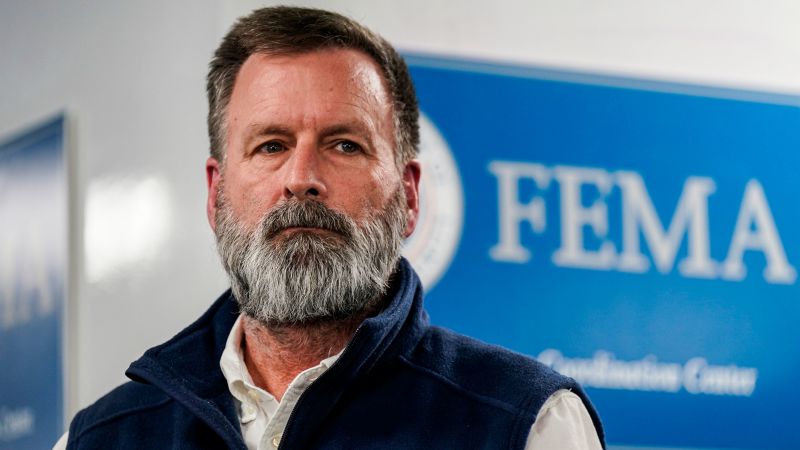
FEMA official who claimed he teleported to Waffle House ousted from agency, sources say
FEMA official who claimed he teleported – Gregg Phillips, a prominent figure within the Federal Emergency Management Agency (FEMA), has been removed from his position after drawing widespread criticism for his unusual public statements, including the assertion that he physically teleported to a Waffle House. According to four unnamed sources, the decision to oust Phillips was driven by his controversial remarks and the growing concern within the Department of Homeland Security (DHS) about his public image. The agency, which governs FEMA, confirmed Thursday that Phillips is no longer in his role, citing personal reasons for his departure. However, insiders suggest that the move was more about addressing the embarrassment caused by his antics and frequent disagreements with other department leaders.
A Controversial Appointment
Phillips was appointed by the White House in December 2020 to lead FEMA’s Office of Response and Recovery, a critical leadership position responsible for coordinating disaster relief efforts. Despite his history of promoting election conspiracy theories, particularly following the 2020 presidential election, the administration saw potential in his ability to streamline operations and push a more assertive agenda. His appointment came at a time when the agency was under scrutiny for its response to various crises, and Phillips was expected to bring a fresh perspective to its leadership.
Scrutiny Over Bizarre Comments
Phillips’ unorthodox statements began to attract national attention in March 2026, when CNN published a report detailing a collection of outlandish remarks from his appearances on right-wing podcasts. Among the most memorable was his claim of teleportation, which he described as a genuine spiritual experience. In one instance, he recounted how he suddenly found himself at a Waffle House approximately 50 miles from his previous location, a story that sparked both amusement and skepticism. The report highlighted how these comments, while eccentric, reflected a pattern of public statements that often blurred the line between factual reporting and personal belief.
While some of his peers in the agency admired his willingness to challenge bureaucratic norms, others found his approach disruptive. His tenure coincided with efforts by then-Homeland Security Secretary Kristi Noem and her chief of staff, Corey Lewandowski, to reduce FEMA’s size and control its operations more tightly. Phillips’ resistance to these changes, which some saw as necessary reforms, earned him respect among career officials but also alienated others. His defenders argue that his boldness helped maintain the agency’s independence, while critics believe his presence added unnecessary friction.
The Teleportation Claim
One of Phillips’ most talked-about claims centered around his assertion of teleportation. In a conversation with CNN, he described multiple incidents where he had experienced physical displacement, including a notable event at a Waffle House. “I was in my car, and the next thing I knew, I was standing at a Waffle House about 50 miles away,” he told the outlet. This story, which he later defended as a testament to his spiritual experiences, became a symbol of his unconventional worldview. He referenced biblical examples of supernatural transportation, stating, “haters gonna hate,” to justify his remarks.
Though the claim seemed fantastical, Phillips maintained that it was rooted in personal encounters and religious inspiration. His defenders pointed to his ability to connect with the public and his unique approach to crisis management. However, the controversy surrounding his statements intensified after the Washington Post first reported his removal, prompting further examination of his role within FEMA.
Prior Inflammatory Statements
Before joining FEMA, Phillips had a documented history of making provocative public comments that sparked debate. CNN previously highlighted his record, which included violent rhetoric directed at political opponents and repeated promotion of false claims about election fraud. In one instance, he warned that migrants were coming to kill Americans, urging listeners to arm themselves. These statements, which often aligned with the agenda of right-wing media, contributed to his reputation as a polarizing figure.
His inflammatory remarks extended beyond political discourse. Phillips had also expressed skepticism about mainstream scientific consensus, which some saw as a challenge to the agency’s credibility. The DHS leadership, now under new direction, reportedly grew frustrated with his public persona and the potential for his comments to undermine FEMA’s effectiveness. While he had supporters within the agency, his departure marked a shift in the leadership’s priorities.
Public Reaction and Political Context
The incident gained further traction when former President Donald Trump commented on Phillips’ claims, calling them “sounds a little strange” but expressing openness to investigating the matter. “I know nothing about teleporting or him, but I’ll find out about it right now,” Trump said, highlighting the political dimension of the controversy. His endorsement of Phillips underscored the ongoing influence of his administration’s policies on the agency’s direction, even after he left.
Meanwhile, the media and public reaction to Phillips’ comments varied widely. Some dismissed his teleportation story as a harmless quirk, while others saw it as a reflection of broader ideological shifts within the agency. His ousting was also linked to the broader effort to distance the DHS from past controversies, particularly those tied to the 2020 election. As the agency moved forward, Phillips’ legacy remained a topic of discussion, with some viewing him as a visionary and others as a liability.
Legacy of a Polarizing Leader
Phillips’ time at FEMA was marked by both support and criticism. While he was praised for his ability to resist bureaucratic constraints, his presence also raised questions about the agency’s commitment to impartiality. His departure signaled a new era for FEMA, as the DHS sought to realign its priorities and address concerns about public perception. Despite his removal, Phillips’ influence on the agency’s operations and culture remains a point of interest for analysts and policymakers.
The story of Gregg Phillips serves as a case study in the intersection of public service and personal belief. His claims, though unusual, were part of a larger narrative of how individuals with unconventional ideas can shape institutional dynamics. As FEMA continues its work, the agency faces the challenge of balancing innovation with credibility, ensuring that its mission remains focused on disaster preparedness and response. Phillips’ ousting underscores the importance of maintaining a consistent public image, even in the face of extraordinary claims.
