How Trump’s Iran agreement fails to achieve many of his goals

How Trump’s Iran Agreement Fails to Achieve Many of His Goals
How Trump s Iran agreement fails – On February 28, as the conflict with Iran escalated, President Donald Trump outlined his vision for the war, emphasizing the need to eliminate Iran’s missile capabilities. “We’re going to destroy their missiles and raze their missile industry to the ground,” he stated, vowing that Iran’s program would be “totally, again, obliterated.” This declaration was met with optimism by some in the administration, framing the war as a decisive strike against a perceived regional threat. However, the path to a preliminary agreement has revealed a stark shift in Trump’s rhetoric and objectives.
Absolution from the Missile Threat
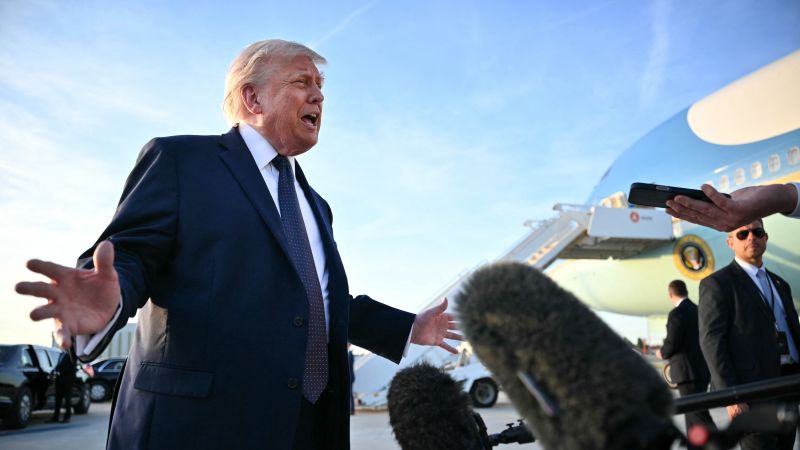
By the time the G7 summit in France concluded, Trump’s stance had softened significantly. During a press conference, he acknowledged that Iran should be permitted to retain some missile capacity. “They have to have some, because other people have some,” he said, suggesting that the balance of power in the region necessitated a more flexible approach. This marks a notable departure from his earlier insistence on total destruction.
“They have to have some, because other people have some,” Trump said at the press conference. “Missiles aren’t the problem because they don’t blow up the planet.”
The administration’s 14-point memorandum of understanding (MOU) with Iran appears to reflect this shift. While the original goal was to dismantle Iran’s missile infrastructure, the MOU does not explicitly address the issue, effectively allowing Iran to retain a red line in negotiations. This concession has sparked debate over whether the agreement truly represents a strategic victory or a compromise that prioritizes stability over aggression.
From Unconditional Surrender to Negotiated Terms
Initially, Trump had demanded an “unconditional surrender” from Iran, a phrase that dominated his social media posts. “There will be no deal with Iran except UNCONDITIONAL SURRENDER!” he asserted on March 6, signaling his intent to force Iran into complete submission. Yet, by the time the MOU was finalized, this demand had been abandoned in favor of a more pragmatic approach.
“There will be no deal with Iran except UNCONDITIONAL SURRENDER!” – Trump on social media on March 6
Trump’s apparent pivot to negotiation has raised questions about the agreement’s terms. The MOU, which includes substantial concessions to Tehran, has been criticized as a U.S. surrender rather than a hard-fought triumph. While the document outlines a framework for cooperation, its provisions have left many of Trump’s initial demands unmet, suggesting a willingness to trade military dominance for diplomatic resolution.
Regime Change: A Goal Reimagined
Trump had also framed the war as an opportunity for regime change, declaring that the U.S. would “take over your government” and leave Iran “to yours to take.” This rhetoric was reinforced by the deaths of Iranian leaders during the conflict, which Trump interpreted as a sign of progress. However, the emergence of a new supreme leader—son of the former leader—has cast doubt on whether the agreement signals a lasting shift in power dynamics.
“I didn’t do this for regime change,” Trump claimed Wednesday, indicating his focus had shifted from toppling the Iranian government to securing a favorable deal.
Despite this, the administration has not entirely abandoned the idea of toppling the regime. Some officials continue to view the agreement as a stepping stone toward long-term influence, even if the immediate objective of regime change remains unfulfilled. The MOU, while not explicitly mentioning regime change, allows for future opportunities to challenge Iran’s leadership through sustained pressure.
Nuclear Ambitions: A Delicate Balance
Another core objective of the war was to prevent Iran from acquiring nuclear weapons. Trump had proclaimed that “we will ensure that Iran does not obtain a nuclear weapon. It’s a very simple message: They will never have a nuclear weapon.” This goal, however, now faces uncertainty. The MOU states that Iran “reaffirms that it shall not procure or develop nuclear weapons,” but it stops short of detailing the specific conditions or mechanisms to enforce this commitment.
“We will ensure that Iran does not obtain a nuclear weapon. It’s a very simple message: They will never have a nuclear weapon.” – Trump on February 28
While Iran has consistently denied pursuing nuclear arms, the agreement does not clarify how the U.S. will verify compliance. Critics argue that the lack of concrete measures leaves the door open for Iran to resume its nuclear program under less restrictive terms. This ambiguity has sparked concerns about the long-term effectiveness of the deal in addressing nuclear threats.
Enrichment and Energy: A Dual Challenge
Trump had also targeted Iran’s uranium enrichment capabilities, stating that the U.S. would “take it ourselves” if the program continued. “There will be no enrichment of Uranium,” he declared on social media on April 8, later reiterating this stance on March 23. However, the MOU appears to allow Iran to enrich uranium for civilian purposes, aligning with Trump’s recent admission that “it’s a little hard when other people have it.”
“We want no enrichment” – Trump on March 23
Trump has argued that allowing low-level enrichment is justified if it serves peaceful purposes, such as electricity generation. He told the New York Times earlier this month that Iran could enrich uranium at “low levels,” provided it “could never be used by the military.” This concession, while pragmatic, leaves room for Iran to leverage its nuclear capabilities in the future, potentially undermining Trump’s original vision.
The MOU’s 14 points outline a framework that prioritizes short-term stability over long-term strategic dominance. While it includes key concessions from the U.S., such as lifting sanctions and allowing Iran to maintain its missile program, the document also reflects the administration’s compromise on other fronts. The agreement’s emphasis on mutual concessions has led to accusations that the U.S. is conceding more than it gains, particularly in areas like nuclear energy and regional influence.
Trump’s evolving priorities highlight the challenges of maintaining a consistent foreign policy. What was once a campaign promise to reshape the Middle East now appears to be a series of adjustments aimed at securing a ceasefire. While the MOU may have prevented further escalation, it has also left many of his initial goals unfulfilled, raising questions about the effectiveness of his approach. As the details of the deal continue to unfold, it remains to be seen whether this agreement will be viewed as a strategic success or a missed opportunity.