
In Trump’s America, two very different views of Christianity in politics emerge
In Trump’s America, two very different views of Christianity in politics emerge
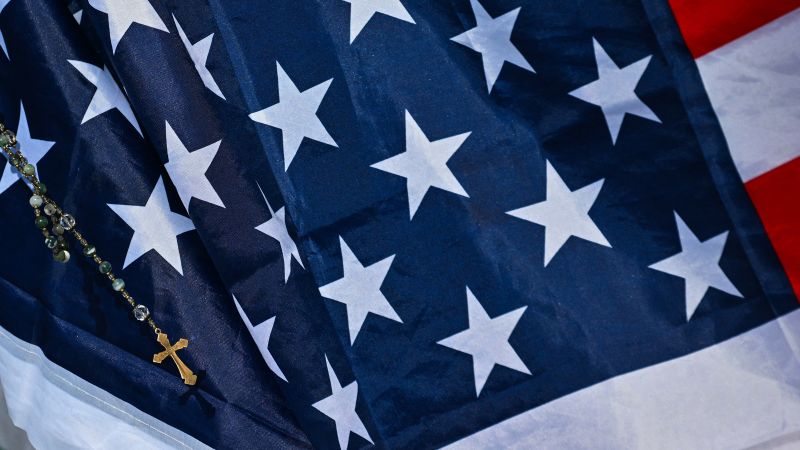
In Trump s America two very – In Trump’s America, two very different views of Christianity’s role in politics are increasingly shaping the national discourse. Despite a declining trend in organized religious participation, the influence of the religious right persists within the Trump administration, as evidenced by recent policy initiatives. A report by the Religious Liberty Commission, a key organization under President Donald Trump, highlights a push to integrate faith more deeply into governance, challenging the traditional separation of church and state. This shift has sparked debate, with some advocating for Christian values to dominate public policy, while others argue that religion should remain a personal belief rather than a political tool.
A push for religious integration in governance
The Religious Liberty Commission’s efforts reflect a broader movement to embed Christianity in the fabric of American institutions. Advocates insist that the nation’s identity as a “Christian nation” is not just historical but actively relevant today. This perspective is echoed by Trump officials who frequently frame their actions through a religious lens, often invoking divine purpose to justify policies on immigration, economic reform, and social issues. For example, Secretary of Defense Pete Hegseth has used biblical language to describe military strategies, reinforcing the idea that faith should underpin national decision-making. This approach is also championed by Vice President JD Vance, whose memoir Communion chronicles his spiritual transformation into Catholicism, which he ties to his political philosophy.
Vance’s emphasis on faith as a guiding force for conservative governance is particularly notable. He argues that policies should reflect traditional Christian values, prioritizing family stability over economic metrics like GDP. His rhetoric, which positions religion as a tool for cultural preservation, aligns with the administration’s broader agenda. However, this perspective has drawn criticism for its perceived narrowness, as it seeks to redefine public life through a distinctly Christian framework, even as the nation’s religious demographics continue to evolve.
A critique from the political left
Opposing this vision is a growing sentiment on the political left, which questions whether Christian faith is being used to legitimize a partisan agenda rather than foster genuine unity. Senator Raphael Warnock, a Georgia Democrat and pastor at Ebenezer Baptist Church, has been vocal in his critique of the right’s approach. In his book The Crooked Places Made Straight, he challenges the notion that religion should be wielded as a weapon in politics, arguing that it risks alienating those who do not share the same beliefs. Warnock’s perspective is grounded in the belief that faith should inspire compassion, not coercion, and that policies must address the needs of all citizens, not just those aligned with a specific ideology.
Warnock also points to the Trump tax cuts as an example of how economic policies can be framed as moral choices, even if they favor the wealthy. He believes that Democrats must reclaim the narrative by presenting faith-based arguments that resonate with a diverse electorate. This push for a more inclusive approach to religion in politics highlights the ideological divide, as the nation grapples with defining its religious identity in an increasingly pluralistic society.
From conversion to confrontation
Vance’s personal journey from skepticism to Catholicism serves as a powerful narrative for his political stance. He describes this transformation as a pivotal moment that shaped his view of America’s future, one where Christian principles are central to governance. His arguments for restrictive immigration and family-centric policies are presented as extensions of this spiritual commitment. However, this perspective has also led to internal debates, particularly within the Catholic Church, where Vance critiques the administration’s stance on issues like Iran and its impact on religious freedom.
Meanwhile, Warnock’s dual role as a politician and pastor underscores his belief in the importance of faith in public life. He argues that the nation’s religious diversity must be acknowledged and that Christian values should not be imposed on others. This contrast between Vance’s integrationist approach and Warnock’s inclusive vision captures the essence of the current debate. As In Trump’s America, two very distinct interpretations of how faith should influence governance continue to emerge, reflecting broader societal tensions.
Both perspectives are rooted in their understanding of Christianity’s role in shaping policy. Vance’s vision emphasizes ideological purity and a return to traditional values, while Warnock advocates for a more compassionate, pluralistic framework. Their differing views highlight the challenge of defining what it means to be a Christian nation in an era of shifting beliefs and growing secularism. As the debate continues, the influence of religion on politics remains a central theme in the American political landscape.
