
After ousting Bill Cassidy, Donald Trump faces fresh test of his sway with GOP voters in Louisiana’s Senate runoff
Republican Voters in Louisiana Weigh New Senator Amid Trump’s Influence
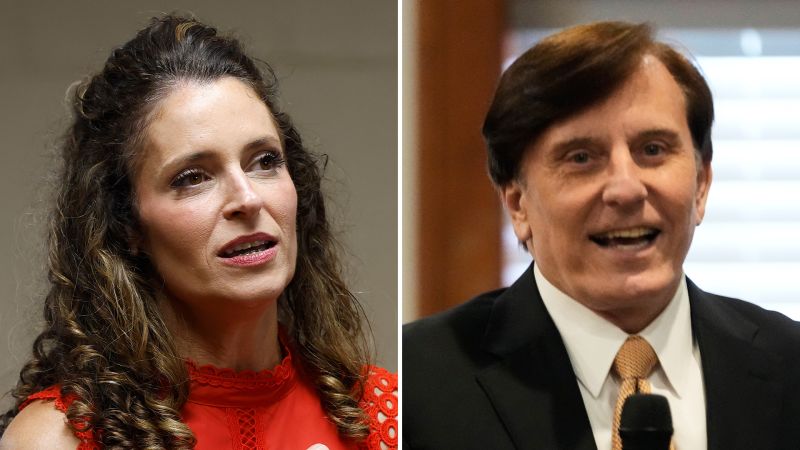
After ousting Bill Cassidy Donald Trump – With Louisiana’s Senate primary runoff set for Saturday, the political landscape of the state has shifted significantly. The race, centered on replacing Sen. Bill Cassidy, has become a crucial barometer of President Donald Trump’s remaining power within the Republican Party. Cassidy, a two-term senator, was ousted in the May 16 primary after voting to convict Trump during his second impeachment trial in 2021. Now, GOP voters are deciding whether to align with Trump’s preference for a new nominee, as Rep. Julia Letlow, his endorsed candidate, faces off against state Treasurer John Fleming in a contest expected to shape the state’s next senator.
Trump’s Strategy in a Deep-Red State
The runoff marks another chapter in Trump’s ongoing efforts to influence Republican primaries. This spring, he successfully unseated two seasoned incumbents—Sen. Bill Cassidy and Sen. John Cornyn—by backing their opponents. His campaign against Cassidy was particularly notable, as the senator’s vote during the 2021 impeachment trial had alienated Trump. The president’s message of retribution resonates strongly in Louisiana, a state traditionally aligned with his policies. Yet, the current race presents a new challenge: whether Trump’s support can translate into victory when his preferred candidate faces a credible rival.
“She’s fantastic. She’s going to do a great job. She’s a warrior,” Trump said during a telephone rally for Letlow on Thursday night. The event, lasting about six minutes, highlighted his confidence in her abilities. He praised Letlow for her advocacy of his tax and spending proposals, her backing of immigration enforcement policies, and her alignment with his efforts to restrict mail-in voting. These endorsements underscore Trump’s continued role as a key player in Republican politics, even as his influence is tested by shifting voter priorities.
Letlow, a 45-year-old former university administrator, has become a symbol of Trump’s base in Louisiana. She secured the most votes in the May 16 primary, garnering nearly 45% support. Fleming followed with 28%, while Cassidy, the former senator, received almost 25%. The lack of a majority in the primary forced the top two candidates into a runoff, a scenario that has played out multiple times this year. For Trump, the race represents a chance to reaffirm his sway over the GOP, but it also exposes the growing divide between his core supporters and more moderate Republicans.
Contestants and Their Backgrounds
Letlow’s path to the Senate was shaped by personal tragedy. She was first elected to Congress in 2021 to fill a vacancy created when her husband, Luke Letlow, died from Covid-19 in December 2020. Her swift rise to prominence, combined with her alignment with Trump’s policies, has made her a favorite among conservative voters. Fleming, on the other hand, brings a different pedigree. The 74-year-old former House member left Congress in 2016 to run for the Senate, though he narrowly lost. He later joined the Trump administration, serving as assistant to the president for planning and implementation. His campaign emphasizes a “pro-Trump agenda,” framing him as a MAGA conservative with a deep understanding of the party’s priorities.
The runoff’s outcome hinges on the preferences of Louisiana’s most populous parishes—Orleans, East Baton Rouge, and Jefferson. In the May 16 primary, Cassidy had drawn the most support from voters in these areas. However, Fleming’s campaign has targeted these regions, highlighting his experience and conservative credentials. Letlow’s appeal, meanwhile, is rooted in her grassroots presence and Trump’s backing. The race has become a microcosm of the broader ideological debates within the GOP, with both candidates positioning themselves as the ideal choice for the party’s future.
Meanwhile, the Democratic race for the Senate seat has also reached a critical juncture. The two finalists are Jamie Davis, a farmer and former state House candidate, and Gary Crockett, a Navy veteran and defense contractor. Davis nearly won the primary outright, securing over 47% of the vote, while Crockett edged out Nick Albares by fewer than 300 votes out of roughly 345,000 cast. Despite this, the Democratic contest is seen as a secondary storyline compared to the GOP race, as Trump’s dominance in Louisiana’s electorate is expected to secure his preferred candidate’s victory.
The significance of Saturday’s election extends beyond the state’s borders. It reflects a broader trend in Republican primaries, where Trump’s influence has often led to the downfall of establishment figures. This pattern was evident in his victories over Kentucky Rep. Thomas Massie and Indiana state senators who opposed his redistricting proposals. However, recent developments suggest a potential waning of his power. In Iowa and Georgia, GOP voters have shown hesitation in endorsing his picks, with Trump’s choices narrowly losing in some cases. In South Carolina, his last-minute endorsement of state Attorney General Alan Wilson helped secure a decisive win, but this also indicates a need for strategic adjustments in his campaign.
For Louisiana, the runoff is a test of how deeply Trump’s ideology remains embedded in the party’s base. While the state has a history of voting for Trump by more than 18 percentage points in past elections, the current race has introduced new dynamics. The shift from Louisiana’s previous “jungle primary” system to a more structured process has limited voter choices, but it has also intensified competition. This change has allowed candidates like Letlow and Fleming to emerge as clear contenders, each with distinct narratives that appeal to different factions of the GOP electorate.
As the election approaches, analysts are closely monitoring the trends in key demographics. Trump’s endorsement is a major asset for Letlow, but Fleming’s campaign has leveraged his tenure in the Trump administration and his alignment with the party’s conservative wing. The race is not without ideological nuance, as both candidates present themselves as champions of Trump’s vision for the country. Yet, the runoff’s outcome may reveal whether the party’s base is still united under his leadership or if fractures are beginning to form.
Political Realities and Broader Implications
Despite the uncertainty, the political realities of Louisiana make the runoff a near-certain path to a Senate seat. The state’s deep-red leanings, combined with Trump’s strong historical performance, suggest that the GOP nominee will likely win the general election in November. This scenario has led Democrats to focus on their own nominee, hoping to mount a strong challenge. However, the state’s electoral map and voter turnout patterns indicate that the race is largely a formality, with the GOP’s choice poised to secure a majority.
The runoff also highlights the evolving role of Trump in the Republican Party. While he remains a powerful figure, his influence is no longer absolute. The fact that some voters have opted for alternatives—such as Fleming, who has been a consistent supporter of Trump’s agenda—suggests a growing acceptance of diverse perspectives within the party. This could signal a shift in the GOP’s strategy, as candidates increasingly seek to balance Trump’s policies with broader appeal.
As Louisiana prepares to cast its votes on Saturday, the stakes are high. The election will determine not only the next senator but also the trajectory of the Republican Party in the coming months. For Trump, it’s a chance to prove that his brand still commands loyalty. For his opponents, it’s an opportunity to carve out a space for themselves in a party that has long been his stronghold. The result may shape the future of the GOP, both in Louisiana and nationally.
