
Lawyers for Rep. LaMonica McIver force judges to weigh the limits of congressional immunity
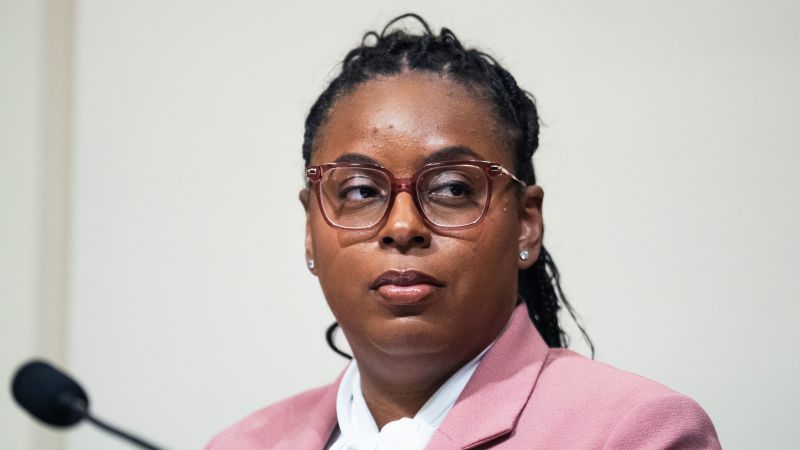
Lawyers for Rep. LaMonica McIver Push Judges to Assess Congressional Immunity Limits
Lawyers for Rep LaMonica McIver force – In a pivotal legal showdown, federal judges in Wilmington, Delaware, have been compelled to scrutinize whether the constitutional shield of congressional immunity extends to actions involving the assault of a federal officer. The case centers on Democratic Representative LaMonica McIver, who faces charges of assaulting immigration agents during a visit to a detention center in New Jersey. The hearing, which lasted over two hours, has sparked a debate over the boundaries of legislative privilege and the role of executive authority in prosecuting lawmakers.
The incident in question occurred in 2025, when McIver was at an immigration detention facility in New Jersey. Officials there had begun arresting Newark Mayor Ras Baraka, who was present at the site, but the arrest was swiftly withdrawn. Prosecutors claim McIver used her forearm to strike one officer and attempted to restrain another by grabbing him, while also applying pressure to an officer as she tried to re-enter the facility. Despite these allegations, the indictment does not specify that any officers sustained injuries during the encounter.
McIver’s legal team, led by attorney Paul Fishman, has argued that the congresswoman was performing her duty of oversight when the altercation took place. Fishman emphasized that the visit to the detention center, which has recently been a focal point for protests and clashes between law enforcement and demonstrators, was part of her legislative responsibilities. He contended that the judges should consider the broader context of the event, noting that McIver and two other congress members exited the facility during Baraka’s arrest to monitor the actions of Immigration and Customs Enforcement and the Department of Homeland Security.
“Being a critic of the administration is what the Speech and Debate clause was meant to protect,” Fishman asserted. “They are targeting someone who exercises their constitutional right to challenge executive decisions.”
However, the prosecution, represented by Justice Department attorney Mark Coyne, has pushed back against this interpretation. Coyne acknowledged the gravity of the case but maintained that the use of physical force does not fall under the protections of the Speech and Debate clause. “This is not a typical situation,” Coyne noted, highlighting the unique circumstances of the incident. The legal team’s arguments have placed the judges in a difficult position, as they must balance the rights of lawmakers with the need to hold them accountable for alleged misconduct.
The panel of judges, which included Stephen Bibas, a Trump appointee, and Thomas Ambro, a Clinton nominee, has been actively probing the nuances of congressional immunity. Bibas questioned the validity of McIver’s defense, asking during the hearing, “Isn’t this as weak a case as I hypothesized?” This line of inquiry reflects the skepticism surrounding the claim that the congresswoman’s actions were purely legislative. Ambro, meanwhile, challenged the prosecution’s reasoning, suggesting that the charges might be an overreach.
“That doesn’t seem like assault,” Ambro remarked, casting doubt on whether McIver’s physical interactions with officers qualified as a crime under the law.
As the case unfolds, the Third Circuit Court of Appeals is set to review McIver’s appeal against a lower court’s decision to reject her motion to dismiss the charges. The appeal hinges on several key issues, including the extent of congressional protections and potential motives of vindictive prosecution. Fishman’s team has sought to argue that the Trump administration may have targeted McIver specifically for her opposition to its policies, a claim Coyne refuted.
“I’m still here,” Coyne stated, addressing concerns about the administration’s intent. “If they decide to charge multiple lawmakers, I will do everything in my power to stop it.”
During the hearing, Fishman clarified that he was not asserting that the assault itself was a legislative act, but rather that McIver was engaged in her oversight duties when the incident occurred. He provided a hypothetical scenario to illustrate his point: “If a member of Congress walks into a bar and decks an ICE officer, that would not be protected by the Speech and Debate clause,” he said. This distinction underscores the crux of the legal battle—whether the force applied was an integral part of legislative activity or an independent act of aggression.
McIver, who has pleaded not guilty to the charges, remains defiant in her stance. She faces a potential sentence of up to 17 years in prison if convicted. In a press conference following the hearing, the congresswoman, who was several months pregnant at the time, expressed her belief that the case was a political move by Trump. “The president of the United States and the Department of Justice are trying to send me to jail for 17 years,” she said, describing the situation as “cruel” and the process as a tool for “pain” inflicted on her and her allies.
The debate over congressional immunity has gained renewed attention as the case progresses. While the Speech and Debate clause is designed to shield lawmakers from prosecution for actions taken in the course of their duties, its application to physical altercations remains contentious. McIver’s legal team argues that the detention center visit was a form of oversight, but prosecutors insist that the force used exceeded the bounds of legitimate legislative conduct.
As the Third Circuit deliberates, the outcome of this case could set a precedent for how congressional immunity is interpreted in future legal challenges. The courtroom drama has not only highlighted the tensions between legislative and executive branches but also raised questions about the fairness of prosecuting lawmakers for actions that occur in the context of their official duties.
