
Mamdani’s hat trick in New York, Trump’s hedged bet in South Carolina, and other takeaways from Tuesday’s primaries
Mamadani’s Hat Trick in New York, Trump’s Hedged Bet in South Carolina, and Other Takeaways from Tuesday’s Primaries
Democratic Socialists Secure Three Wins in New York
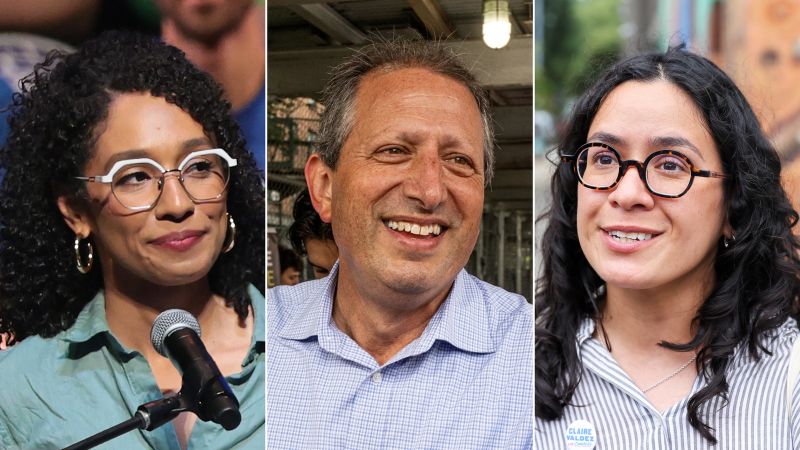
Mamdani s hat trick in New York – Two days after Tuesday’s primary elections, New York City Mayor Zohran Mamdani emerged as a central figure in the shifting political landscape, as three congressional races he backed achieved decisive victories. These wins, which saw progressive candidates ousting two long-serving Democratic incumbents, underscored the growing influence of the city’s progressive wing. The results were not only a testament to Mamdani’s leadership but also a harbinger of deeper ideological divides within the Democratic Party. The 13th Congressional District race, in particular, highlighted tensions over U.S. foreign policy, with democratic socialist candidate Darializa Avila Chevalier defeating Rep. Adriano Espaillat, the chair of the Congressional Hispanic Caucus. Espaillat’s defeat marked a significant moment in a contest that had largely hinged on the nation’s relationship with Israel.
Another notable victory came in the 7th District, where Assemblywoman Claire Valdez, a progressive advocate, unseated Brooklyn Borough President Antonio Reynoso. This race was seen as a test of momentum for the city’s leftward tilt, with Valdez’s success signaling a broader rejection of establishment figures. Meanwhile, in the 10th District, Brad Lander, a former New York City comptroller and close ally of Mamdani, defeated Rep. Dan Goldman. Lander’s win reinforced the mayor’s influence in shaping the political future of the city. Mamdani, reflecting on the night’s results, praised Lander’s “vision of politics that is more than what we’ve seen for so long,” a nod to their shared commitment to progressive reform.
Trump’s Influence Falters in South Carolina
While New York’s races showcased the Democratic Party’s internal shifts, South Carolina’s primary results revealed a different story for President Donald Trump. The former president’s sway over Republican voters appeared to wane, as his preferred candidates struggled to secure dominant victories. This trend was evident in the state’s congressional contests, where Trump’s support seemed less decisive than in previous years. The day’s activities also included voting in Maryland and Utah, but South Carolina’s outcomes offered the clearest indication of how the GOP might be evolving in response to the 2028 presidential race.
Trump’s diminishing presence in South Carolina’s primaries came amid a backdrop of broader Republican realignment. The state’s primary, held on the same day as other contests, was a critical barometer for the party’s direction. Voters in the Carolinas appeared to prioritize candidates who could bridge the gap between traditional conservatism and more centrist approaches, reflecting a cautious optimism about the future of the Republican brand. However, this shift also raised questions about whether Trump’s influence would persist in other key states, especially as the November midterms approach.
Broader Implications for the Democratic Party
The momentum seen in New York’s congressional races is part of a larger trend across the country. Democratic voters are increasingly drawn to progressive leaders, even as they remain firmly opposed to the policies of former President Donald Trump. This dynamic has created a paradox: the party’s base is united against Trump, yet it is growing impatient with the leadership of its own establishment. The outcomes in New York, Seattle, and Washington, D.C. suggest that this dissatisfaction could fuel a wave of change in the coming months.
Earlier this month, Democratic voters in Washington, D.C. elected Janeese Lewis George as mayor, a decision that all but guarantees her victory in November’s general election. The race in the nation’s capital mirrored the energy seen in New York, as Lewis George’s win signaled a shift toward more progressive governance. Similarly, in Los Angeles, democratic socialist city councilwoman Nithya Raman advanced to a runoff against Mayor Karen Bass, a figure associated with the Democratic establishment. These developments highlight a national pattern where urban centers are becoming hotbeds for left-leaning political movements.
However, not all Democratic victories reflect a pure ideological shift. In New York’s 12th District, a Manhattan seat covering one of the city’s most traditional and affluent electorates, voters opted for Micah Lasher, a state assemblyman with strong establishment ties, over progressive favorite Alex Bores. Bores, who had advocated for stricter regulation of artificial intelligence, fell short in a race that demonstrated the complexities of urban politics. The 12th District’s result also highlighted the challenges progressive candidates face in districts where voters prioritize stability over radical change.
Republican Strategy and Democratic Reactions
As Democrats consolidate progressive gains, Republicans are positioning themselves to exploit these shifts. The ideological left’s surge in blue strongholds has provided the GOP with a wealth of campaign material, particularly in battleground states and districts. Pennsylvania Senator John Fetterman, a prominent Republican voice, told CNN that “the dirtbag left is surging,” a characterization that reflects the party’s concerns about the Democratic base’s growing radicalism. Meanwhile, New Jersey Senator Cory Booker tempered the rhetoric, acknowledging the party’s diversity. “Our party’s not homogenous,” Booker said to CNN’s Kaitlan Collins. “One of the things that make the Democratic Party great is it’s a big tent party. We need to stay that way.”
The ripple effects of Tuesday’s primaries could extend beyond the immediate results. If Democrats secure majorities in the House, Senate, or both in November’s midterms, the ideological realignment could reshape leadership races in 2028. House Minority Leader Hakeem Jeffries, who had previously supported Democratic incumbents in New York, acknowledged the growing rift with Mamdani. “He and I have agreed to strongly disagree,” Jeffries remarked, a statement that underscored the challenges of uniting the party’s factions. The crowd at Avila Chevalier’s victory celebration in New York even booed Jeffries during a televised appearance, illustrating the personal stakes involved in these political battles.
Despite these challenges, the Democratic Party remains a formidable force in the midterm elections. The primary results in New York, Washington, and Los Angeles demonstrated a clear appetite for change, but they also revealed that not all races are moving in the same direction. In Utah, where Democrats aimed to flip a congressional seat, voters chose moderate former Rep. Ben McAdams over several more progressive rivals in the newly redrawn 1st District. This outcome suggested that the party’s reach in rural and suburban areas may still be strong, even as urban centers tilt further to the left.
Statewide Trends and National Context
At the state level, Democratic voters in Iowa also signaled a shift in priorities, as they held a Senate primary earlier this month. While the race in Des Moines did not produce a dramatic upset, it highlighted the party’s ability to mobilize support in key states. The broader context of Tuesday’s primaries painted a picture of a Democratic Party in transition, grappling with both internal and external pressures. The victories in New York and other cities suggest that the party’s left wing is gaining traction, but the mixed results in other districts indicate that the path to power remains uneven.
For Democrats, the challenge lies in balancing the demands of their progressive base with the need to appeal to moderate voters. The success of Mamdani’s allies in New York, coupled with the strong showing of establishment figures in the 12th District, illustrates this tension. At the same time, the erosion of Trump’s influence in South Carolina and other states raises questions about the future of the Republican Party. Will the GOP continue to splinter, or can it adapt to the changing political climate? The answers may come in the coming months as the midterm elections draw closer and the 2028 presidential race begins to take shape.
Ultimately, Tuesday’s primaries marked a pivotal moment in the 2026 election cycle. The victories of democratic socialists in New York, the cautious approach in South Carolina, and the mixed results in other races all point to a Democratic Party that is both energized and divided. As the party navigates this complex landscape, its ability to unify its base will be crucial in determining its success in November. For Republicans, the opportunity to leverage these divisions into electoral advantages remains open, but the road to victory may be more challenging than anticipated.
