
Trump went back to his political happy place — but voters may not follow
Trump Went Back to His Political Happy Place — But Voters May Not Follow
A Return to Roots, A Rally in Pennsylvania
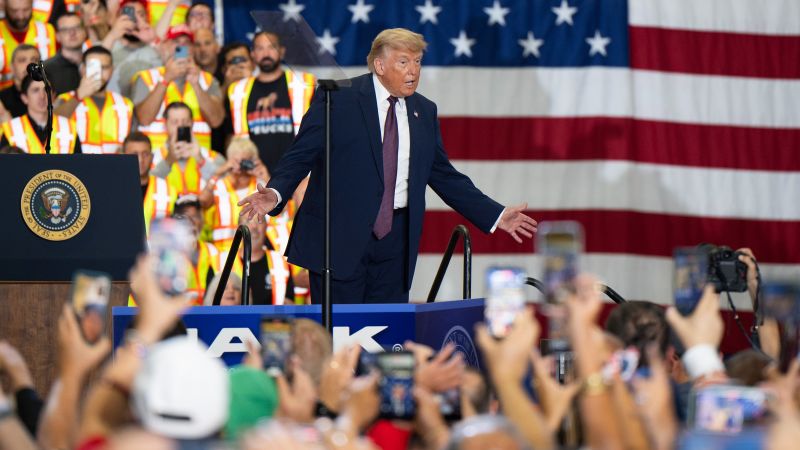
Trump went back to his political – Donald Trump’s return to the campaign trail marked a significant shift in his political strategy. After months of navigating a stalemate with Iran and redefining his role in Washington, the president chose Pennsylvania—a state deeply tied to his political rise—as the stage to revive his image as a charismatic, battle-hardened leader. The decision was strategic, given the state’s historical significance in his presidential victories and its reputation for hosting intense, partisan crowds. At the event, Trump’s energy was palpable, contrasting sharply with his recent subdued appearances in the Oval Office or during a disorganized news conference following the G7 summit in France.
Standing before a boisterous audience at a Mack truck plant, Trump channeled the same fiery rhetoric that defined his 2016 and 2024 campaigns. He declared,
“We’re the hottest country in the world,”
a line that encapsulated his blend of hyperbole and national pride. Yet, this familiar persona carried an underlying tension. While his supporters were energized, the broader electorate remained skeptical, raising questions about whether Trump’s message would resonate beyond his core base.
The Power of Rhetoric, The Limits of Reality
Trump’s speech was a masterclass in populist appeal, but it also highlighted the gap between his grandiose claims and the economic realities facing many Americans. He touted tariffs as job-saving measures and framed his policies as the catalyst for a manufacturing renaissance. However, critics argue that these assertions often overlook the complex factors driving economic trends. The president’s insistence on blaming Democrats for the nation’s woes—
“the ideology of the Muslims is slightly different than the ideology of the Catholics,”
he said—further underscored his tendency to conflate cultural and economic issues.
His engagement with the crowd was nothing short of theatrical. Supporters cheered as he railed against Congress’s failure to pass restrictive election laws, a theme that dominated his speech. Yet, the connection he forged with blue-collar voters was more about sentiment than substance. For these audiences, his message was a return to the days of bold action and unapologetic leadership. However, for others, particularly those grappling with rising living costs, his focus on ideological battles seemed to miss the mark.
Economic Performance and Voter Sentiment
Despite his claims of economic success, Trump’s approval ratings have suffered. A recent CNN/SSRS poll revealed that 70% of Americans believe he has struggled to manage the economy effectively. This sentiment is particularly relevant in the lead-up to the midterms, where economic issues are expected to dominate the discourse. Trump’s assertion that the end of the war would alleviate cost-of-living pressures—
“Prices are coming down right now at levels you’ve never seen. And now, with oil crashing, you’re going to see something really amazing,”
he vowed—rarely aligns with the experiences of everyday Americans.
While Trump’s supporters were motivated by his narrative of American resurgence, the same cannot be said for all voters. The president’s tendency to exaggerate his achievements and attribute setbacks to political opponents has left many in the middle and independent demographics feeling disconnected. His claim that he “inherited” all economic challenges from Democrats, for instance, contrasts with the current fiscal landscape. The war in Iran and Venezuela, while part of his strategic agenda, did little to address the inflationary pressures that have plagued millions.
The Subtext of the Rally: A Political Battery Recharged
Trump’s rally in Pennsylvania was more than just a campaign stop—it was a symbolic reclamation of his political identity. The event mirrored the energy of his past victories, with supporters chanting “USA, USA” and embracing the MAGA ethos that once propelled him to power. This resurgence of enthusiasm suggests that Trump’s brand of leadership still holds sway among his base, even as the national mood shifts.
However, the rally’s success does not guarantee a similar outcome in November. The president’s reliance on dramatic statements and emotional appeals, while effective for mobilizing his most loyal followers, may not translate to broader support. For example, his attack on alternative energy and his claim that Democrats have manipulated the electoral process have left many voters confused. Meanwhile, his focus on cultural issues—such as the supposed dominance of transgender women in women’s sports—diverts attention from pressing concerns like healthcare access and housing affordability.
Suburban Battlegrounds and the Road to November
As the midterms approach, Trump’s ability to win over suburban voters will be critical. These districts, which often swing between parties, are key to securing a majority in the House. Yet, the president’s recent rhetoric has struggled to connect with these demographics. In Allentown, where he held a rally Tuesday, the mix of working-class families and moderate Republicans presents a unique challenge. For these voters, the promise of economic stability and political change is more compelling than Trump’s attacks on opposing ideologies.
The president’s return to the campaign trail also revealed the limitations of his current political strategy. While his public appearances are energetic, they often lack the depth needed to address the nuanced issues shaping the midterm landscape. His emphasis on rebuilding a physical legacy through the White House ballroom project and patriotic blue paint at the National Mall highlights a shift toward symbolic gestures over substantive policy. This approach may galvanize his base but leaves room for doubt among undecided voters.
Conclusion: A Happy Place with a Political Cost
Trump’s rally in Pennsylvania was a reminder of his political strength, but it also exposed the challenges of his messaging. While he successfully reconnected with his core supporters, the broader electorate remains unconvinced. His ability to captivate crowds with bombastic declarations is a powerful tool, but it must be paired with policies that address real-world problems. The midterms represent a pivotal moment for Trump’s legacy, and his success will depend on whether he can bridge the gap between his rhetorical flair and the practical needs of American voters.
As the political landscape continues to evolve, Trump’s message may serve as a rallying cry for his most fervent allies but fall short for those seeking tangible solutions. The president’s reliance on nostalgia and hyperbolic claims—while effective in his happy place—may not be enough to secure a second term. The coming weeks will test his ability to adapt his strategy, ensuring that his campaign appeals to the diverse coalition needed to win in November.
