McConnell hospitalized and ‘receiving excellent care,’ spokesperson says

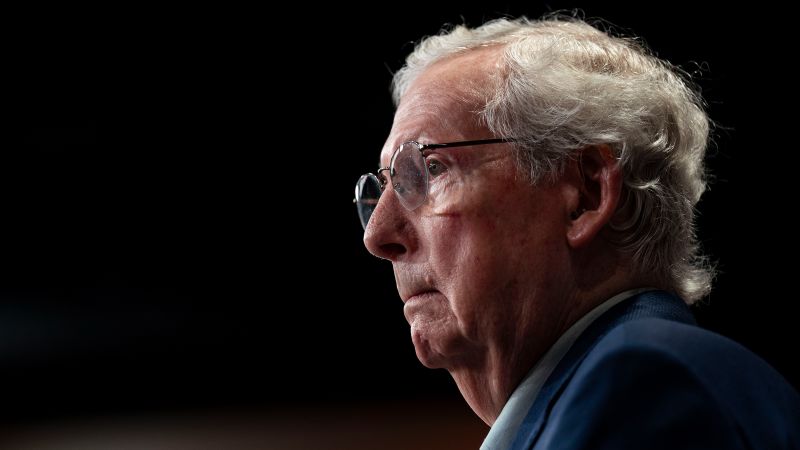
Senator Mitch McConnell Hospitalized, Receiving ‘Excellent Care’
McConnell hospitalized and receiving excellent care – Sunday morning saw a notable development in the political landscape as Senator Mitch McConnell, representing Kentucky as a Republican, was hospitalized, according to his spokesperson. David Popp, the senator’s representative, confirmed the admission but provided limited details, stating only that McConnell is under excellent care. The absence of specifics about his condition or the reason for his hospitalization has left many to speculate, though the spokesperson’s message conveyed reassurance about his well-being.
A History of Health Challenges
McConnell, 84, has long been known for his resilience, but recent years have brought a series of health setbacks. In March 2023, he suffered a concussion and fractured ribs after a fall, an incident that sparked questions about his stamina. Months later, during a high-profile news conference, he froze midsentence, a moment that highlighted the physical and mental toll of his age. CNN later revealed that he had experienced two additional falls earlier that year, further underscoring the challenges he has faced.
“Senator McConnell was admitted to the hospital this morning. He is receiving excellent care,” spokesperson David Popp said.
These incidents are not isolated. McConnell’s health has been a recurring topic of discussion, with some analysts noting that his physical condition has occasionally impacted his ability to perform in the Senate. Yet, his political influence has remained steadfast, even as he navigates these personal challenges.
Political Legacy and Leadership
McConnell’s tenure in the Senate dates back to 1984, when he first won a seat representing Kentucky. Over the decades, he rose through the ranks, eventually becoming the majority leader in 2015. As the longest-serving Republican leader in the Senate, his leadership has been pivotal in shaping key legislative priorities, particularly during the early years of President Donald Trump’s administration.
One of his most significant contributions was facilitating the confirmation of hundreds of federal judges, a move that solidified his reputation as a staunch conservative. His strategic acumen and ability to navigate Senate procedures have left a lasting mark on the institution, influencing its role in the executive branch’s agenda. However, his approach has also drawn criticism, with some arguing that his focus on judicial appointments sometimes overshadowed broader policy debates.
Fractures with the Trump Administration
Despite his early support for Trump, tensions have emerged as the president’s second term progressed. McConnell, no longer in a top leadership role, has found himself at odds with Trump on several occasions. Notably, he opposed the confirmation of certain Cabinet nominees, including Robert F. Kennedy Jr., who was appointed as Health and Human Services Secretary. McConnell’s rationale for this vote was clear: “He failed to prove he is the best possible person to lead America’s health agency.”
These disagreements reflect a broader shift in McConnell’s relationship with the administration. While he once aligned closely with Trump’s agenda, his more measured approach has positioned him as a moderate within the Republican Party. This divergence has also extended to foreign policy, where McConnell’s advocacy for a proactive U.S. role in deterring aggression from Russia in Ukraine and China in Taiwan has put him at odds with a growing faction of Republican voters who favor Trump’s isolationist stance.
Upcoming Election and Future Prospects
McConnell’s decision to step down from the Senate in 2026 has set the stage for a pivotal election. The Republican Party has endorsed Andy Barr, a representative from Kentucky, to challenge Democratic former state lawmaker Charles Booker in November. This race is seen as a barometer of shifting voter sentiments within the state and the party as a whole.
McConnell has expressed confidence in the Senate’s future, stating last year that he would leave the chamber “with great hope for the endurance of the Senate as an institution.” He emphasized that while there are reasons for optimism, the Senate’s strength remains intact. “There are any number of reasons for pessimism, but the strength of the Senate is not one of them,” he remarked, underscoring his belief in the body’s resilience despite the challenges it faces.
Context and Implications
McConnell’s health concerns come at a critical juncture for the Senate. His influence has shaped not only the legislative process but also the party’s strategy, particularly during Trump’s first term. However, as the political landscape evolves, his role has diminished, leaving his successor to navigate the complexities of a divided Republican base and a changing national agenda.
His hospitalization has raised questions about whether his health will affect the upcoming election or the political momentum he has built over decades. Yet, even as his physical condition is scrutinized, his legacy as a masterful negotiator and a key architect of modern Senate procedures remains undiminished. The interplay between his personal challenges and political career continues to captivate observers, highlighting the balance between leadership and vulnerability in public service.
As the Senate prepares for its next chapter, McConnell’s experience serves as both a testament to his endurance and a reminder of the pressures faced by long-serving politicians. His ability to adapt and maintain influence, even amid health issues, underscores the multifaceted nature of his career. Whether his current situation will alter the trajectory of his final term or his successor’s campaign remains to be seen, but his presence in the headlines continues to shape the narrative around the nation’s highest legislative body.